
Bacon grease, chicken cooked in too much oil, hamburger splatters — grease ends up everywhere, which is why the kitchen can be one of the hardest rooms in the house to keep clean.
Thankfully, this homemade citrus degreaser cuts through grease, oil splatters, and burnt-on messes so you can get your kitchen truly clean.
It dissolves grease and grime on a wide range of hard, non-porous kitchen surfaces:
- range hood
- stovetop
- microwave
- vent
- oven
- kitchen cabinets
- drip pans
- indoor grill
It also makes quick work of fingerprints on refrigerators, dishwashers, and other appliances.
Best of all, unlike many store-bought degreasers, this citrus cleaner is made from natural, plant-derived ingredients like citrus essential oils and vinegar, so it’s an effective and more natural option for regular kitchen maintenance.

What you need to make a natural kitchen degreaser spray
Use these simple ingredients and supplies to make a 16-ounce batch of citrus degreaser. Choose high-quality essential oils when possible and a bottle that’s essential-oil-safe (glass, stainless steel, or certain plastics).
- Water — distilled is best. If you don’t have distilled water, use filtered tap water that’s been boiled and cooled to extend shelf life.
- White vinegar — a natural cleaner that deodorizes and helps dissolve grease. A moderate amount keeps the solution effective without an overpowering vinegar scent.
- Sal Suds — a plant-derived liquid detergent that cuts through grease more aggressively than regular Castile soap. It’s optional but recommended if you want stronger degreasing power.
- Lemon essential oil — antimicrobial and a great degreaser, lemon oil boosts cleaning power and leaves a fresh scent.
- Sweet orange (wild orange) essential oil — citrus oils are especially effective at breaking down grease while adding a pleasant aroma.
- Spray bottle — 16 oz or larger; glass, stainless steel, or essential-oil-safe plastic such as PET (#1) or HDPE (#2).
- Label — mark the bottle with the contents and the date so you know when it was made.
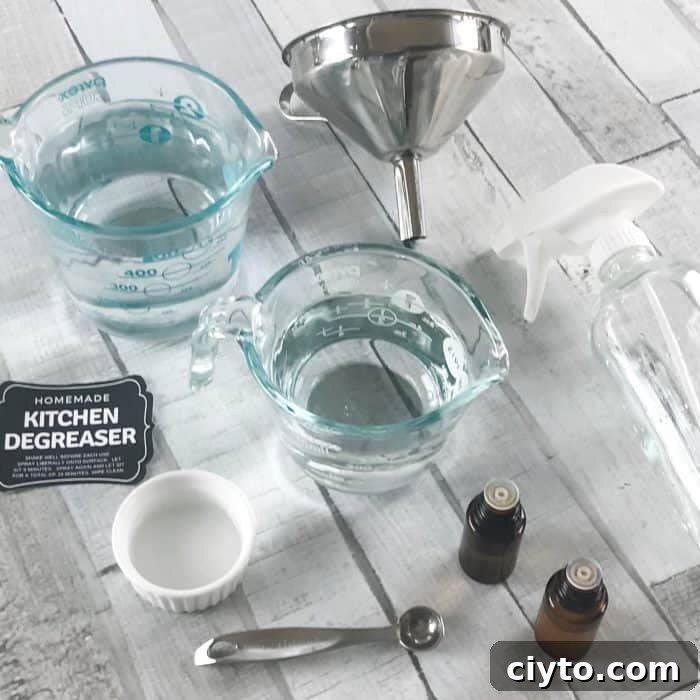
How to make the natural citrus degreaser
Step 1: Add 1/2 teaspoon Sal Suds to a 16 oz spray bottle
Tip: Pick a bottle that’s compatible with essential oils. Glass and stainless steel are best; certain plastics like PET and HDPE work when diluted.
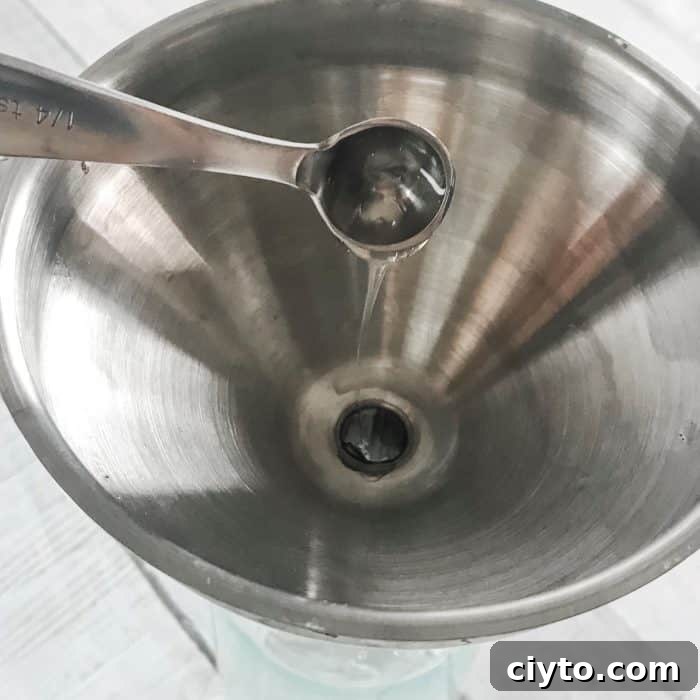
Step 2: Add 1/2 cup white vinegar
Tip: If you dislike the vinegar smell, you can reduce it slightly, but vinegar helps cut grime and discourages residue from sticking to surfaces.

Step 3: Add 1.5 cups distilled water
Tip: Boiled and cooled filtered water can be used instead of distilled if needed.

Step 4: Add 40 drops of citrus essential oils
I recommend 20 drops lemon and 20 drops sweet orange (wild orange) to balance cleaning power and fragrance. Citrus oils are especially effective at dissolving grease.
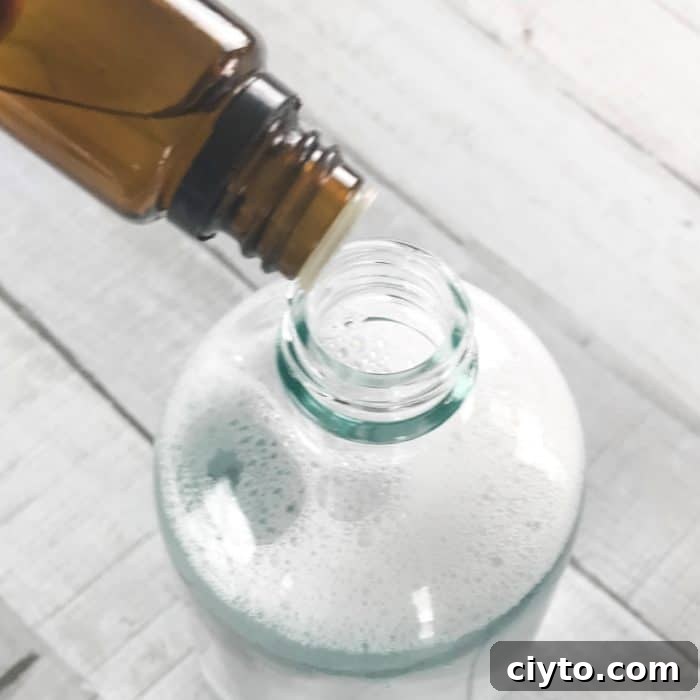
Step 5: Put the spray top on and shake well to mix
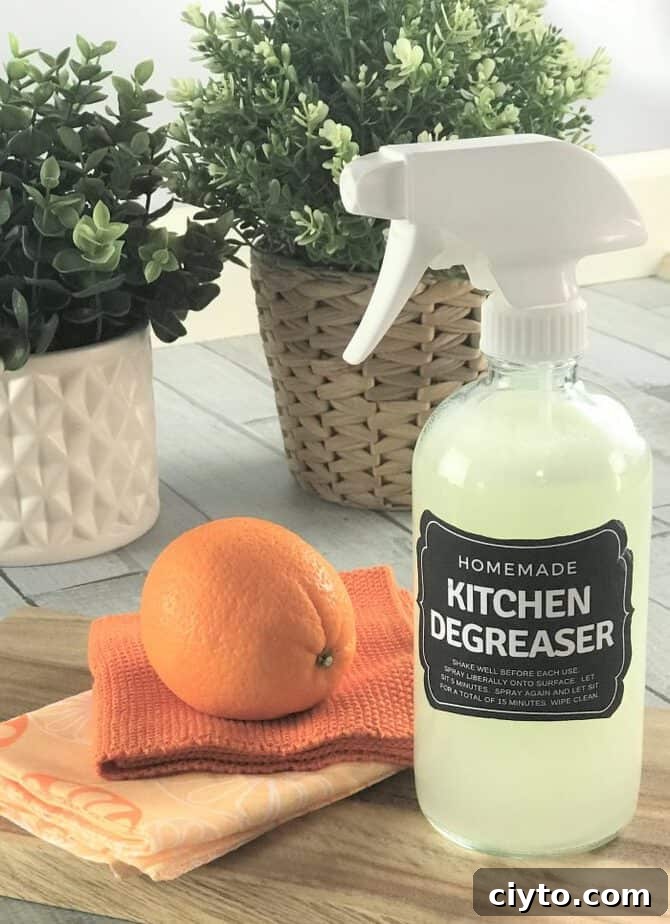
Optional: Add a label with the contents and date. You can print a label on regular paper and protect it with packing tape for durability.

How to use the citrus degreaser
This degreaser works on grease and grime on cabinets, stovetops, ovens, range hoods, microwaves, drip pans, vents, refrigerators, and other hard, non-porous kitchen surfaces.
- Shake well before each use.
- Spray liberally onto the dirty surface.
- Let it sit for 5 minutes.
- Spray again so the surface remains wet for about 15 minutes total.
- Wipe clean with a dishcloth rinsed in warm to hot water and wrung out.
Tip: For tougher buildup, sprinkle a little baking soda on the surface before spraying. The baking soda reacts with vinegar and foams slightly, while also providing a gentle abrasive to help lift stubborn grease. Always spot test a hidden area before using any new cleaner on a surface.

Please join our community on social platforms and consider subscribing to the newsletter for more natural cleaning recipes and tips.
Please note: Products mentioned in this article have not been evaluated by the FDA. The information on this page is not intended to diagnose, treat, cure, or prevent any disease. This website is not a substitute for professional medical care. Always consult your medical doctor regarding your medical care. Never disregard professional medical advice or delay in seeking it because of something you have read on this page.
Disclaimer: This article previously referenced affiliate links. Any product recommendations are shared for convenience; purchases, if any, are independent of this content.