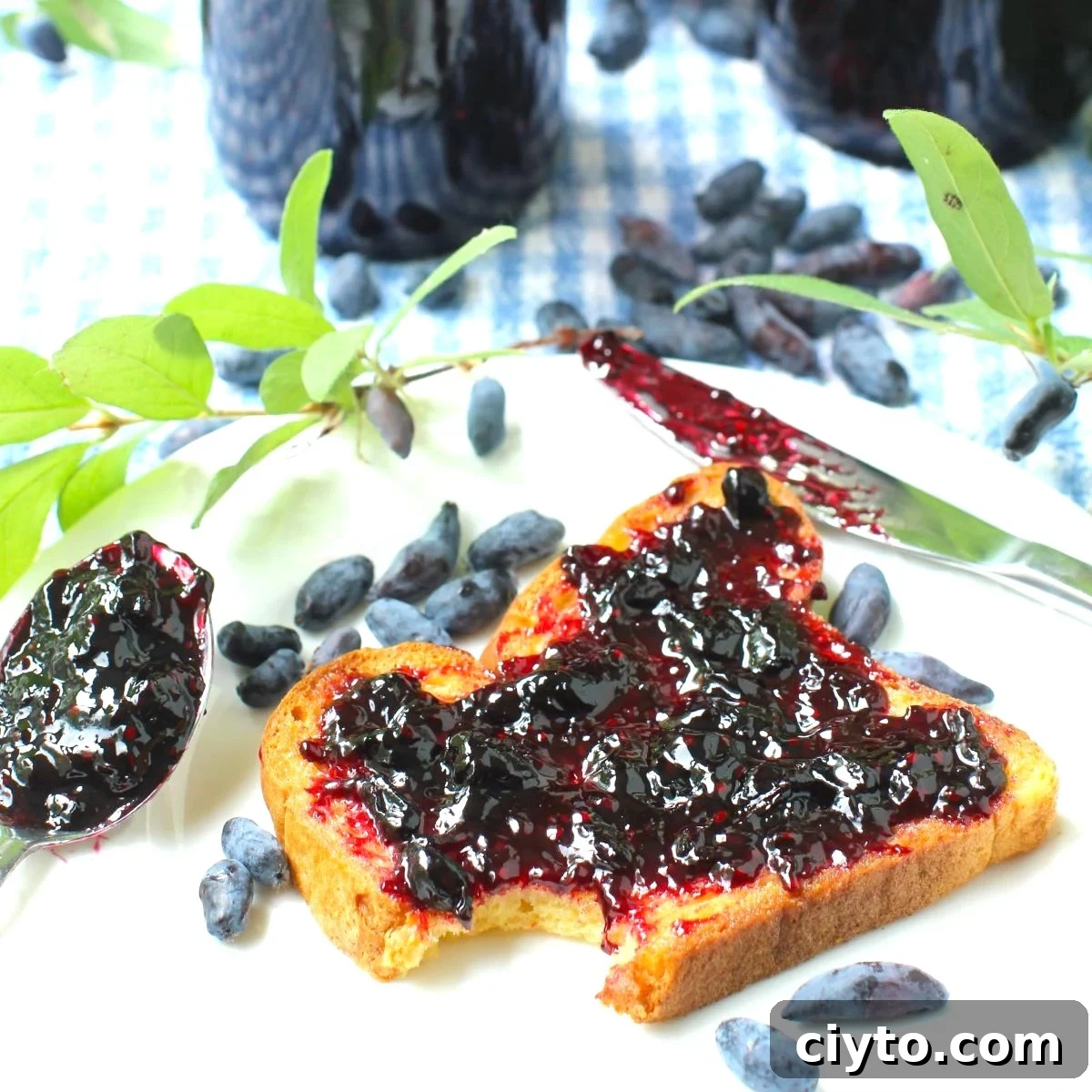
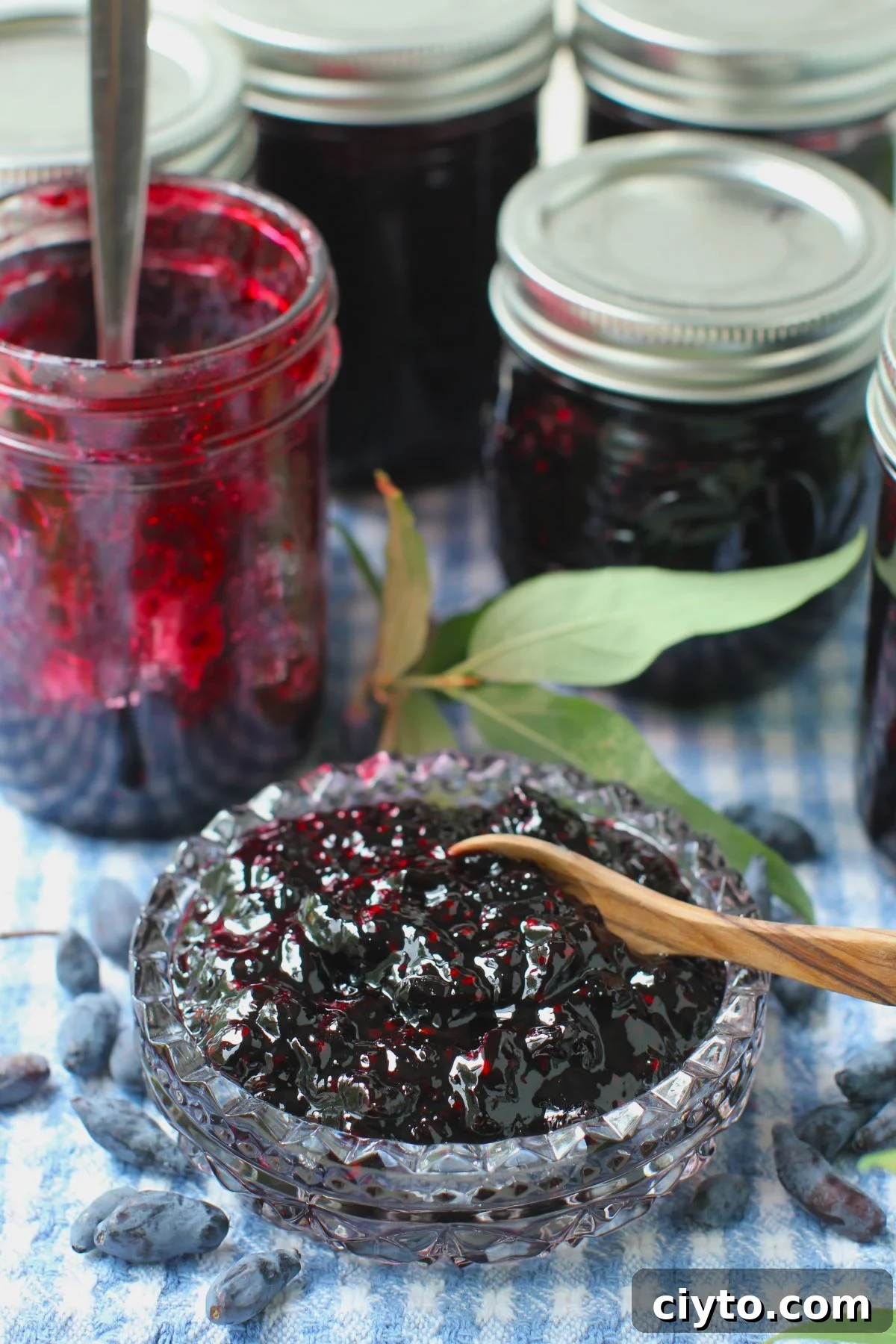
Haskap jam is a delicious way to capture the bright, concentrated flavor of haskap (honeyberry) fruit. This thick, tangy jam requires just two main ingredients—haskap berries and sugar—and no added pectin. It sets up beautifully thanks to the natural pectin in the berries and is surprisingly easy to make at home.
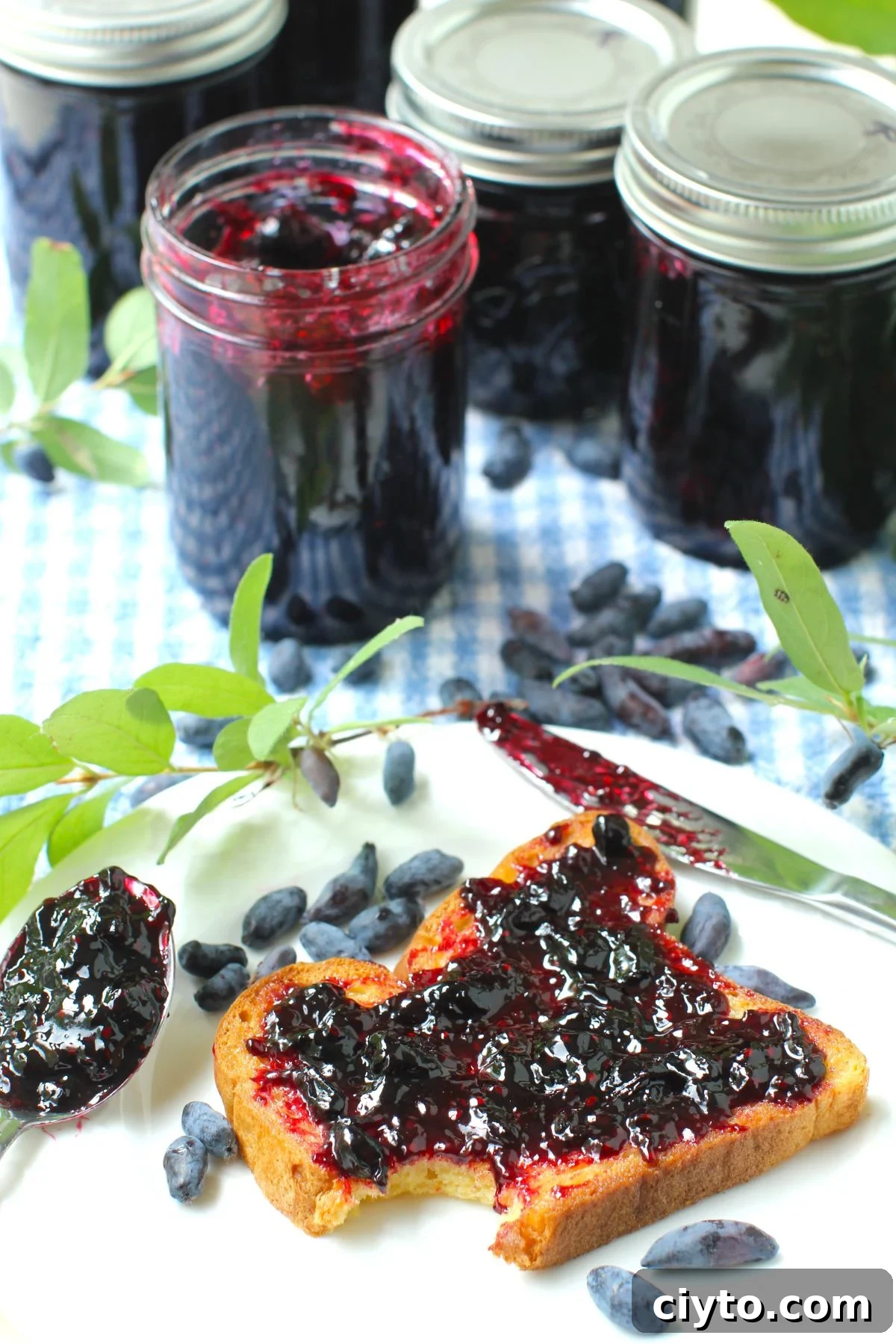
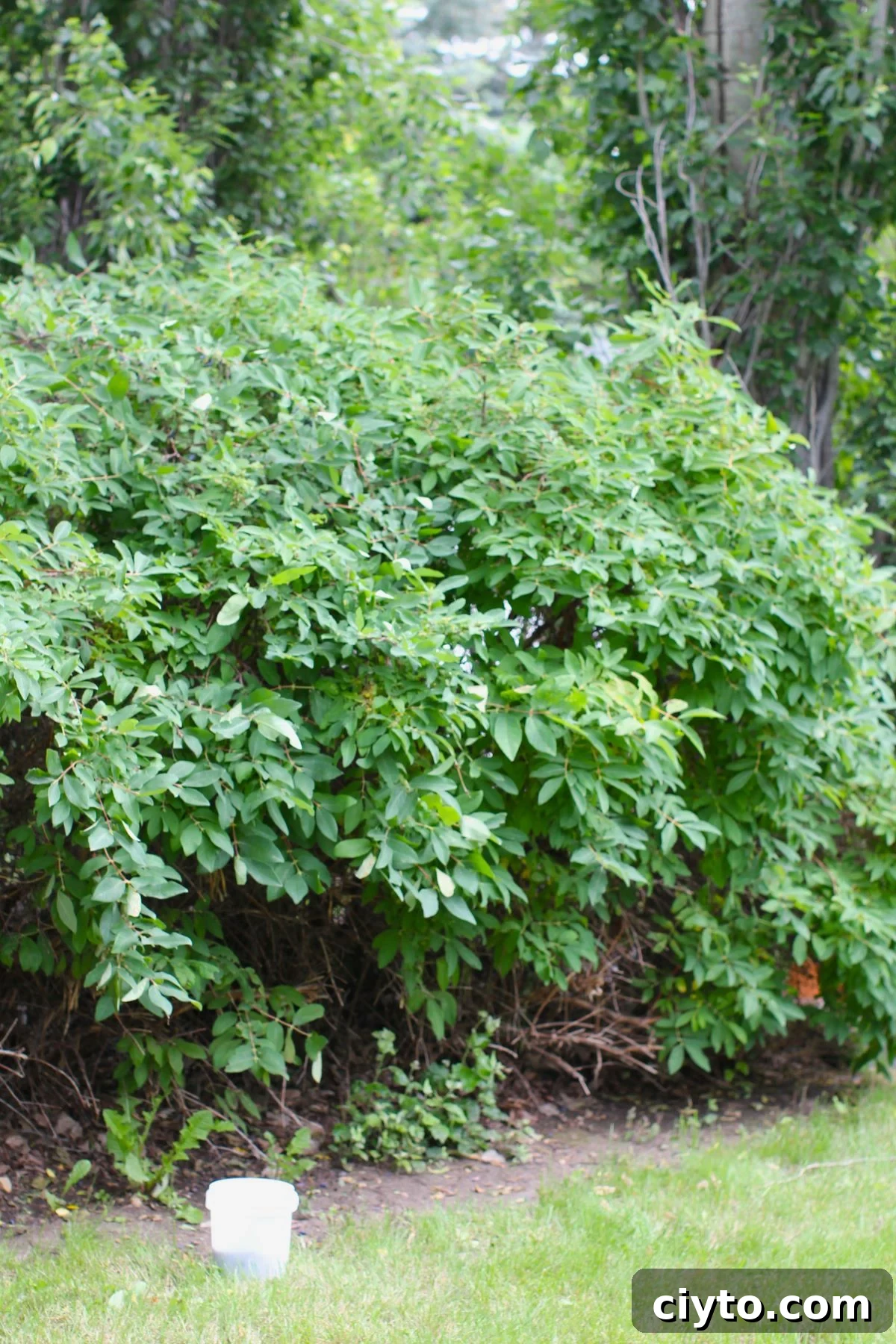
Haskap bushes are often among the first productive plants in the spring, ripening soon after rhubarb and asparagus. The berries can be easy to miss because they hide under the foliage, but once found they are a welcome early-summer treat.
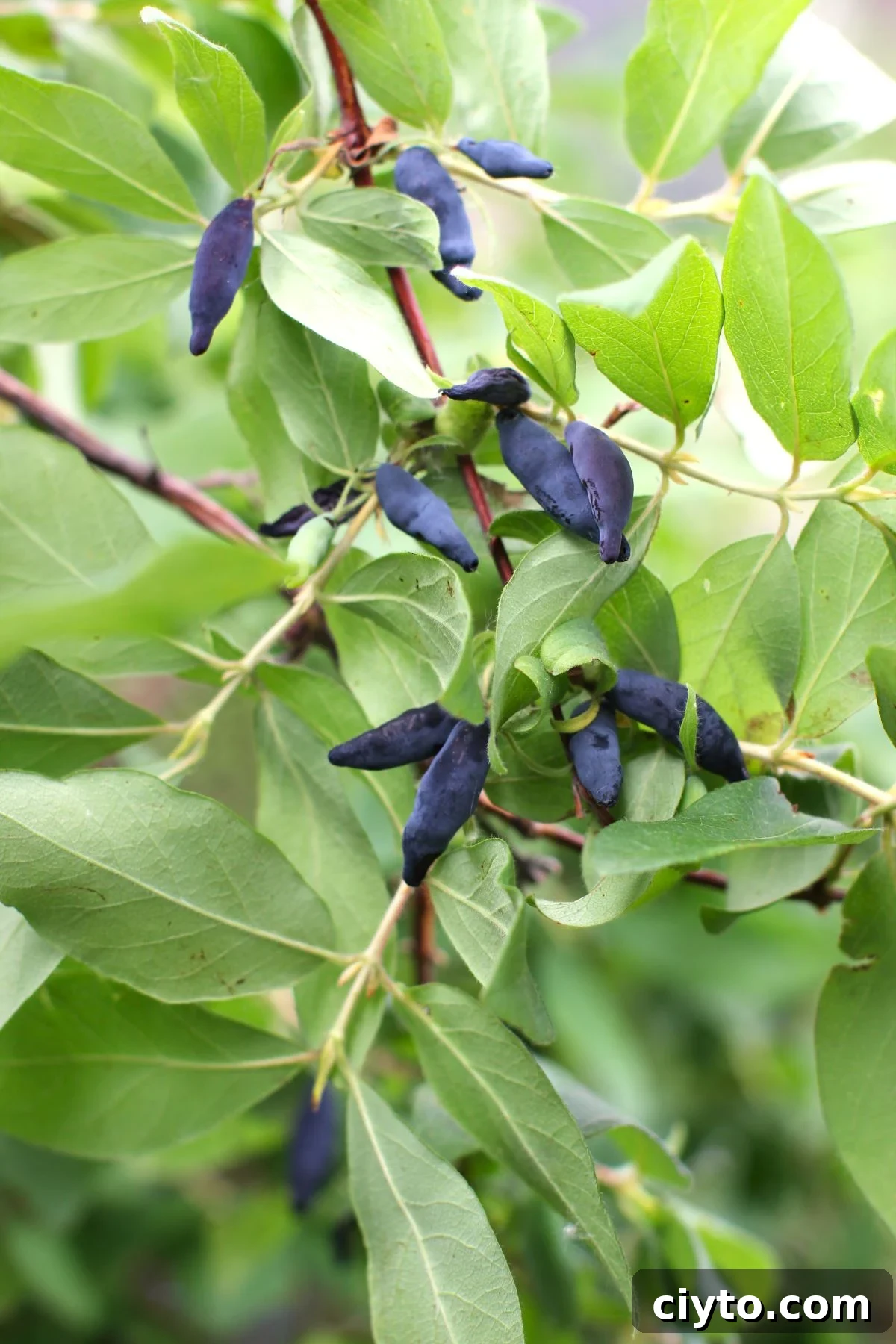
Haskap berries (also called honeyberries) are elongated and typically blue-purple on the outside with a deep, juicy interior. Their flavor is vivid and tangy—somewhere between blueberry, raspberry and black currant—with a pleasant zing that mellows when cooked. A slight astringency may be present in the raw fruit but it disappears during cooking, leaving a rich, full berry taste.
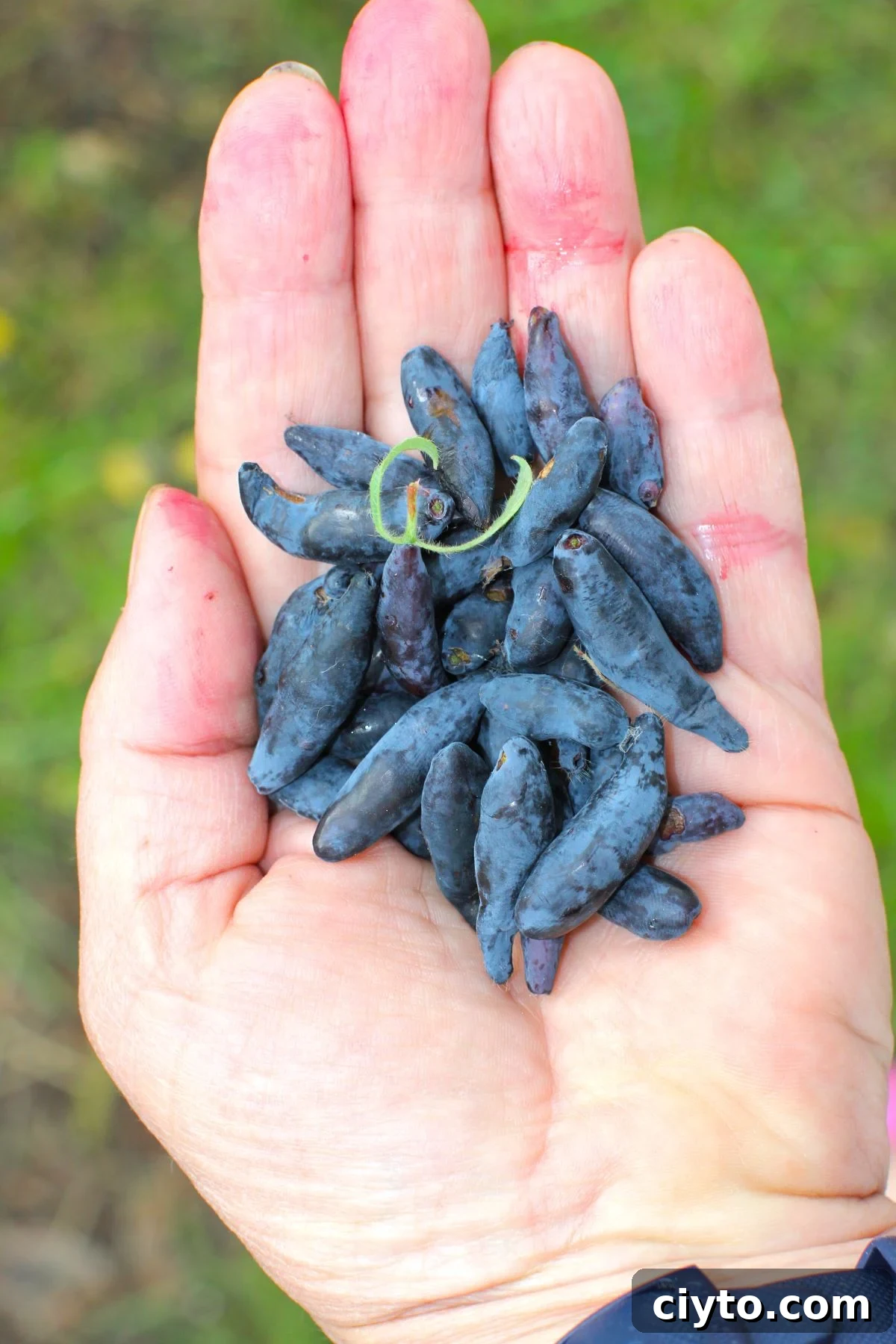
Super Healthy Berries
Haskaps (Lonicera caerulea) go by many names—honeyberries, mayberries, Siberian blueberries, blue honeysuckle—and are native to parts of the northern hemisphere, including regions of Canada, Japan and Russia. They tolerate extremely cold winters and are often the earliest berries to produce in northern gardens. Haskaps are nutritionally dense: they contain generous levels of antioxidants, vitamin C, anthocyanins, manganese, vitamin A and fiber, making them small but powerful additions to a healthy diet.
Haskaps Make Great Jam
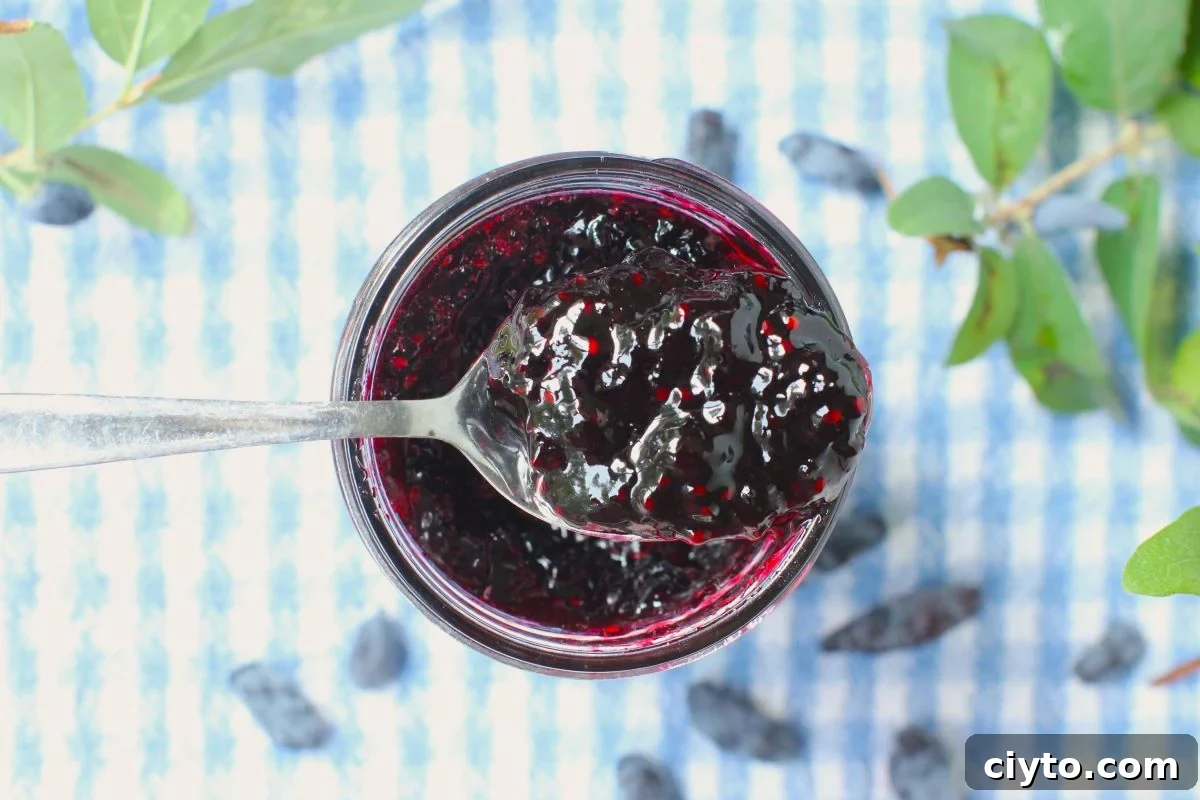
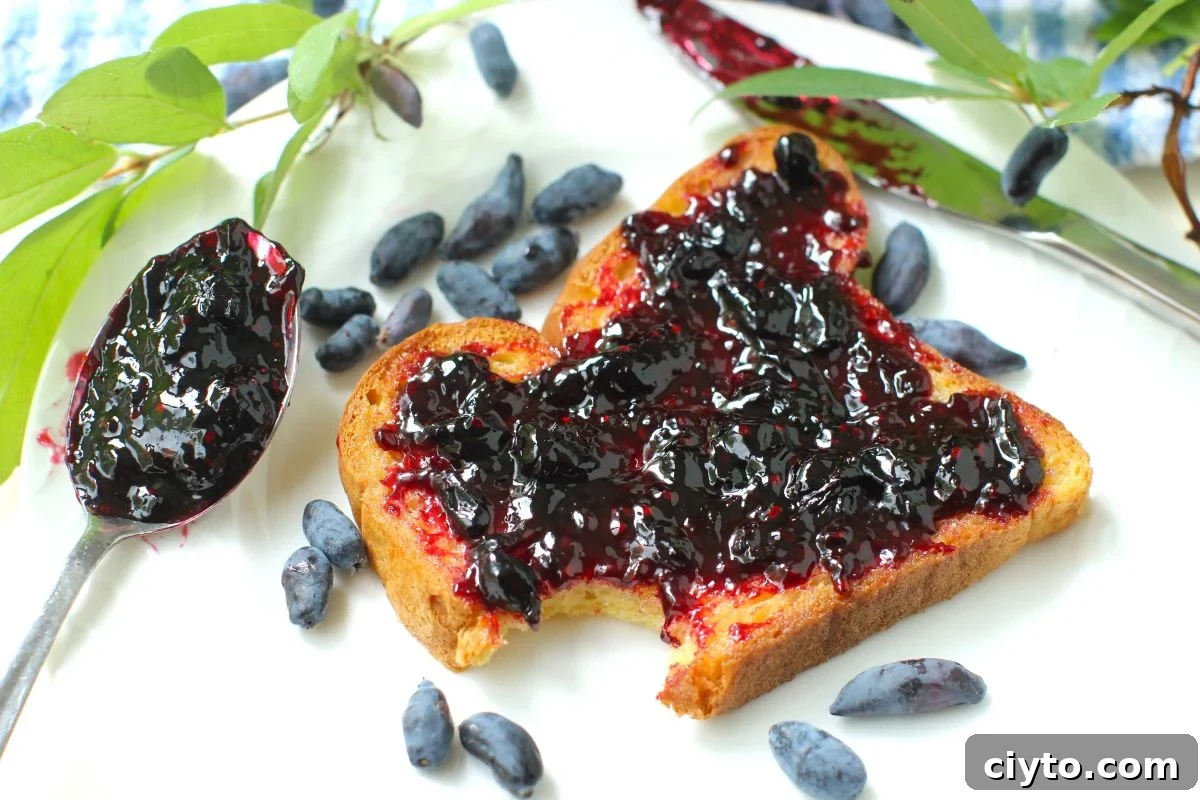
Because haskap berries are naturally high in pectin, they make an excellent two-ingredient jam: just fruit and sugar. Cook the berries with sugar until the mixture reaches the jelling stage, which typically happens within 20–25 minutes of boiling. The result is a dark, intensely flavored jam that balances sweet and tart, perfect on toast, stirred into yogurt, or spooned over desserts. Frozen haskaps work well too when fresh fruit isn’t available.
How to Freeze Haskaps
To freeze haskaps, sort them to remove leaves and stray stems, then rinse gently in a colander. Spread them in a single layer on a paper-towel–lined baking sheet to drain and dry. Freeze until firm, then transfer the berries to heavy-duty freezer bags or containers, label, and store for up to a year. Frozen haskaps are convenient for smoothies, baking, and recipes that call for blueberries.
Making Pectin-Free Haskap Jam is Easy
When making jam without added pectin, avoid overcooking. The jam will thicken substantially as it cools, so remove it from the heat as soon as it reaches the jelling stage. A candy thermometer is a helpful tool when you’re starting out because it removes guesswork. Combine the berries and sugar in a heavy-bottomed saucepan, heat gently until the sugar dissolves and the berries release their juices, then boil steadily until the jam reaches the jell point—about 220°F (104.4°C) at sea level, though the required temperature will be lower at high altitude.
Cooking time to reach the jell stage is typically 20–25 minutes after the mixture reaches a full boil, depending on burner strength and pan size. A small splash (about 1 teaspoon) of rosewater can enhance the fruitiness without being obvious, but it’s entirely optional—this jam is excellent with just berries and sugar.
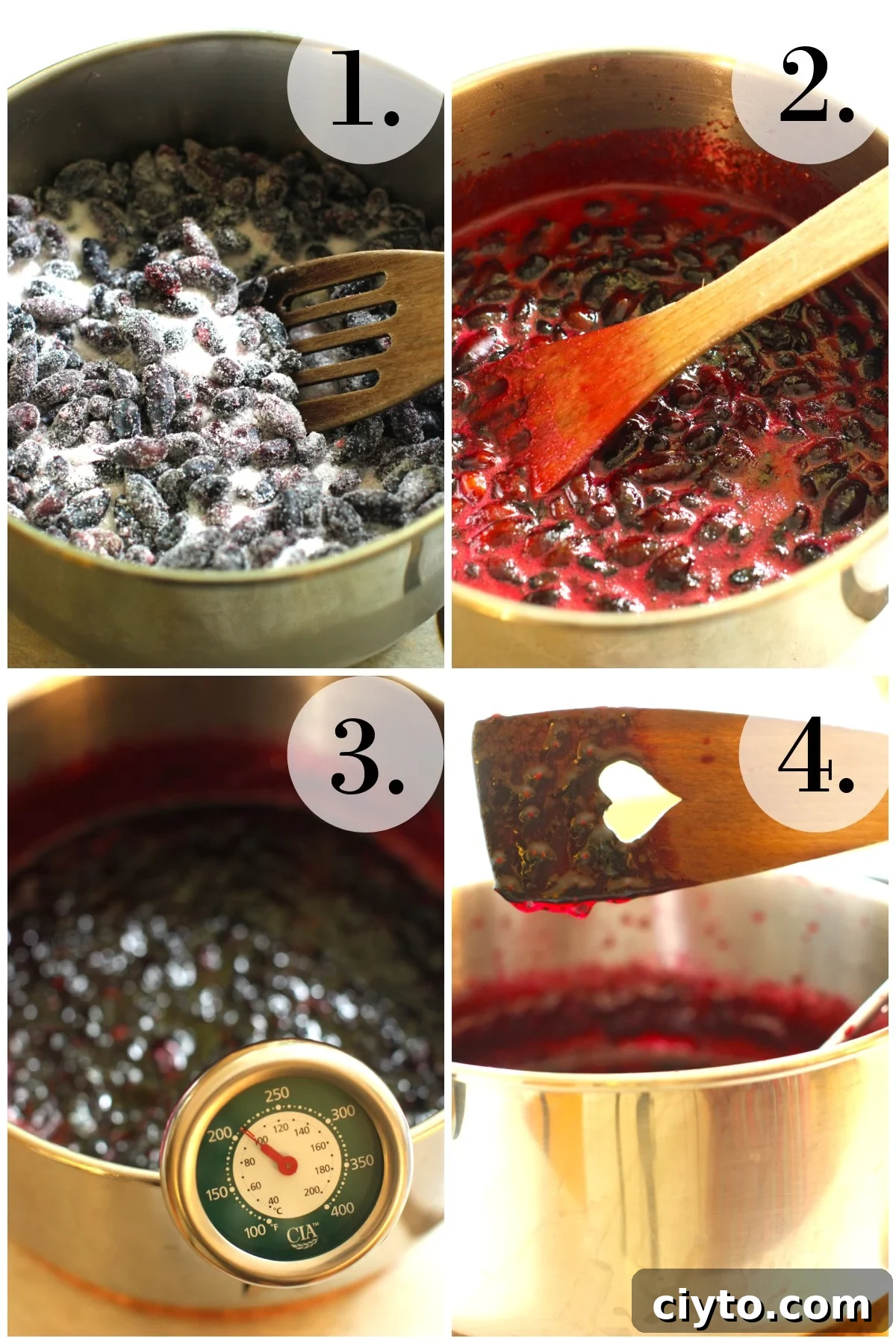
How to Know When Your Jam is Ready
There are several reliable methods to test for the jell stage:
- Thermometer method: clip a candy thermometer so the tip sits in the jam but not touching the pan bottom. The jell temperature is approximately 220°F (104.4°C) at sea level. If you prefer a softer set, remove the jam a degree or two lower.
- Freezer (plate) test: chill small saucers in the freezer before you start. When you think the jam is nearing readiness, spoon a teaspoon onto a chilled saucer and freeze it for two minutes. If the surface wrinkles or a fingertip leaves a trail that doesn’t fill in, the jam is ready.
- Drip test: lift the stirring spoon and watch the droplets. As the jam nears the jell stage, drops will fall more slowly and begin to merge; when several drops run together and fall as one, it’s usually at the right consistency.
How to Can Your Haskap Jam
To preserve your jam, pour the hot jam into sterilized jars, leaving about 1/4 inch (6 mm) headspace. Wipe the rims, apply hot lids and screw bands finger-tight. If you fill hot sterilized jars and seal them promptly, you may leave the jars on a towel to cool without further processing; sealed jars will typically keep 6–12 months. For longer storage and extra safety, water-bath process the filled jars for 10 minutes: place jars in a pot lined with a towel or jar rack, cover by about 1 inch (2.5 cm) of water, bring to a boil and maintain a gentle boil for 10 minutes. Remove jars with tongs, set upright on a towel and allow to cool undisturbed.
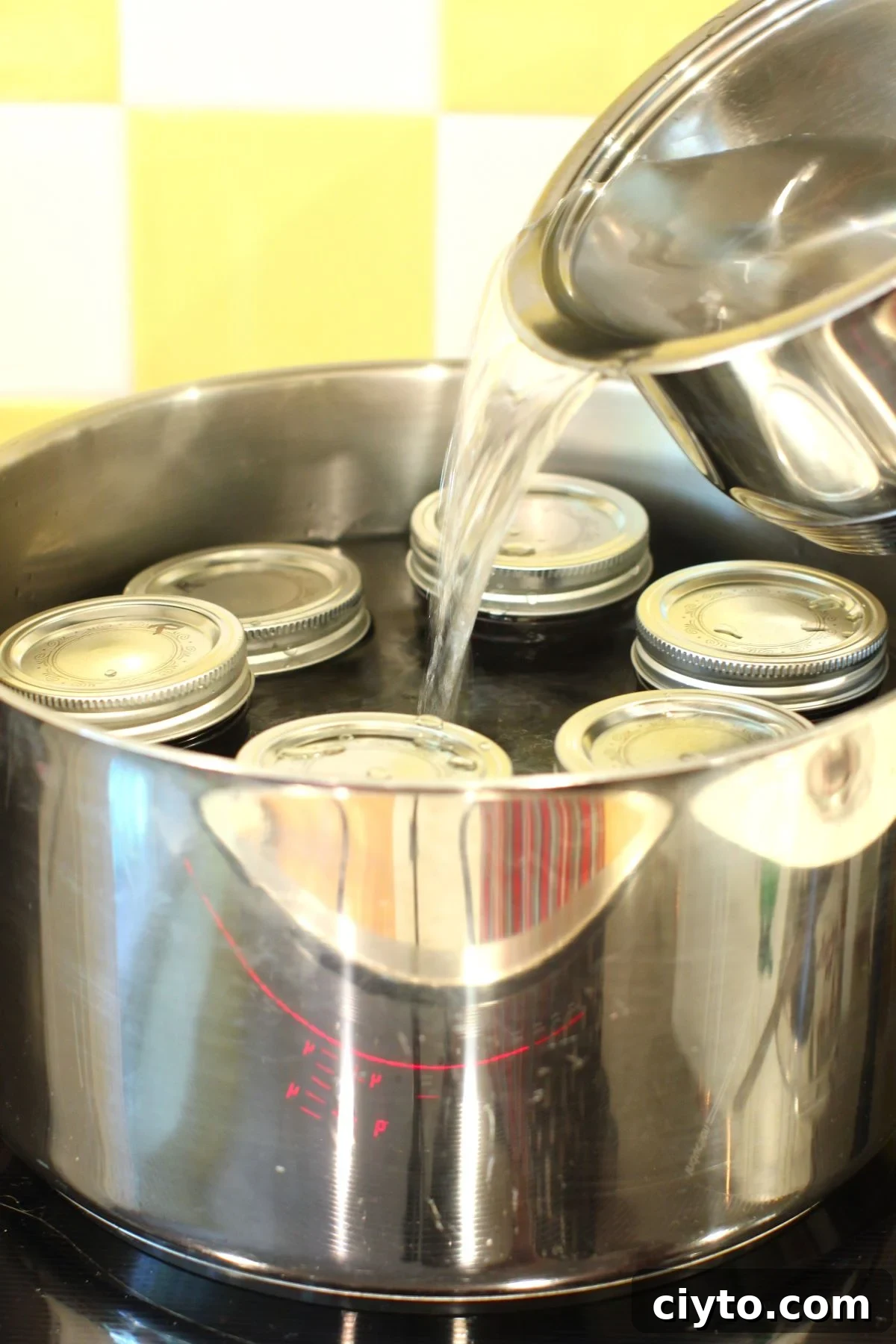
After cooling, check seals: lids should be concave and not move when pressed. Any unsealed jars should be refrigerated and used within a few months. Properly sealed jars stored in a cool, dark place will keep for a year or more.
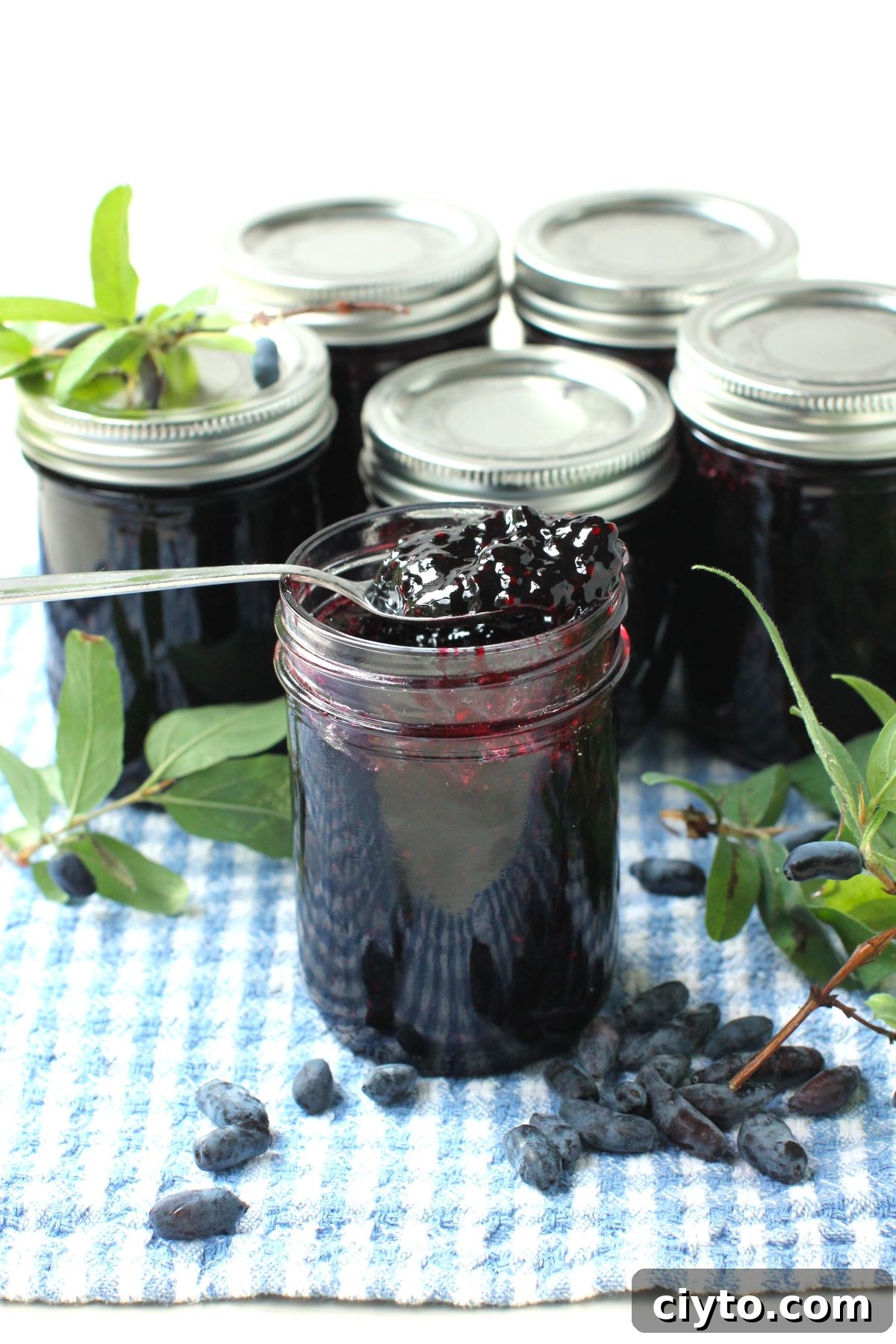
Guten Appetit!
Easy Haskap Jam (Honeyberry Jam), No Pectin
Only two main ingredients turn haskap (honeyberry) into an intensely flavored jam—fruit and sugar. No pectin needed. This simple method yields about three half-pint (250 ml) jars.
Prep Time: 20 mins • Cook Time: 25 mins • Processing Time: 15 mins • Total Time: ~50 mins
Servings: 3 half-pint (250 ml) jars
Course: Canning & Preserving • Cuisine: Canadian
Ingredients
- 4 cups (600 g) fresh haskap berries (or 4½ cups/600 g frozen)
- 3 cups (600 g) granulated sugar
- Optional: 1 teaspoon rosewater
Instructions
- Sterilize three half-pint (250 ml) canning jars and keep lids hot in simmering water.
- Combine the berries and sugar in a large heavy-bottomed saucepan. Heat over medium-high, stirring so the sugar dissolves and the berries release their juices. Stir constantly at first to prevent scorching.
- When the mixture reaches a full boil, reduce to a steady, low boil and begin timing. Boil for about 20–25 minutes, depending on your stove and pan, until the jam reaches the jell stage.
- Use a candy thermometer clipped into the jam (not touching the pot bottom). Aim for about 220°F (104.4°C) at sea level. If you prefer a softer set, remove a degree or two earlier.
- If you don’t have a thermometer, use the chilled plate/freezer test: drop a teaspoon of jam onto a chilled saucer, chill for two minutes, and test for a wrinkle or a trail when pushed.
- When the jam reaches the jell stage, remove from heat. If using rosewater, stir it in now.
- Pour the hot jam into sterilized jars, leaving 1/4 inch headspace. Wipe rims, add hot lids and screw bands finger-tight.
- Either let jars cool undisturbed on a towel (if filled hot and sealed quickly) or water-bath process for 10 minutes for added insurance. After cooling, check seals and store sealed jars in a cool, dark place.
Notes
A candy thermometer is the most reliable way to gauge the jell stage when making jam without pectin. Store any unsealed jars in the refrigerator and use within three months. Properly sealed jars will keep unrefrigerated for a year or longer in a cool, dark storage spot.