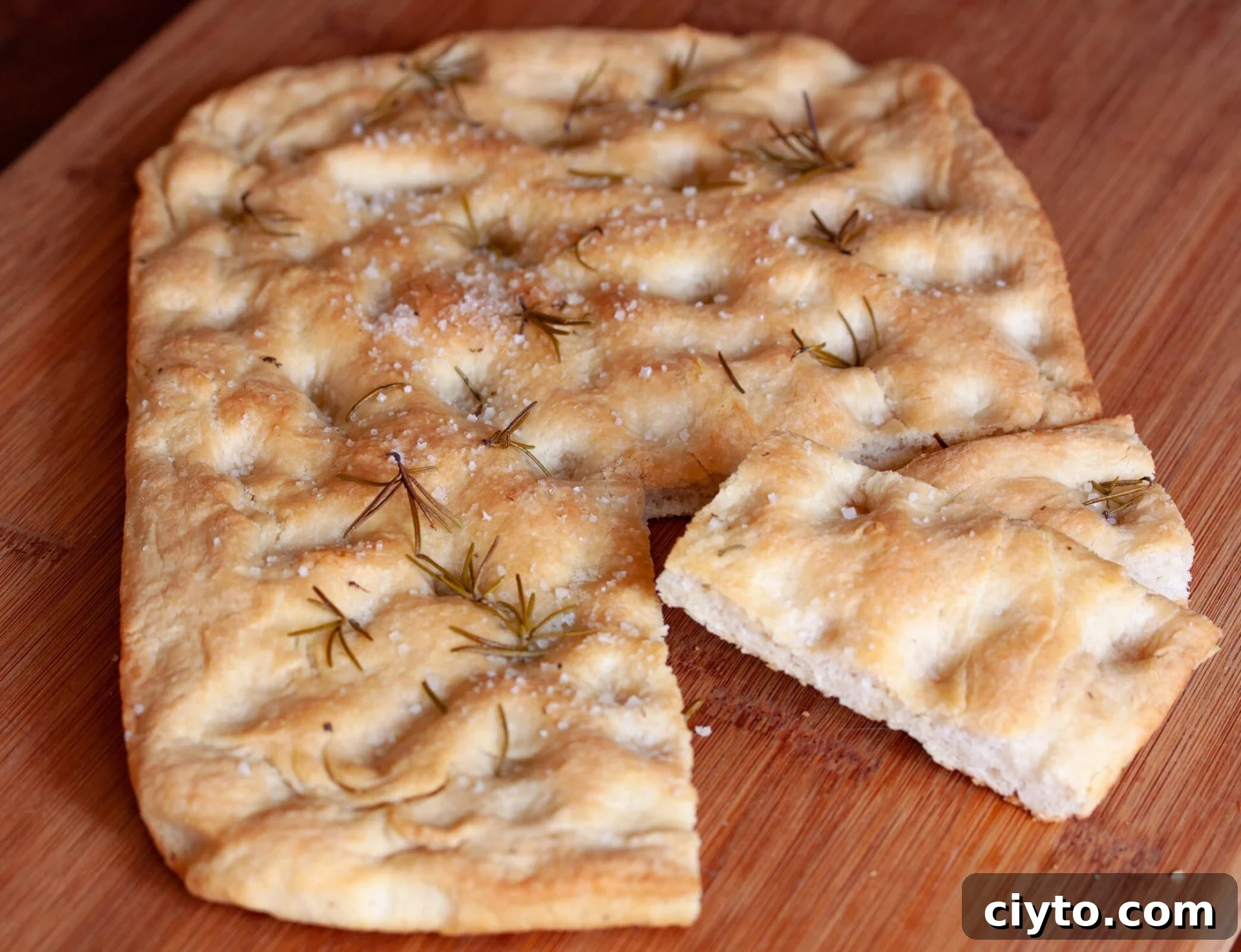
I’ve wanted to make rosemary focaccia for as long as I can remember. The dough itself is simple and requires only minimal hands-on time, but the resting and rising stages are what often put me off—until recently, when I finally gave in to a craving and baked a batch. The process was easy, and I loved working the dough with my hands. I’ll be making it again this weekend, maybe two batches so one can be used for quick pizzas.
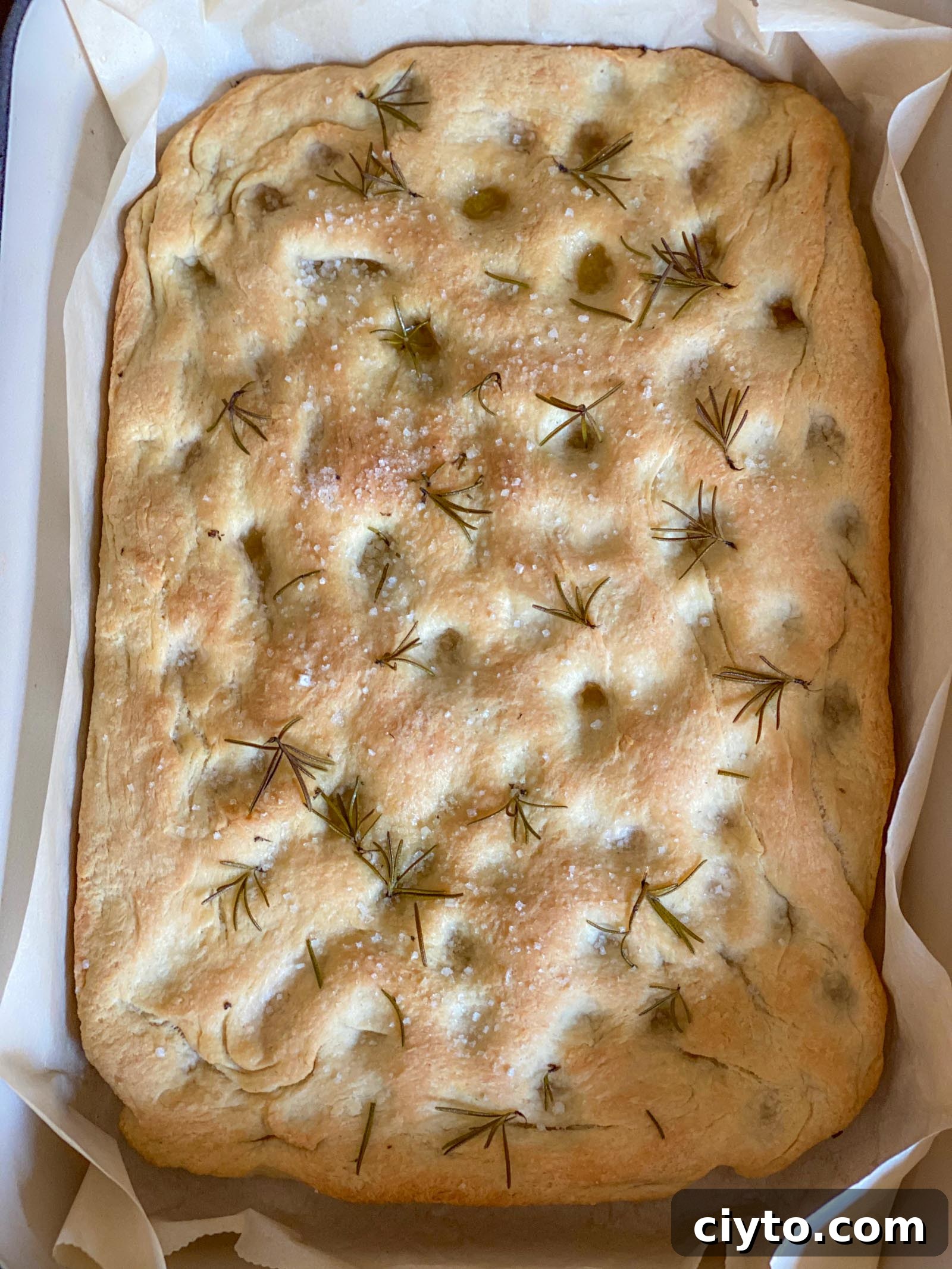
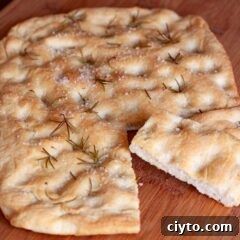
This recipe produces a golden, olive oil–rich focaccia topped with fragrant rosemary and flaky sea salt. It’s forgiving, versatile, and makes a great appetizer, side, or base for toppings. Below I explain the key differences between focaccia and pizza, share practical baking tips to ensure a successful rise, and include the full ingredient list and method so you can recreate it at home.
In this Article
- What is the difference between focaccia and pizza?
- Baking tips to make a successful Rosemary Focaccia
- If you enjoyed this recipe for Rosemary Focaccia, look at some of my other recipes:
- Rosemary Focaccia
What is the difference between focaccia and pizza?
Focaccia and pizza share similar ingredients, but they differ primarily in dough thickness, texture, and how they’re finished. Focaccia is thicker and airier—typically about 1 to 1½ inches—giving it a soft crumb with a chewy crust. It’s usually seasoned simply with olive oil, sea salt, and herbs such as rosemary, and it’s served in large slabs for tearing or slicing.
Pizza dough is rolled or stretched much thinner—usually under an inch—yielding a crispier edge and allowing room for a wide variety of toppings. In Rome and other parts of Italy you’ll find variations such as pizzetta bianca (white pizza), which shares the same basic dough but is made thinner and often sprinkled generously with sea salt.
Baking tips to make a successful Rosemary Focaccia
These practical tips will help your dough rise properly and avoid a dense, underwhelming result. If you’re new to working with yeast, follow them carefully—most issues come down to temperature, salt placement, and handling.
- Use an appropriate flour. “00” white flour is traditional for many Italian breads and works well, but all-purpose or a strong bread flour (such as King Arthur) will also produce good results.
- Keep salt and yeast separate at first. When you add ingredients to the mixing bowl, place the yeast on one side and the salt on the other before combining. Salt can slow yeast activity if it contacts the yeast directly.
- Don’t overwork the dough. Knead only until smooth—overworking can tighten the gluten and reduce the dough’s ability to rise and create a light crumb.
- Find a warm, draft-free spot for rising. If your kitchen is cool, the oven turned to its lowest heat setting (then switched off) makes a gentle proofing space. The dough should be warm but not hot—the goal is a steady rise, not cooking the dough.
- Let the dough rise twice. The first rise happens in the bowl until doubled, and the second rise occurs on the prepared baking tray after shaping. This two-stage rise builds flavor and structure.
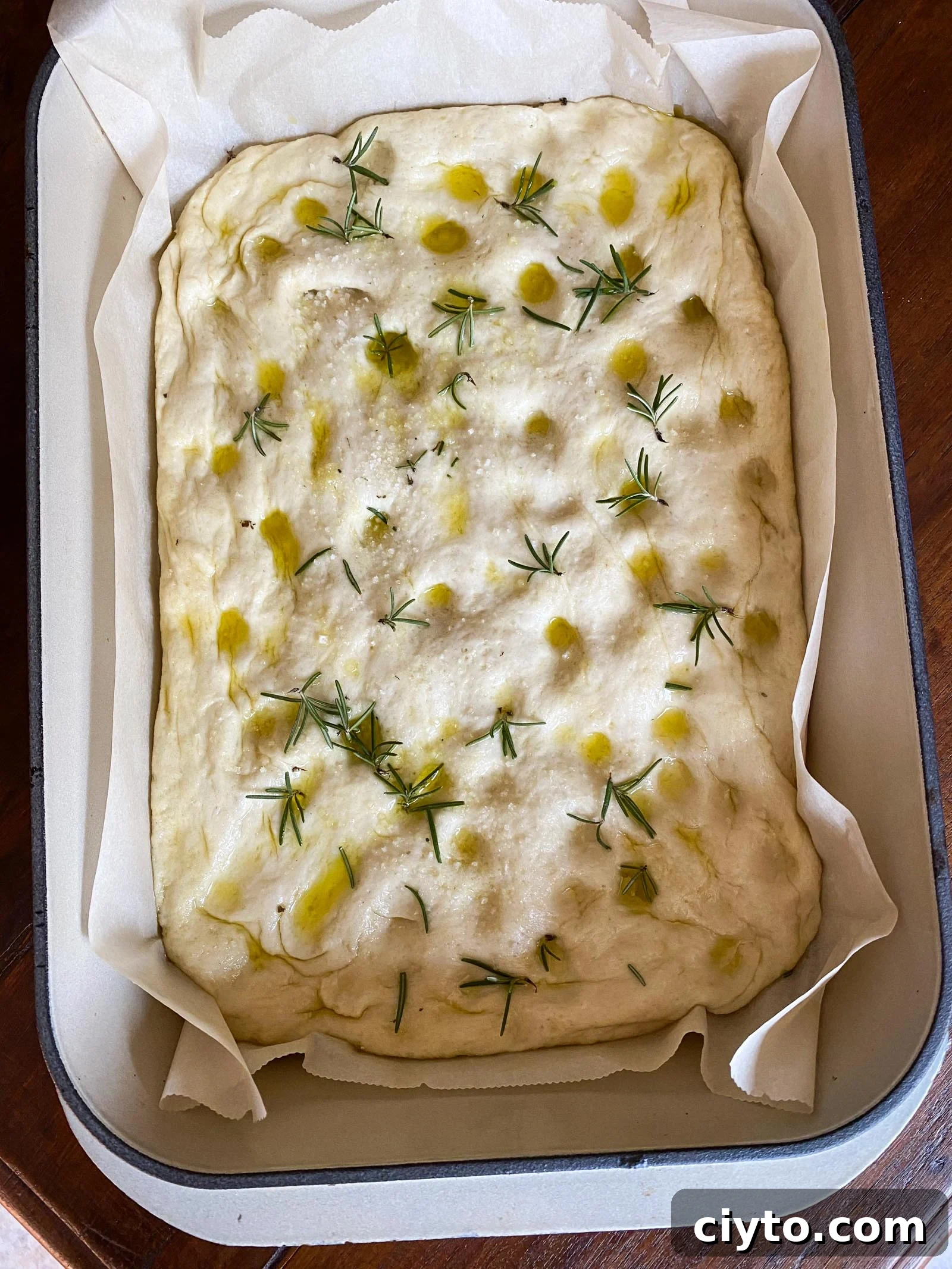
- Use your hands to oil and shape the dough. Brushing with a brush can press down the dough too much; gently rubbing olive oil with your fingertips preserves the air pockets and lets you create the classic dimpled surface by pressing small indentations with your fingers.
- Be generous with olive oil and flaky sea salt. The olive oil keeps the focaccia tender and flavorful, and the salt provides that essential finishing touch.
Above all, be patient. Bread-making rewards a calm approach and a light touch. Have fun with the dough—there’s a lot of joy in creating something with your hands.
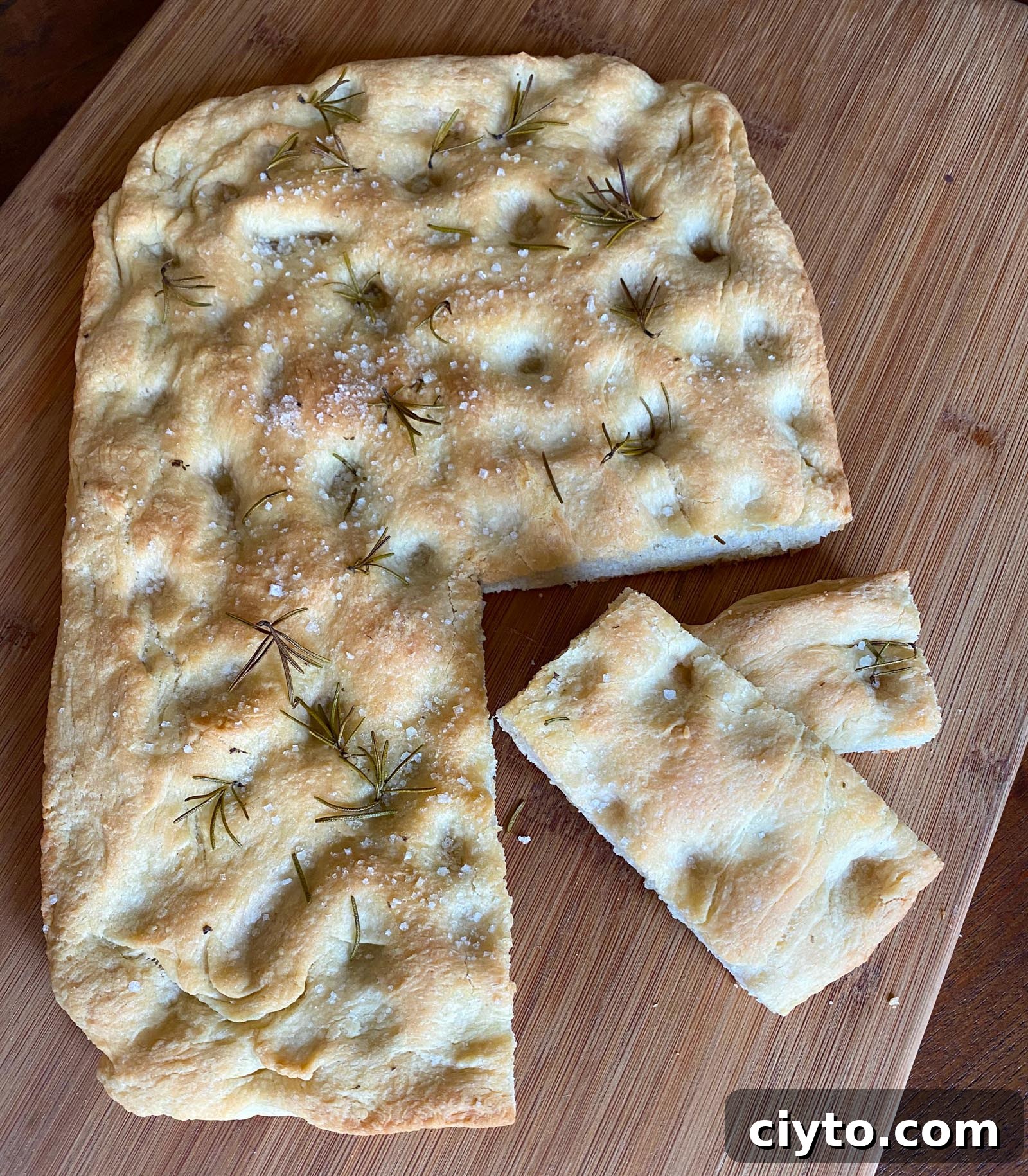
If you enjoyed this recipe for Rosemary Focaccia, look at some of my other recipes:
Roasted Rosemary Potatoes
Cloud Biscuits
Banana Scones
Homemade Pasta
Rosemary Focaccia
Ingredients
- 3 cups white flour (00 or all-purpose)
- 4 ounces active dry yeast packet
- 1½ teaspoons sea salt
- 1 cup lukewarm water
- 3 tablespoons olive oil
- rosemary sprigs
- sea salt flakes
Instructions
-
Place the flour in a mixing bowl. Sprinkle the yeast on one side of the bowl and the measured sea salt on the opposite side so they do not touch. Cover each with a little flour, then make a well in the center and add the lukewarm water and olive oil. Mix with a table knife until the dough begins to come together.
-
Turn the dough out onto a lightly floured surface and knead until it becomes smooth and elastic, about 4–6 minutes. Add a little flour to the board if the dough sticks.
-
Lightly coat the dough with olive oil and place it in a clean, oiled bowl. Cover with plastic wrap and let it rise in a warm, draft-free spot until doubled in size, roughly 1 hour.
-
Grease a large baking tray. Gently transfer the dough to the tray, flatten it into a rectangle, and brush or rub it lightly with more olive oil. Cover again and let it rest for about 30 minutes, or until it has puffed up noticeably.
-
Preheat your oven to 400°F (200°C).
-
Use your fingertips to make small dimples across the surface. Scatter chopped or whole rosemary sprigs over the dough, sprinkle generously with sea salt flakes, and drizzle with additional olive oil.
-
Bake for 25–30 minutes, or until the focaccia is golden brown and cooked through. Remove from the oven, transfer to a wire rack to cool slightly, then slice and serve warm.
Nutrition
Carbohydrates: 55 g |
Protein: 14 g |
Fat: 9 g |
Sodium: 594 mg
Giangi’s Kitchen provides nutritional information as an estimate; it has not been calculated by a registered dietitian.
- Course: Appetizers
- Cuisine: Italian
Did you make this?
Leave a comment below and tag @giangiskitchen on Instagram to share your version.