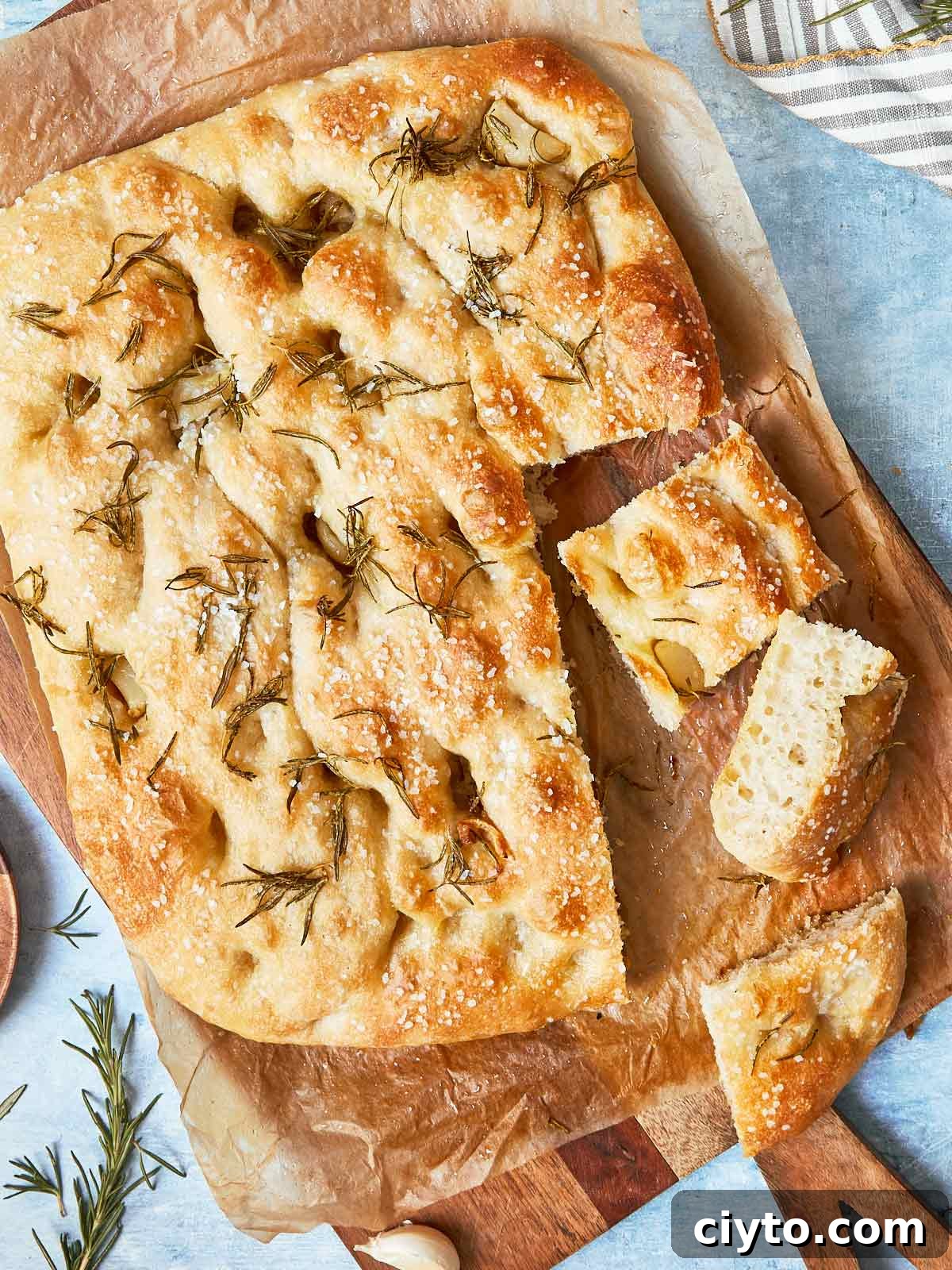
Let’s be honest: homemade bread can feel intimidating. Yeast, rising times and kneading all sound like a commitment. Focaccia is the bread that helped me stop overthinking it.
The first time I made this focaccia I wasn’t planning to bake bread at all. I wanted something warm to go with dinner and didn’t feel like running to the store. I mixed everything in one bowl, pressed the dough into a pan, drizzled olive oil on top and hoped for the best.
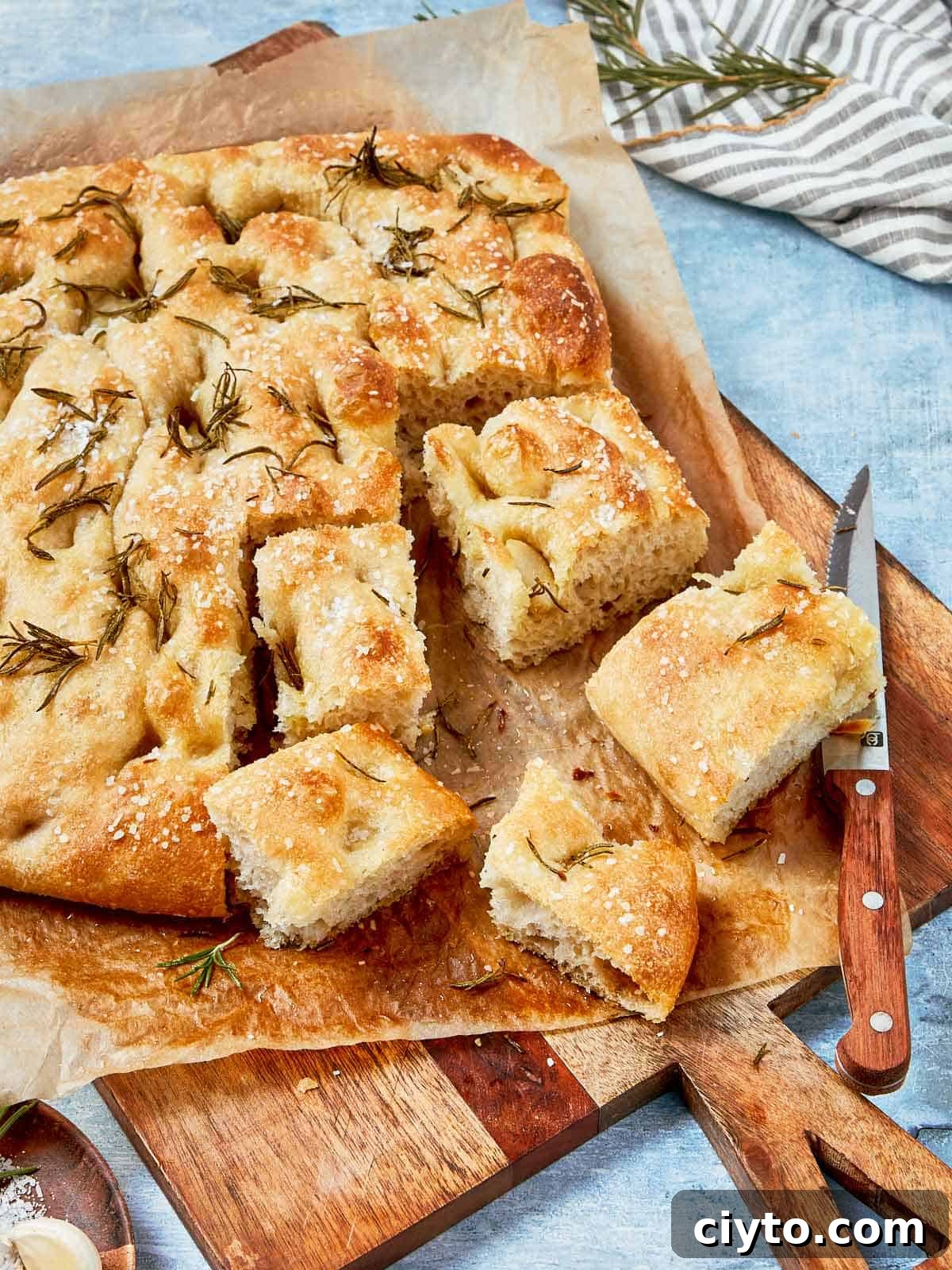
It came out better than expected: soft inside, crisp at the edges and gone faster than anything else on the table. That’s when I realized focaccia doesn’t need to be complicated to be delicious. This recipe has become a regular in my kitchen.
Focaccia is perfect for soaking up sauces or serving alongside soups, salads and roasted mains.
Why This Recipe Works
Here’s why this focaccia is friendly for bakers of any level.
- The dough is forgiving. There’s no heavy kneading and no complex steps: mix, rise, press into a pan and bake. A slightly messy dough is normal and expected.
- Olive oil does a lot of the work. It keeps the interior tender and gives the top a crisp, slightly chewy crust. Skimping on oil leads to dry bread, so use it generously.
- Timing matters, but it’s not stressful. This dough needs a good rise and a hot oven, not constant attention. Follow resting times and the oven will transform the dough into a bakery-style focaccia.
Ingredients That Actually Matter
The ingredient list is short, but a few elements make a big difference:
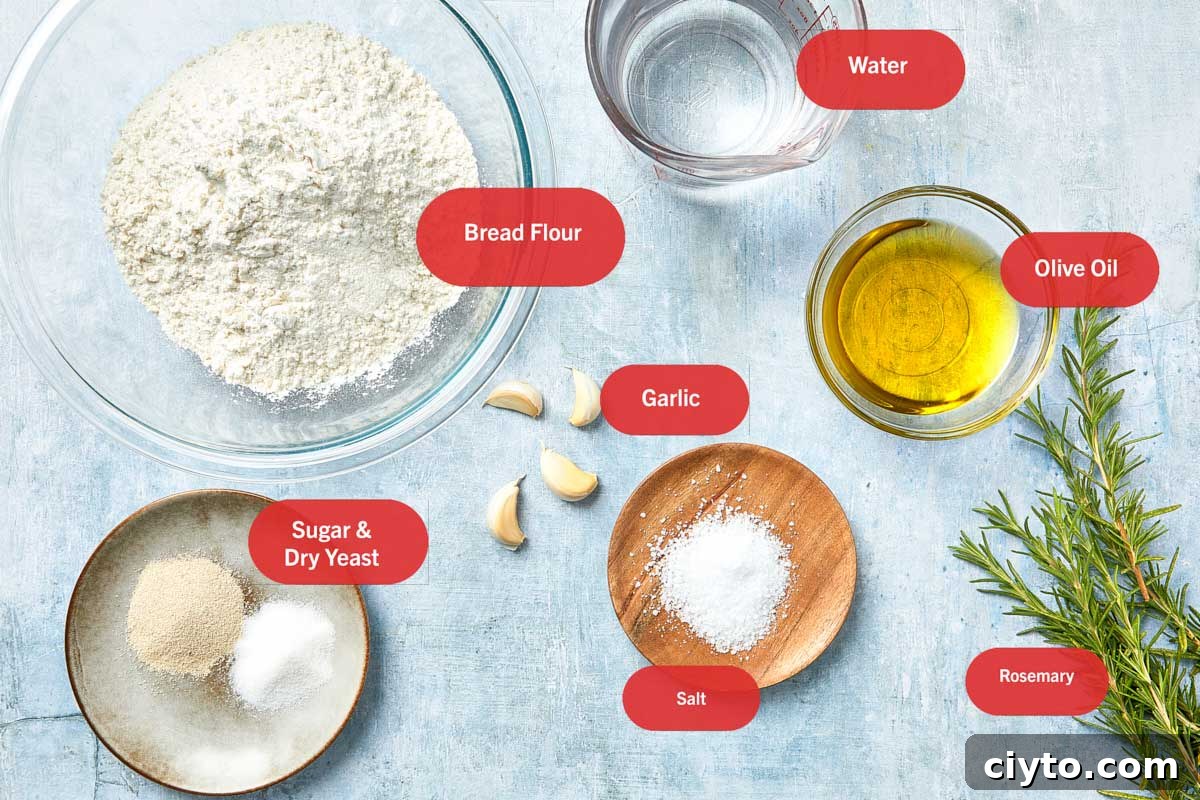
- Bread flour: Gives structure and chew. All-purpose flour will work in a pinch but yields a softer, less chewy crumb.
- Dry yeast: The rise depends on active yeast. Check expiration and proof if unsure; inactive yeast means flat focaccia.
- Olive oil: Essential for flavor and texture. A good extra-virgin olive oil will noticeably improve the result.
- Salt: Balances flavor and strengthens gluten. Too little leaves the bread bland and texturally weak.
See the Recipe Card below for full ingredient amounts and measurements.
Additions and Variations
This focaccia is easy to customize. The base dough stays the same, while toppings and small tweaks change the mood.
Herbs and toppings: Rosemary is classic, but thyme or oregano work well. Thin garlic slices pressed into the surface before baking add a gentle garlic note without overpowering.
Olive oil upgrade: Because you taste the oil here, use a flavorful extra-virgin olive oil if possible. Drizzling a little more on top after baking adds richness.
Finishing salt: Flaky sea salt sprinkled after baking gives bursts of crunch and flavor—optional but highly recommended.
Cheese: A light sprinkle of grated parmesan or pecorino near the end of baking melts and crisps without dominating the bread. If people prefer no cheese, simply skip it.
Pan: A sturdy rimmed pan (9×13 inches) works best. The dough spreads and the oil prevents sticking while promoting crisp edges.
How To Make Focaccia
Follow these simple steps for a reliably airy, dimpled focaccia. Each stage supports the final texture and flavor.
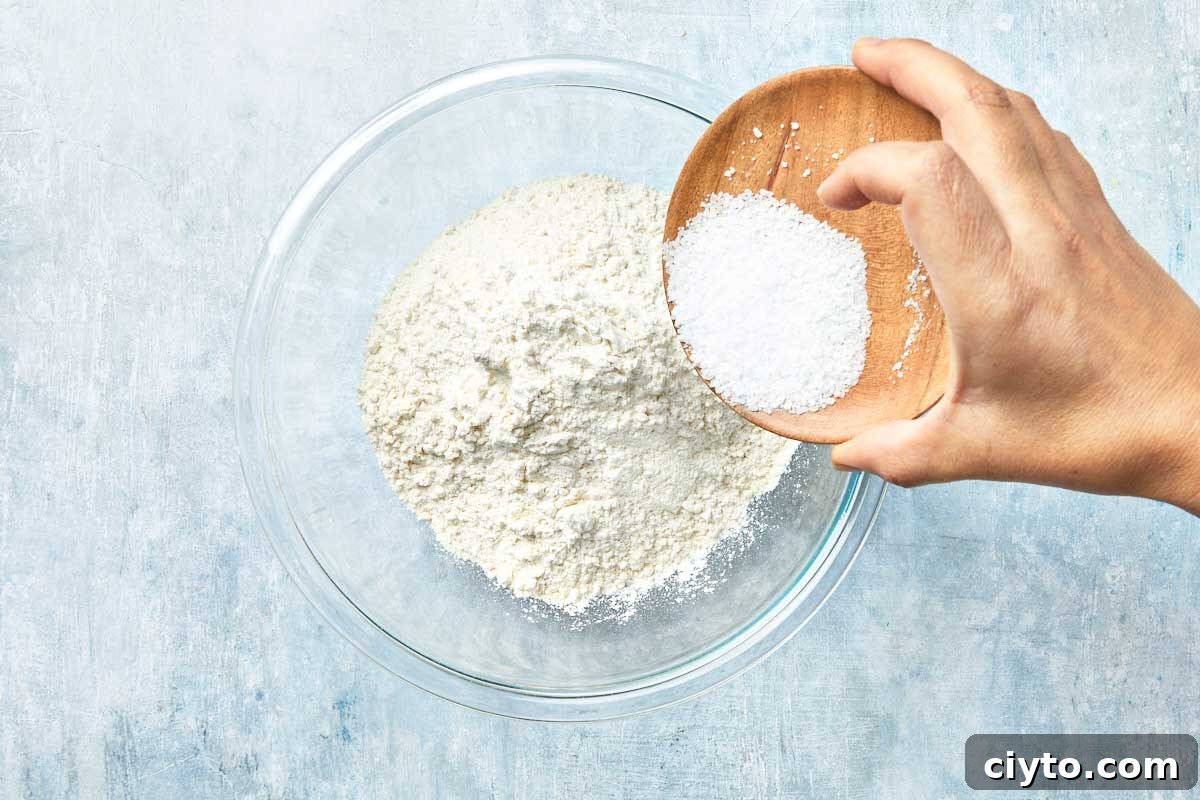
- Whisk the base: Mix flour and salt in a large bowl.
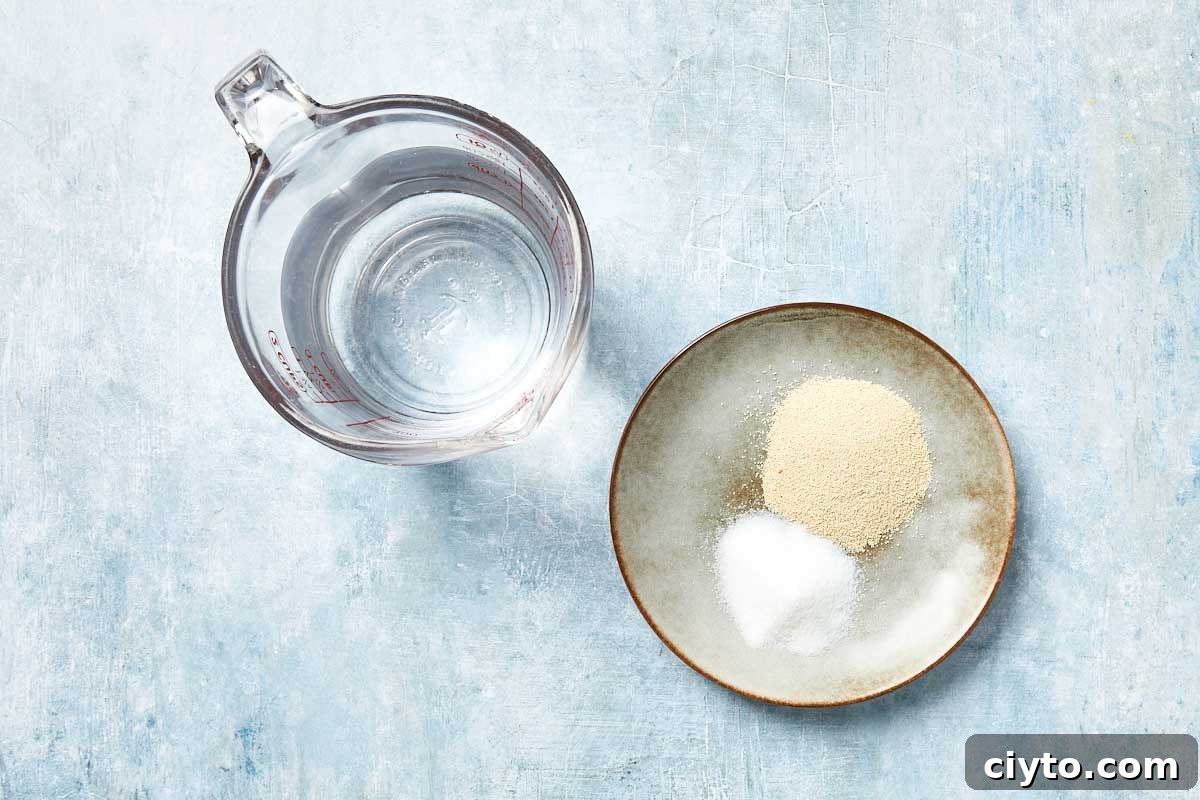
- Bloom the yeast: Stir warm water, yeast and a little sugar. Let sit about 30 minutes until foamy to confirm the yeast is active.
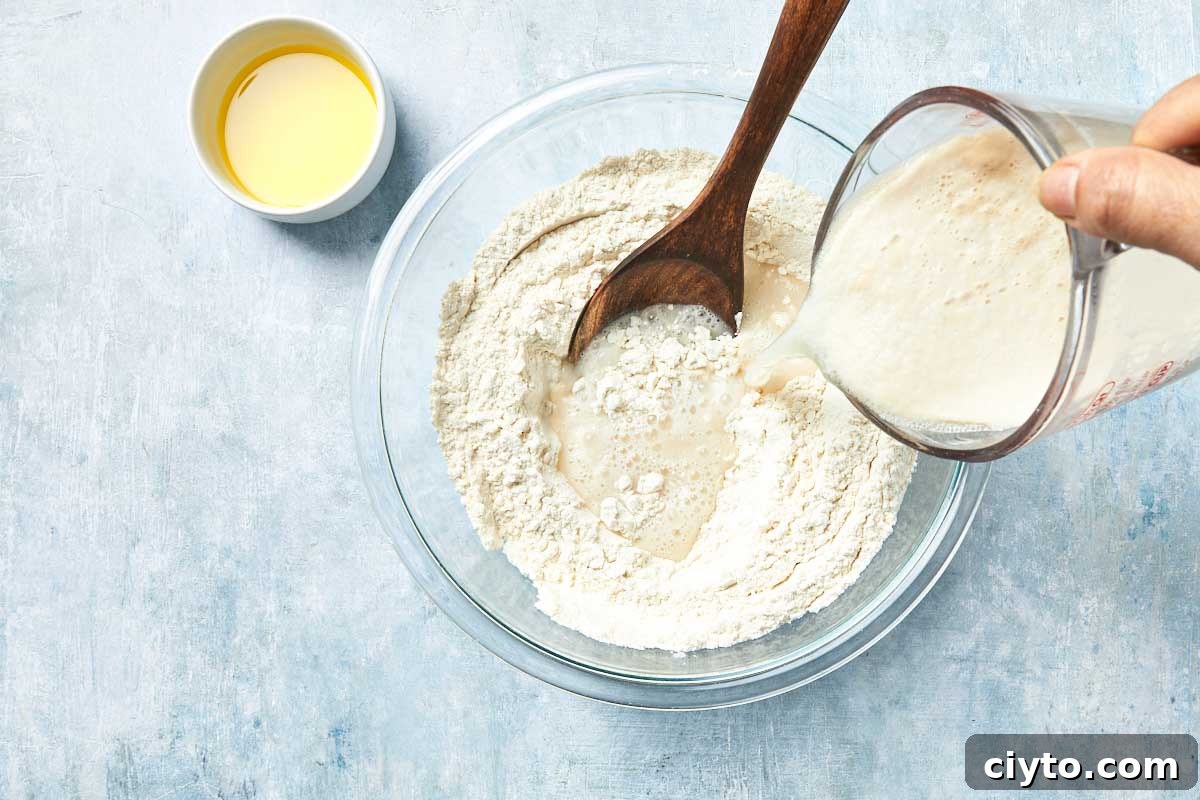
- Mix: Pour the foamy yeast into the flour and stir until a sticky, shaggy dough forms.
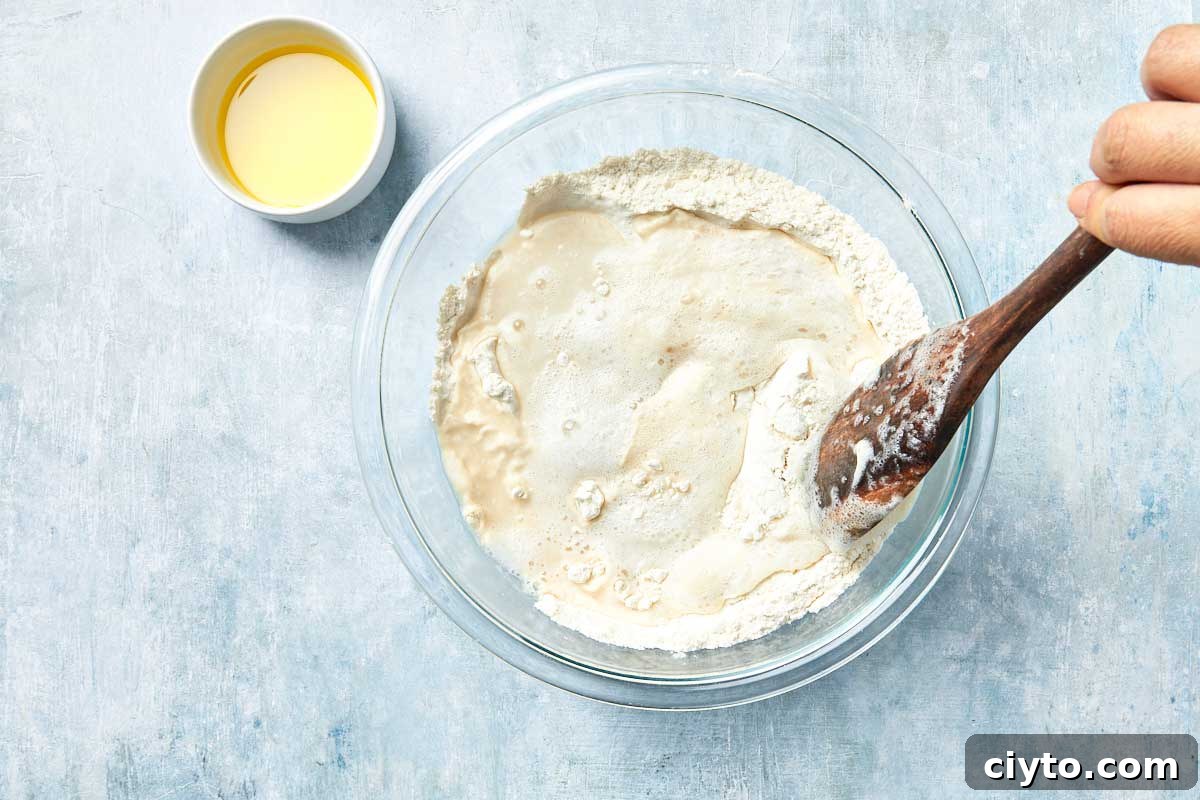
- Add oil: Drizzle in olive oil and knead gently for 1–2 minutes. The dough will be soft and sticky—this is correct.
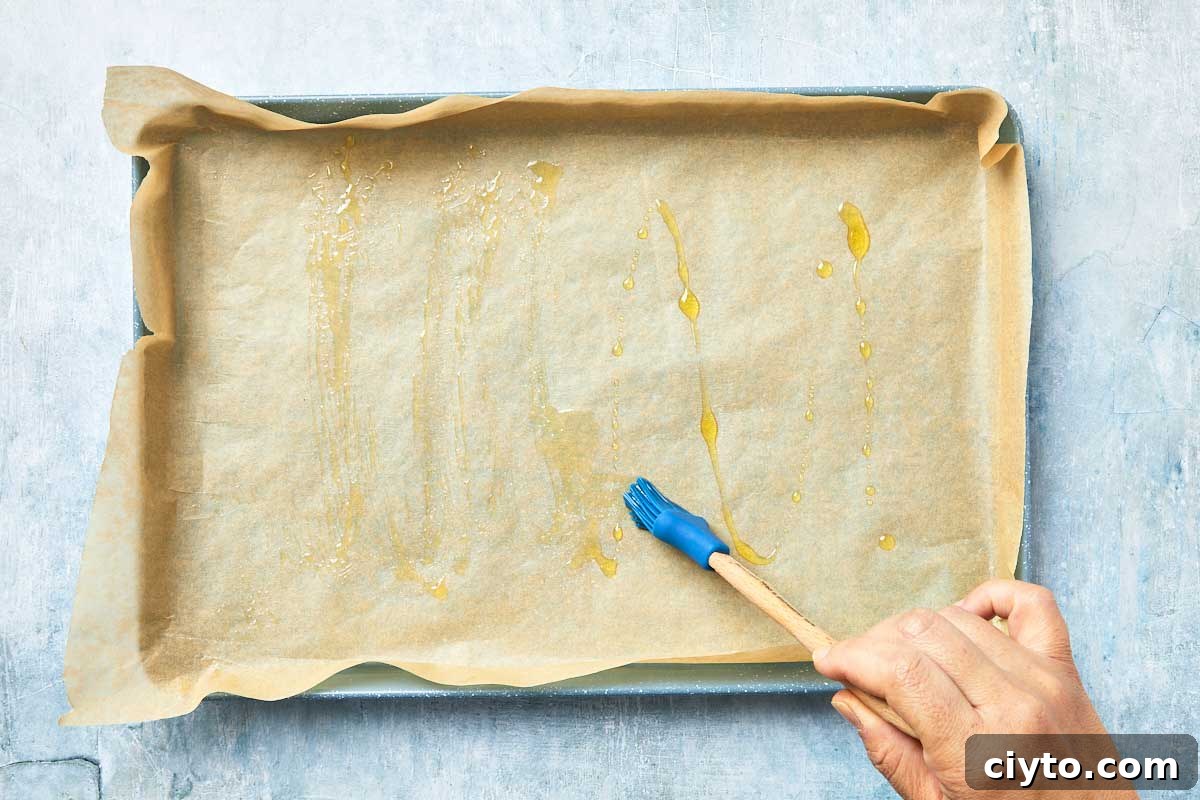
- Prep the pan: Line a 9×13-inch pan with parchment and grease with olive oil.
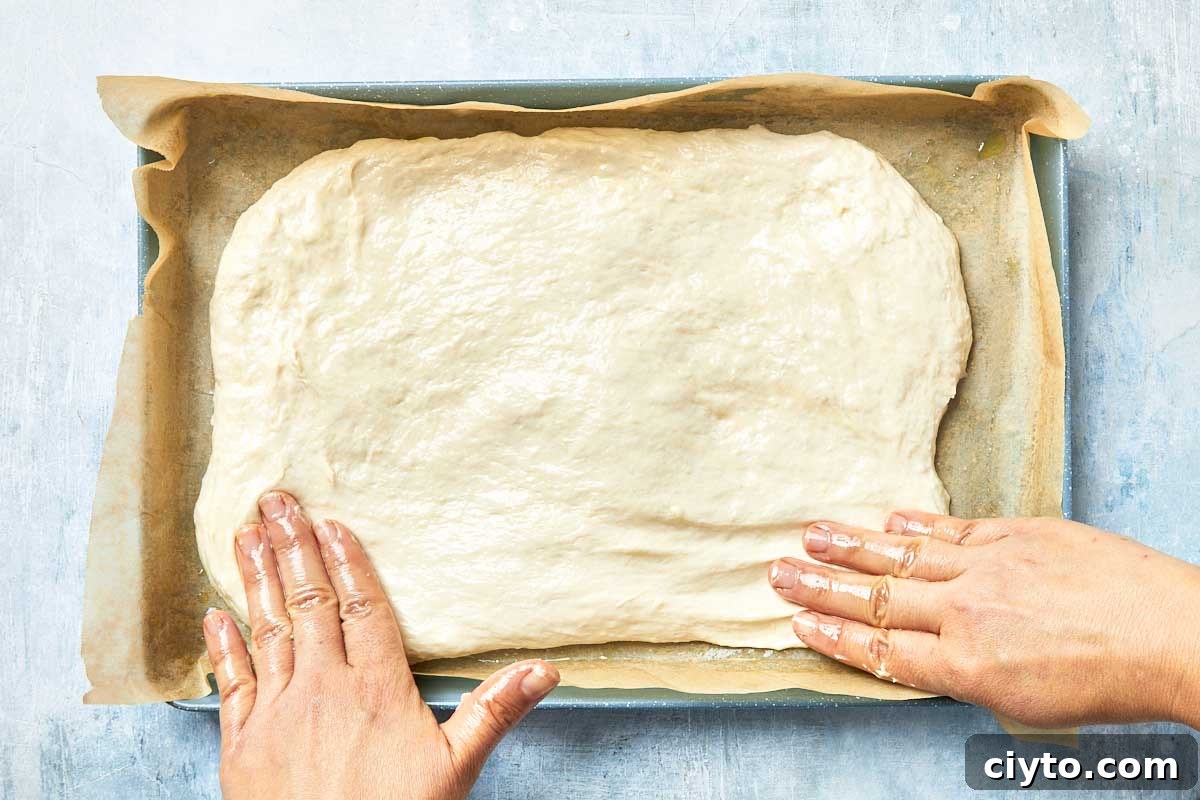
- Transfer and press: Place the dough in the pan, oil your fingers and gently press it to spread.
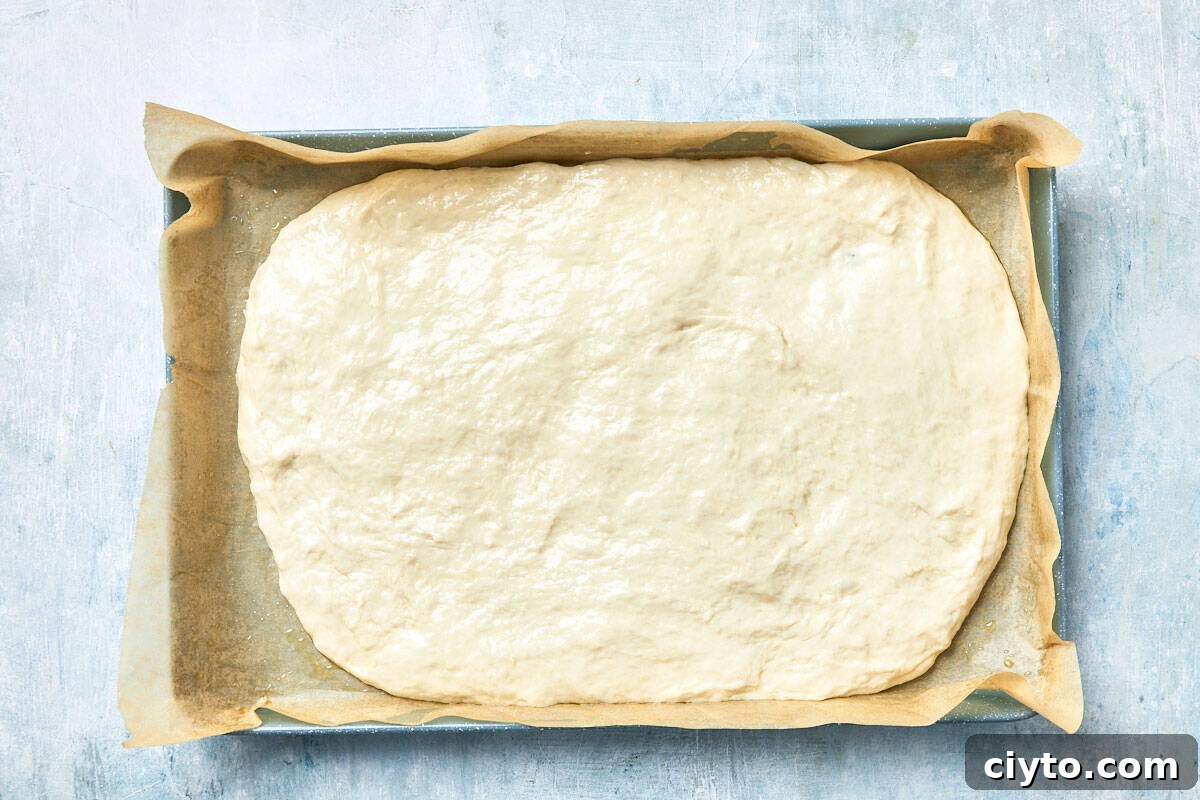
- Rest: Let the dough relax and expand in the pan.
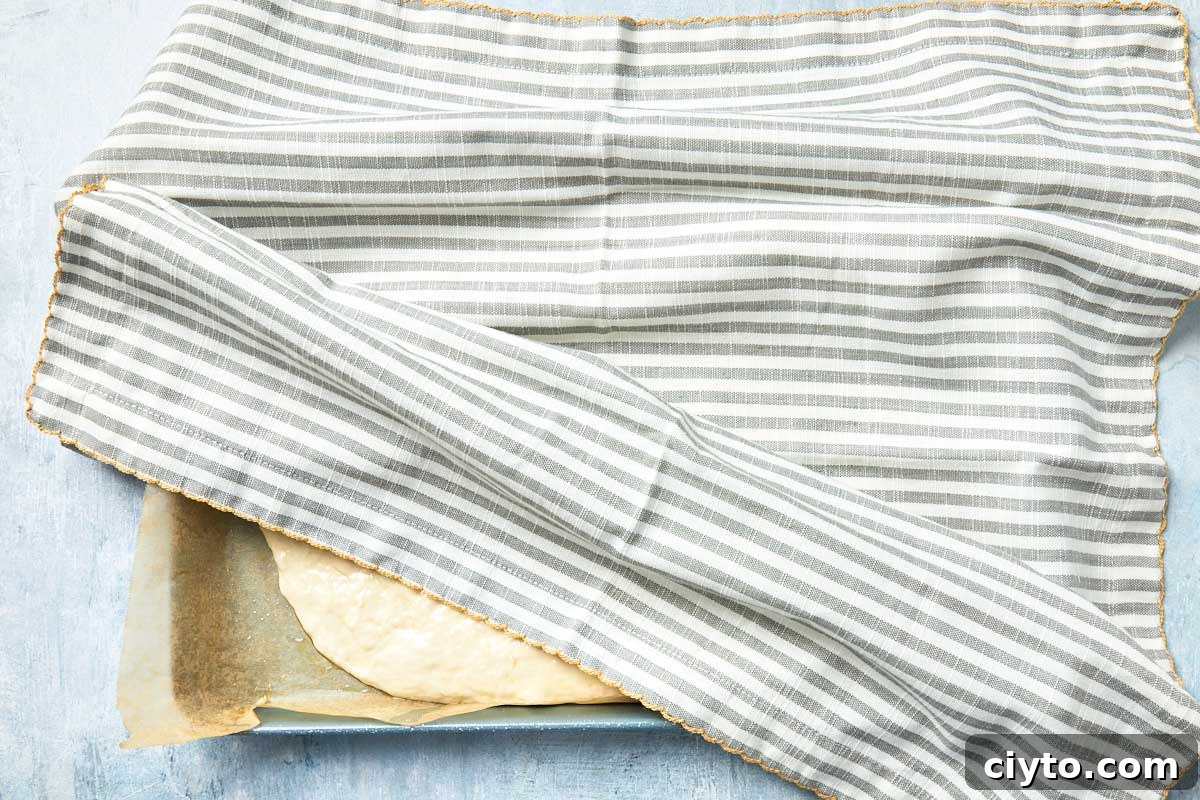
- First rise: Cover the pan and let it rest in a warm spot for about 2 hours until puffy.
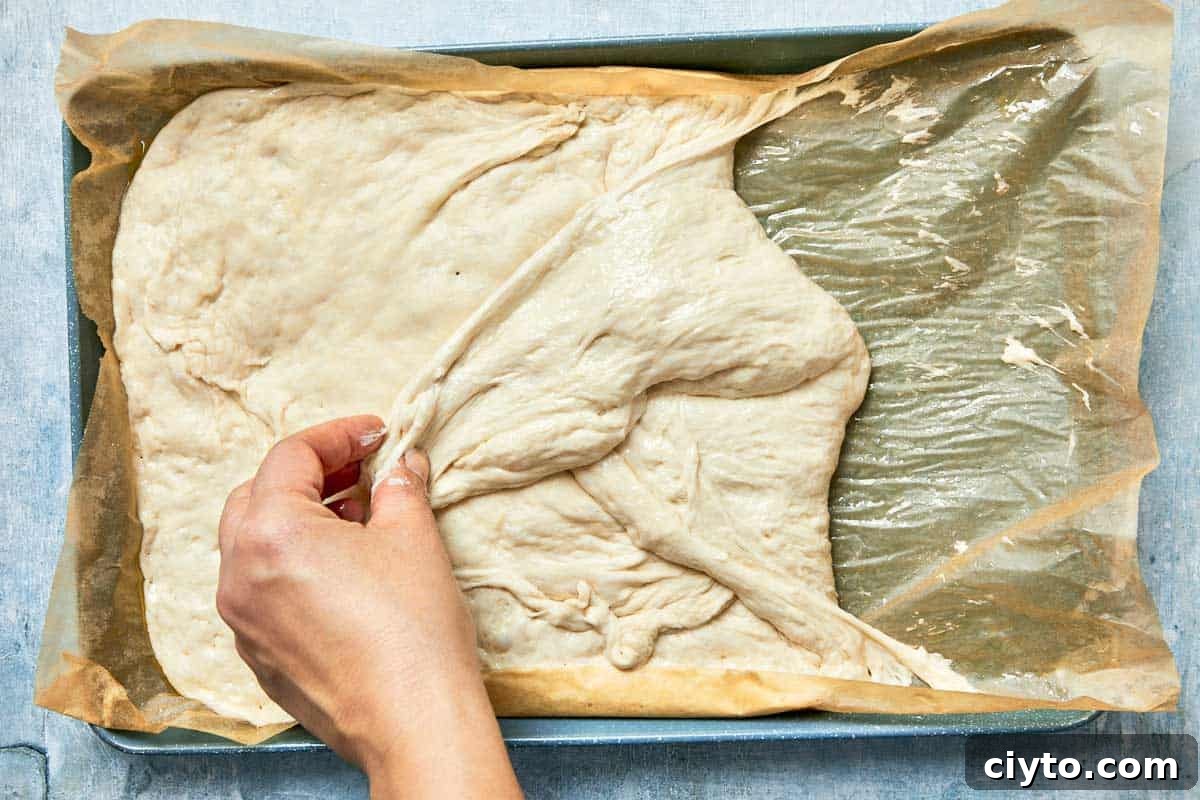
- First fold: With oiled hands, fold each side toward the center, then cover and rest another 2 hours.
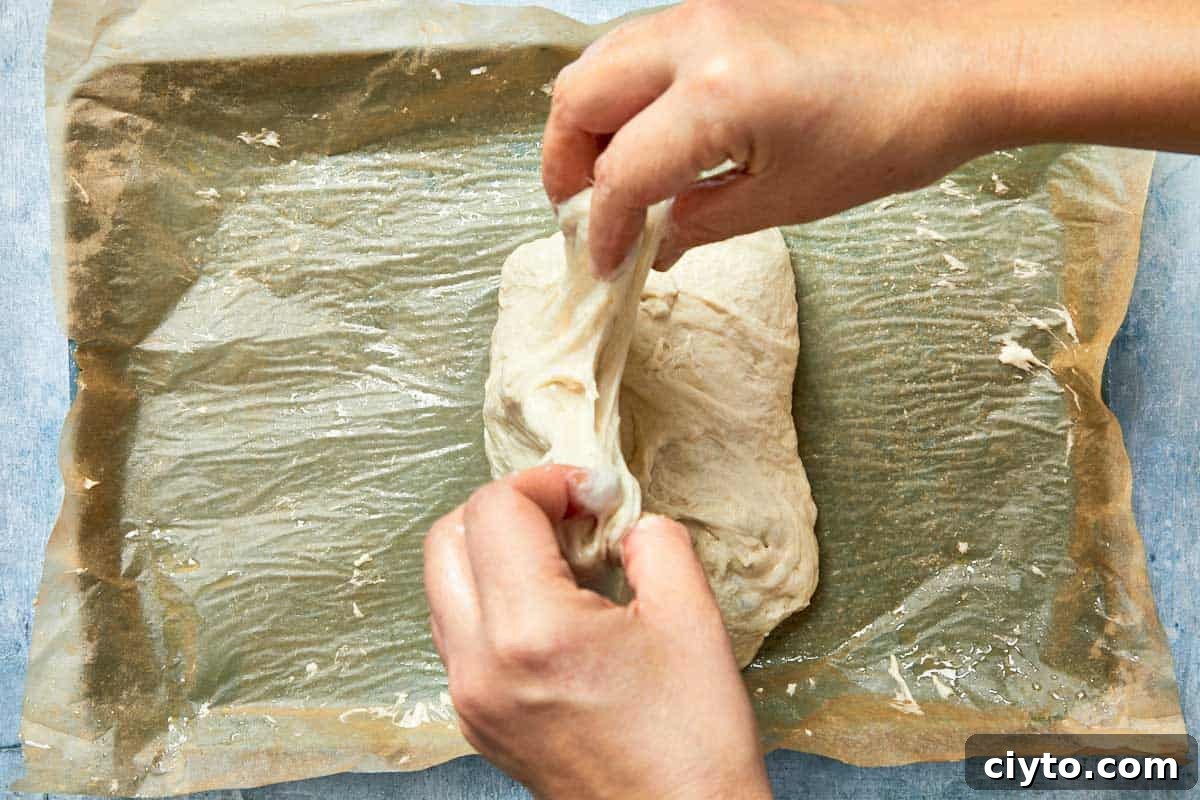
- Second fold: Repeat the folding to build structure, then let the dough rest again.
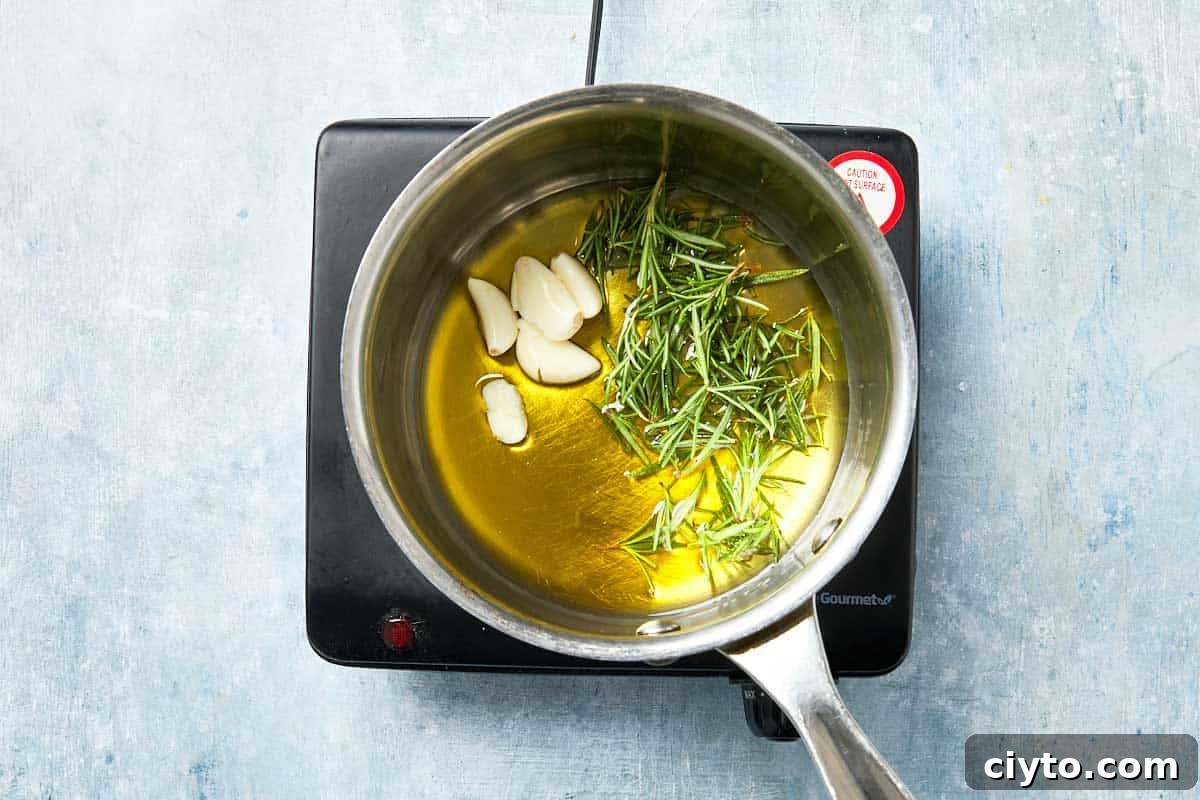
- Infuse oil: Gently warm ¼ cup olive oil with rosemary and garlic for 5–10 minutes, then cool. Avoid burning the garlic.
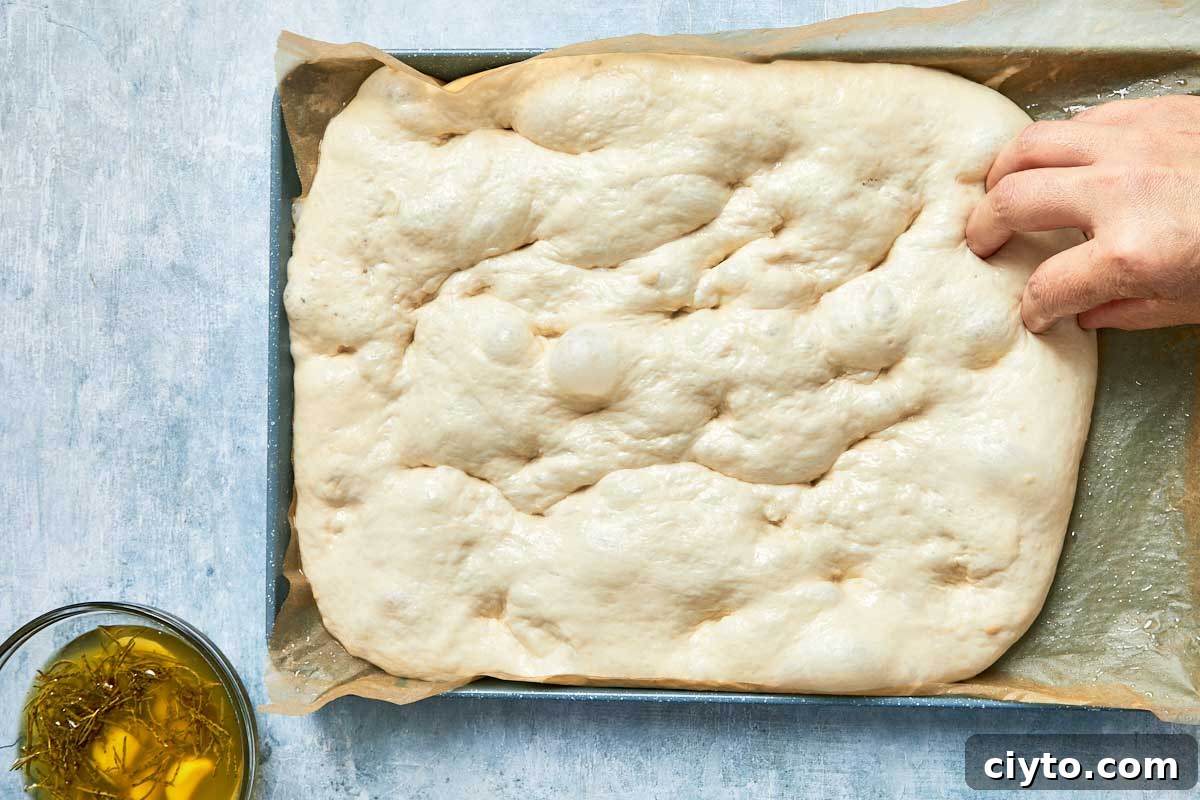
- Make dimples: Oil your fingers and press dimples across the dough’s surface to create the classic focaccia texture.
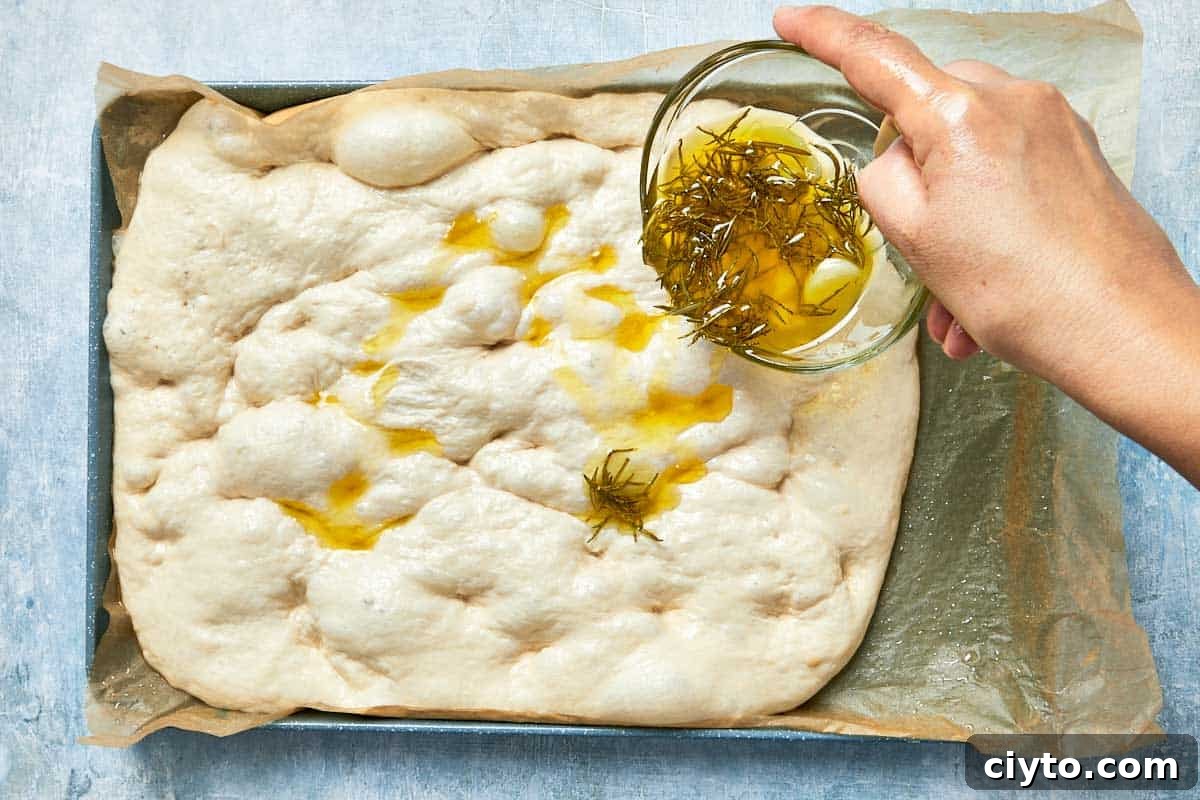
- Oil and season: Drizzle the cooled infused oil over the dough and sprinkle with coarse salt. Leave the rosemary and garlic on top if you like.
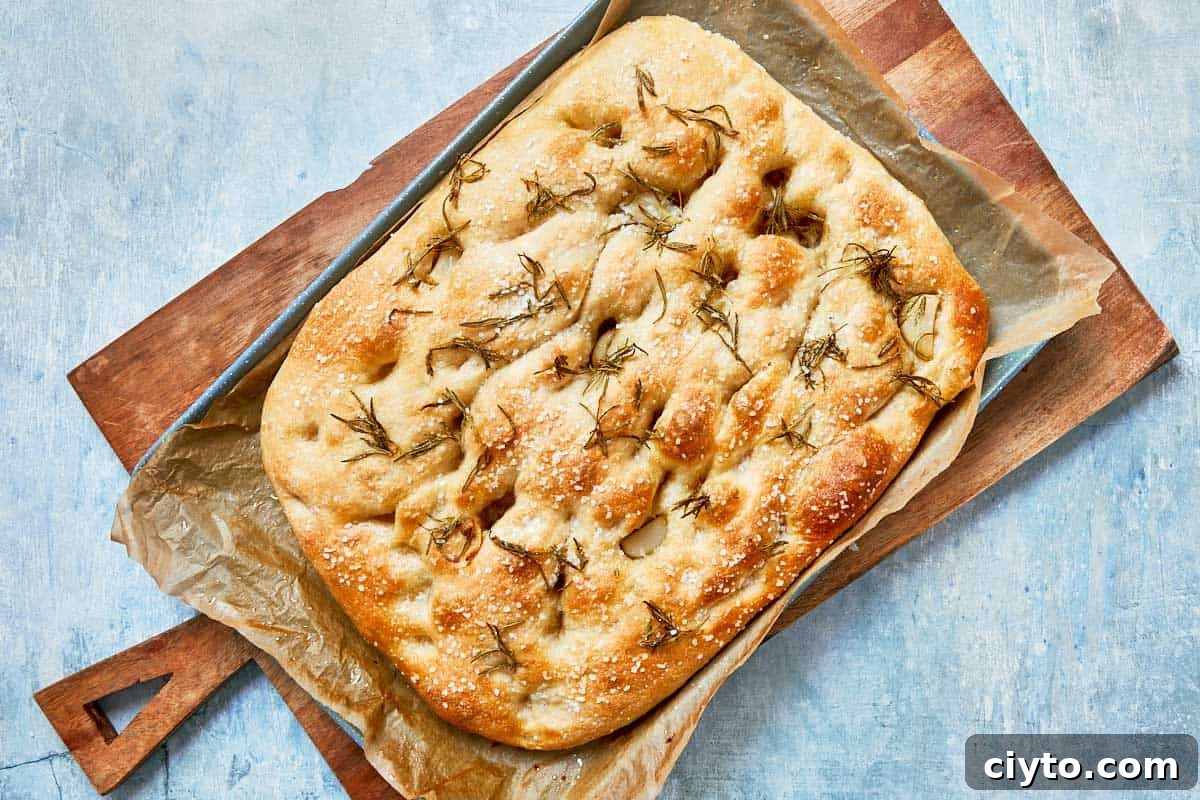
- Bake: Preheat the oven to 465°F (240°C) and bake about 20 minutes, or until golden and cooked through.
Tip: Don’t rush the rests. Long resting and gentle handling are what create an airy, bubbly texture—this recipe is all about time, not aggressive kneading.
Why Is My Focaccia Dense?
If your focaccia turned out dense or flat, a few likely causes can explain it:
- Under-hydration: The dough should be wet and slightly sticky. Adding too much flour prevents open air pockets from forming.
- Inactive yeast: Old or improperly stored yeast won’t rise. Proof your yeast if in doubt.
- Insufficient time: If the dough didn’t rise and puff during the first rest, it needs more time. Rushing yields a tighter crumb.
- Over-handling: Pressing or working the dough too hard before baking can deflate the air you worked to create. Be gentle when dimpling.
Most dense results come down to hydration, yeast activity and proofing time. Once you get those right, the texture improves dramatically.
Serving Suggestions
This focaccia shines with many pairings. Tear off a piece to dip into hummus or whipped feta, or serve it beside creamy tomato soup or roasted vegetable dishes. It’s excellent for brunch too—toast a slice and top with eggs, or serve alongside a fresh salad for a lighter meal. Leftovers can be wrapped and stored at room temperature for a day or frozen in slices; a quick toast restores crispness.
Recipe FAQs
Most likely the water was too hot or too cold, or the yeast had expired. Water should feel warm—about 105–115°F (40–45°C). If there’s no foam after 30 minutes, start again with fresh yeast.
Yes. The rests and gentle folds develop structure and create the airy, bubbly crumb that defines good focaccia. Skipping them results in a flatter, denser loaf.
Absolutely. Sticky dough yields the lightest crumb. Resist adding extra flour; the dough will become easier to handle after resting.
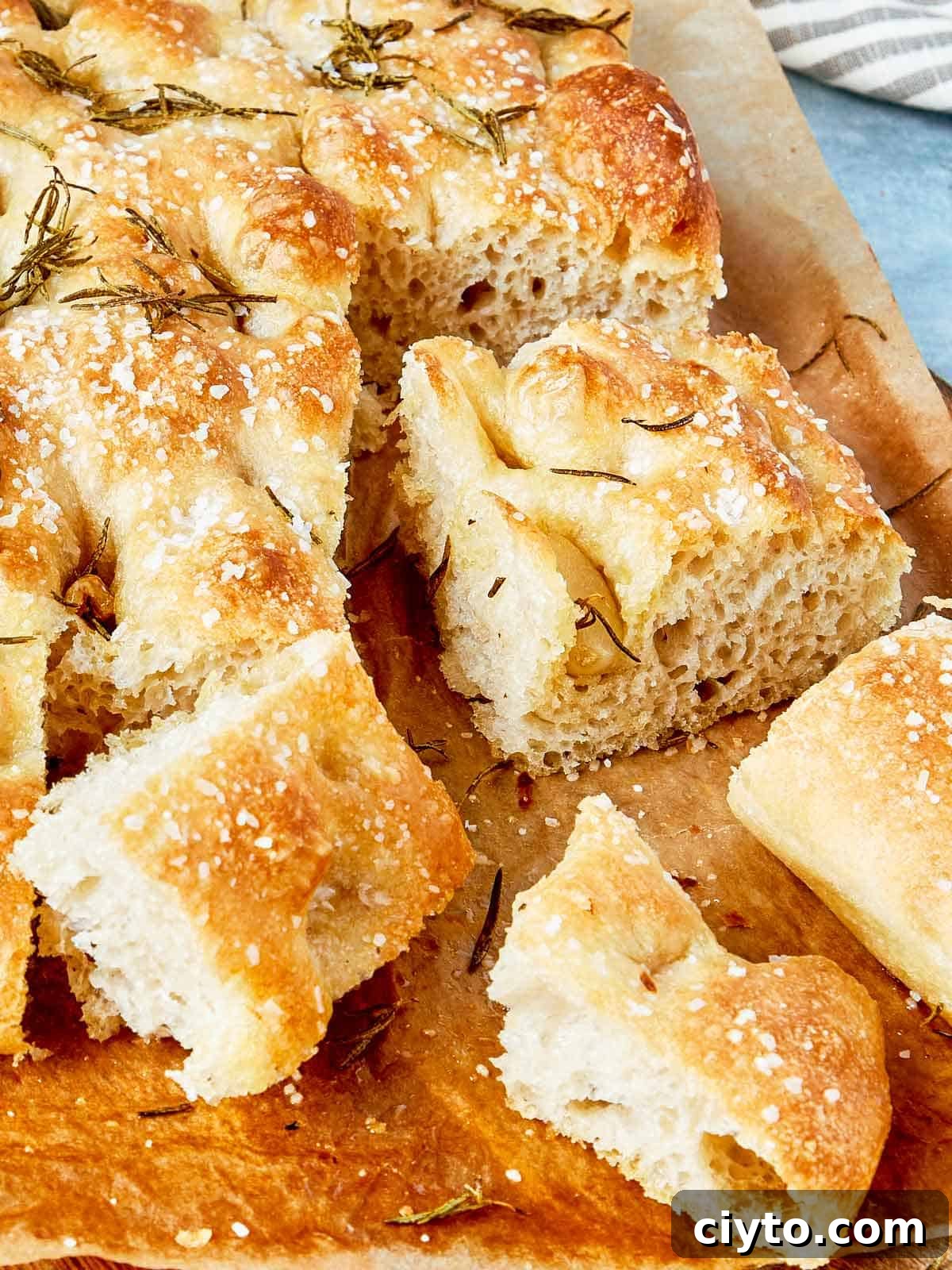

Easy Homemade Focaccia Recipe
Ingredients
- 3 ¾ cups all-purpose flour or bread flour
- 1 ½ cups warm water
- 2 ¼ tsp active dry yeast (one packet)
- ½ tsp granulated sugar
- 1½ tsp salt (for the dough)
- 2 tsp olive oil (for the dough)
- ¼ cup olive oil (for the rosemary-garlic oil)
- ⅓ cup fresh rosemary (optional)
- 4 cloves garlic, peeled and smashed or sliced
- ¾ tsp coarse salt for sprinkling on top
Instructions
- In a large bowl, whisk together the flour and salt.
- In a small bowl or measuring cup, mix the warm water, yeast and sugar. Stir gently and let sit about 30 minutes until foamy.
- Pour the foamy yeast mixture into the flour. Stir until a shaggy, sticky dough forms.
- Drizzle in 2 teaspoons olive oil and gently knead in the bowl for 1–2 minutes until incorporated.
- Line a 9×13-inch baking pan with parchment and lightly grease with olive oil. Transfer the dough to the pan and gently press it out with oiled fingers.
- Cover and let the dough rest in a warm spot for 2 hours until puffy.
- With oiled hands, fold each side toward the center. Cover and rest another 2 hours.
- Repeat the folding once more to build structure and flavor.
- Gently heat ¼ cup olive oil with rosemary and garlic over low heat for 5–10 minutes to infuse, then cool.
- Oil your fingers and press dimples across the dough’s surface.
- Drizzle the cooled infused oil over the dough and sprinkle with coarse salt. Leave herbs or garlic on top if desired.
- Preheat oven to 465°F (240°C) and bake about 20 minutes, or until golden and cooked through.
Notes
Pro tips:
- Long resting times are essential for an airy crumb—don’t rush them.
- Use warm, not hot, water for the yeast. If it’s too hot, it will kill the yeast.
- Press dimples gently with oiled fingertips to preserve air pockets.
- Take time to infuse the oil slowly; avoid burning the garlic.
- Focaccia is best fresh but stores well for a day at room temperature; freeze slices for longer storage.
If the top browns too quickly, loosely tent with foil after 15 minutes or reduce the oven to 450°F.
Nutrition
Nutrition information is an approximation.