
Lemon Poppy Seed Sourdough Scones are tender, flaky, and full of bright citrus flavor. This recipe uses sourdough discard to add moisture, a gentle tang, and a soft crumb without making the process complicated. Fresh lemon juice and lemon zest give the scones their fresh, sunny flavor, while poppy seeds add a light crunch and a subtle nutty note.
These lemon poppy seed sourdough scones are a beautiful choice for breakfast, brunch, afternoon tea, or a simple weekend bake. Once they are baked until golden and finished with a sweet lemon glaze, they taste fresh, buttery, and bakery-worthy.

Why You’ll Love Lemon Poppy Seed Sourdough Scones
- Fresh lemon flavor – Freshly squeezed lemon juice and lemon zest make these sourdough scones taste bright, fragrant, and refreshing.
- Light and flaky texture – Cold butter, chilled dough, and sourdough discard help create tender layers with crisp edges.
- A great sourdough discard recipe – If you keep sourdough discard in the refrigerator, this is a practical and delicious way to use it in a quick breakfast bake.
- Perfect for brunch – These glazed lemon poppy seed scones look beautiful on a breakfast table and pair well with coffee, tea, or a simple fruit plate.
Sourdough Discard Tip: Sourdough discard is the portion removed when maintaining a sourdough starter. Instead of throwing it away, use it in baked goods like scones, muffins, pancakes, quick breads, and cakes. Fresh discard will have a milder flavor, while older refrigerated discard will taste more tangy. For sweet recipes like these lemon poppy seed scones, young or recently fed discard is usually the best choice.
Important Ingredients
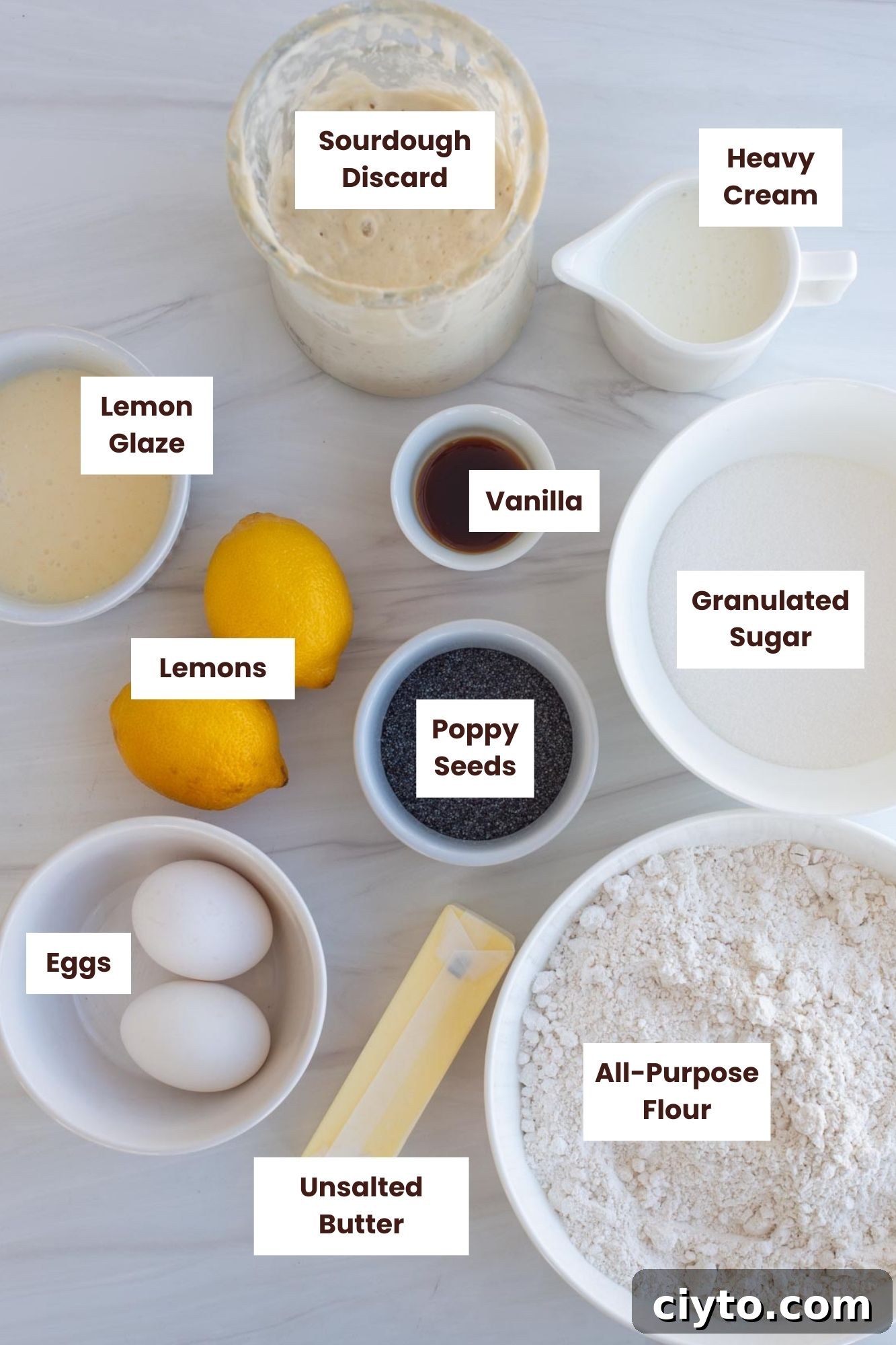
- Sourdough discard – Use 100% hydration sourdough discard. Fresh discard or active starter gives a mild flavor, while older refrigerated discard creates a stronger sourdough taste.
- Lemons – Fresh lemon juice and fresh lemon zest are essential for the best lemon flavor. Bottled lemon juice will not give the same bright result.
- Poppy seeds – Poppy seeds add gentle crunch, texture, and a delicate nutty flavor that pairs beautifully with lemon.
- Cold butter – Very cold or frozen butter is important for flaky scones. As the butter melts in the oven, it helps create layers.
- Heavy cream – Cream adds richness and helps bring the dough together without making it tough.
See the recipe card below for full ingredient amounts and detailed instructions.
Substitutions
- Heavy cream: Buttermilk may be used instead. A mixture of sour cream and milk can also work if needed.
- Unsalted butter: Salted butter can be used, but the finished scones may taste slightly saltier.
- Poppy seeds: Leave them out for plain lemon sourdough scones, or replace them with another mix-in that pairs well with lemon.
- All-purpose flour: Soft whole wheat flour can replace part or all of the all-purpose flour with good results.
How to Make Lemon Poppy Seed Scones
Mix the Scone Dough
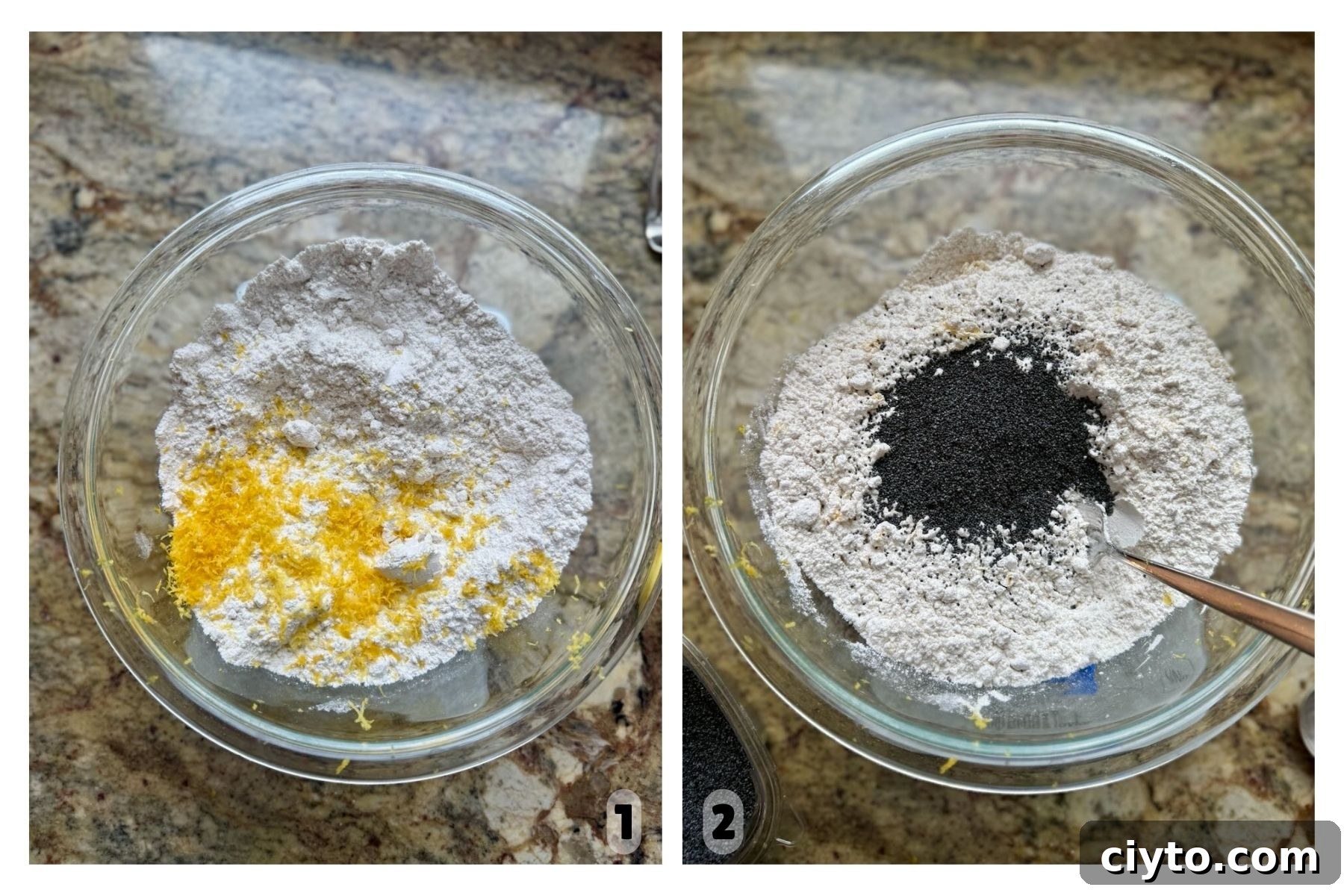
Step 1: Whisk the dry ingredients together in a medium bowl. Combine the flour, sugar, salt, and baking powder. Add the lemon zest, then stir in the poppy seeds so they are evenly distributed.
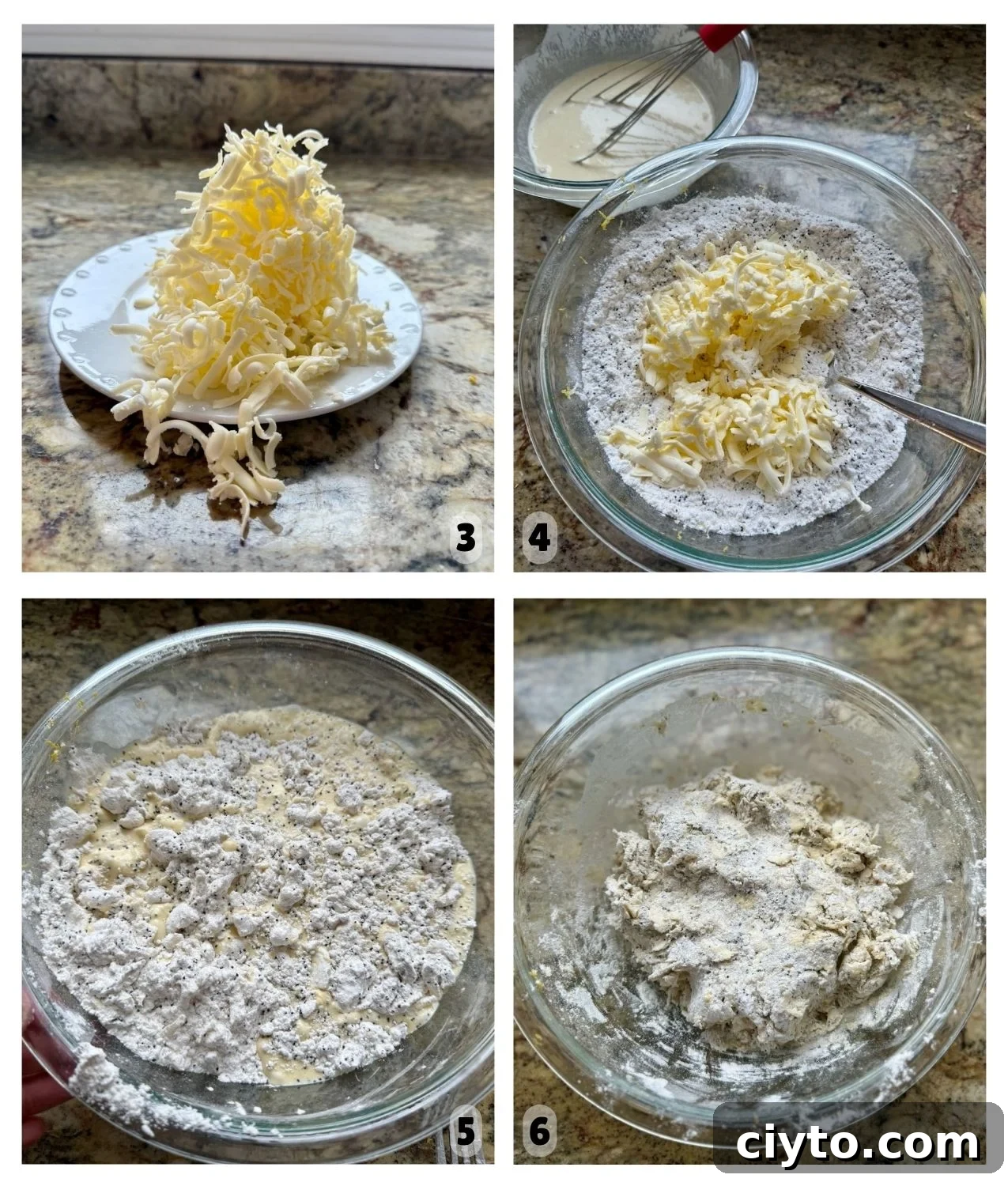
Step 2: Grate the cold or frozen butter and toss it into the flour mixture until the small pieces are coated. In a separate bowl, whisk together the sourdough discard, eggs, heavy cream, lemon juice, lemon zest, and vanilla. Pour the wet ingredients into the dry ingredients and mix gently with a fork until the dough just comes together. Avoid overmixing, as this can make the scones dense instead of tender.
Shape the Scones
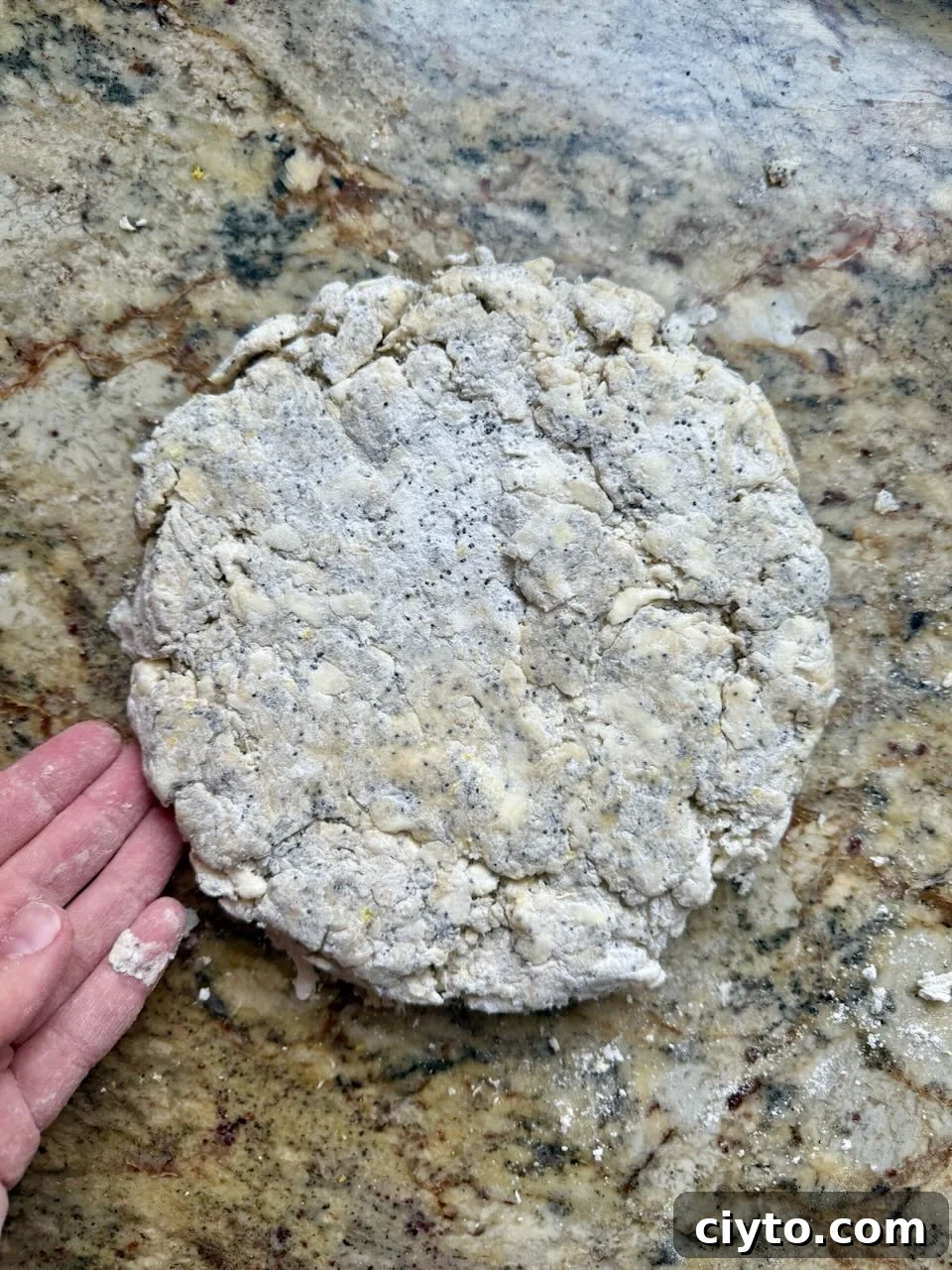
Step 3: Turn the dough out onto the counter and gently pat it into an 8-inch circle about 1 inch thick. Use a sharp knife or bench scraper to cut the dough into eight triangular scones.
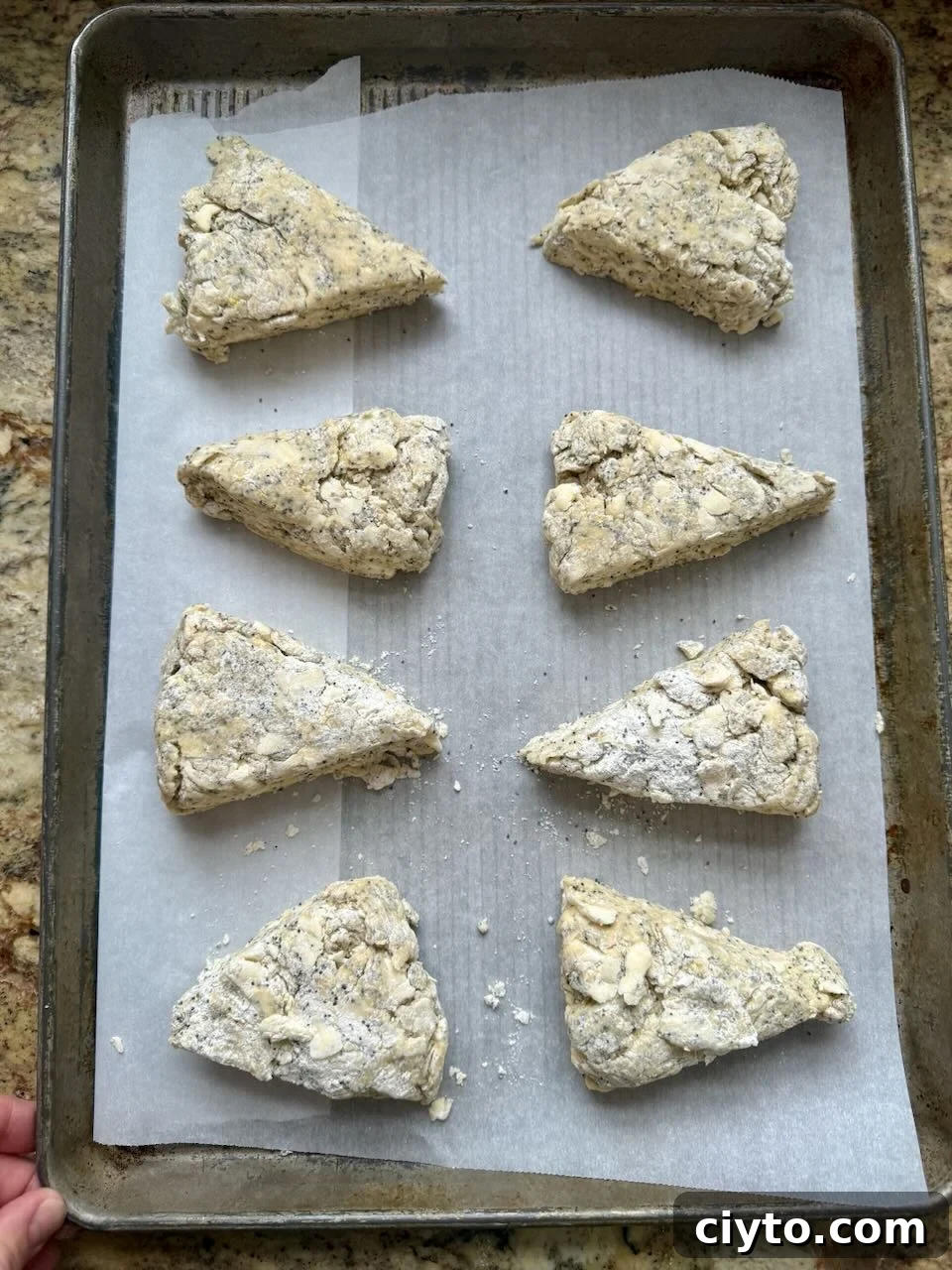
Step 4: Place the scones on a parchment-lined baking sheet, leaving space between each piece. Chill the shaped scones in the freezer for 10 minutes before baking. For a longer fermentation, refrigerate the shaped dough overnight and bake it cold the next day.
Note: This dough can be made ahead. Shape the scones and freeze them until solid, then transfer them to an airtight freezer bag. Bake directly from frozen in a preheated oven, adding a few extra minutes to the baking time.
Bake the Lemon Poppy Seed Scones

Step 5: Bake the lemon poppy seed sourdough scones at 425ºF for about 15 minutes, or until the edges are crisp and the centers are fully baked.

Step 6: Whisk together powdered sugar, fresh lemon juice, vanilla extract, and a pinch of salt to make a smooth lemon glaze. Drizzle the glaze over the warm scones and serve.
How to Store Leftovers
Baked sourdough scones are best the day they are made, especially while the edges are still crisp and the glaze is fresh. Store leftovers in an airtight container at room temperature for up to 24 hours. After that, freeze the scones to preserve their texture and flavor. To serve, thaw and warm them briefly in the microwave or oven.
Recipe Tip
For the flakiest lemon poppy seed sourdough scones, keep every ingredient as cold as possible. Cold butter, chilled discard, and a short freezer rest before baking all help the scones rise well and develop a tender, layered texture.
Frequently Asked Questions
Sourdough discard adds moisture, flavor, and tenderness to scones. When used cold, it also helps keep the dough chilled, which supports a flaky texture. It is also a simple way to use discard instead of wasting it.
Yes. Mix and shape the dough, then refrigerate the scones for 48 to 72 hours. Bake them straight from the refrigerator. Long fermentation gives the sourdough discard more time to work in the dough and can create a deeper flavor.
Yes. Shape the dough into scones and freeze them overnight or for up to a month. Bake from frozen, adding a few extra minutes to the bake time as needed.

Favorite Sourdough Scone Recipes

Lemon Blueberry Sourdough Scones

Cranberry Orange Sourdough Scones

Chocolate Chip Sourdough Scones

Sourdough Discard Scones
If you try these Lemon Poppy Seed Sourdough Scones, leave a star rating and share how they turned out in the comments. Happy baking!

Lemon Poppy Seed Sourdough Scones
Equipment
-
Mixing bowl
-
Baking sheet
-
Parchment paper
Ingredients
Lemon Poppy Seed Sourdough Scones
- 380 grams all-purpose flour, scant 3 cups
- 90 grams granulated sugar, about ½ cup
- 4 grams salt, about ¾ teaspoon
- 15 grams baking powder, about 1 tablespoon
- 113 grams unsalted butter, cold or frozen, about 8 tablespoons
- 30 grams poppy seeds, about 3 tablespoons
- 100 grams sourdough discard, scant ½ cup
- 2 large eggs, about 100 grams
- 30 grams heavy cream, about 2 tablespoons
- 30 grams freshly squeezed lemon juice, about 2 tablespoons
- 10 grams lemon zest, from about 2 medium lemons
- 4 grams vanilla extract, about 1 teaspoon
Lemon Glaze
- 100 grams powdered sugar, about ¾ cup plus 1 tablespoon
- 20 grams freshly squeezed lemon juice, about 1½ tablespoons
- 5 grams vanilla extract or vanilla bean paste, about 1 teaspoon
- Pinch of salt
Instructions
- In a medium bowl, whisk together the flour, sugar, salt, and baking powder. Grate the cold butter into the flour mixture and toss until the butter pieces are coated. Stir in the poppy seeds.
- In a separate bowl, whisk the sourdough discard and eggs until smooth. Add the heavy cream, lemon juice, lemon zest, and vanilla extract, then stir until combined.
- Pour the wet ingredients into the flour mixture. Mix gently with a fork or spoon until the dough is moistened and begins to hold together. Add a teaspoon or two of extra cream if the mixture is too dry, or a little flour if it feels too wet.
- Turn the dough onto the counter and pat it into an 8-inch circle about 1 inch thick. Cut into 8 triangles.
- Line a baking sheet with parchment paper and arrange the scones so they are not touching. Preheat the oven to 425ºF. Chill the scones in the freezer for 10 minutes, then bake for about 15 minutes, until the edges are crisp and the centers are baked through.
- While the scones bake, whisk together the powdered sugar, lemon juice, vanilla, and salt. Drizzle the glaze over the warm scones and serve.
Notes
Nutrition
Nutrition information is automatically calculated and should be used as an approximation.