A few weeks ago I began this three-part essential food pantry series. This final installment covers animal proteins and produce, and how to store and handle them safely. If you read the earlier posts, you may have tried Maldon salt and Tellicherry pepper from part one and a good chunk of Parmigiano-Reggiano from part two. Together, these three posts give you a compact pantry plan that makes it easy to cook a satisfying meal at home without an extra trip to the grocery store.
Keeping a stocked pantry saves money—buy pantry items when they’re on sale—and saves time when you want to put dinner on the table quickly. I recommend keeping your pantry list on your phone so you can shop opportunistically when you’re already at the store.
Join 500+ cozy folks for weekly recipes, crafts & good vibes – from my home to yours.
When you sign up, I’ll send you the Cozy Weekend Starter Pack, a free PDF with three recipes, three crafts, and cozy weekend ideas.

🦐 Animal protein
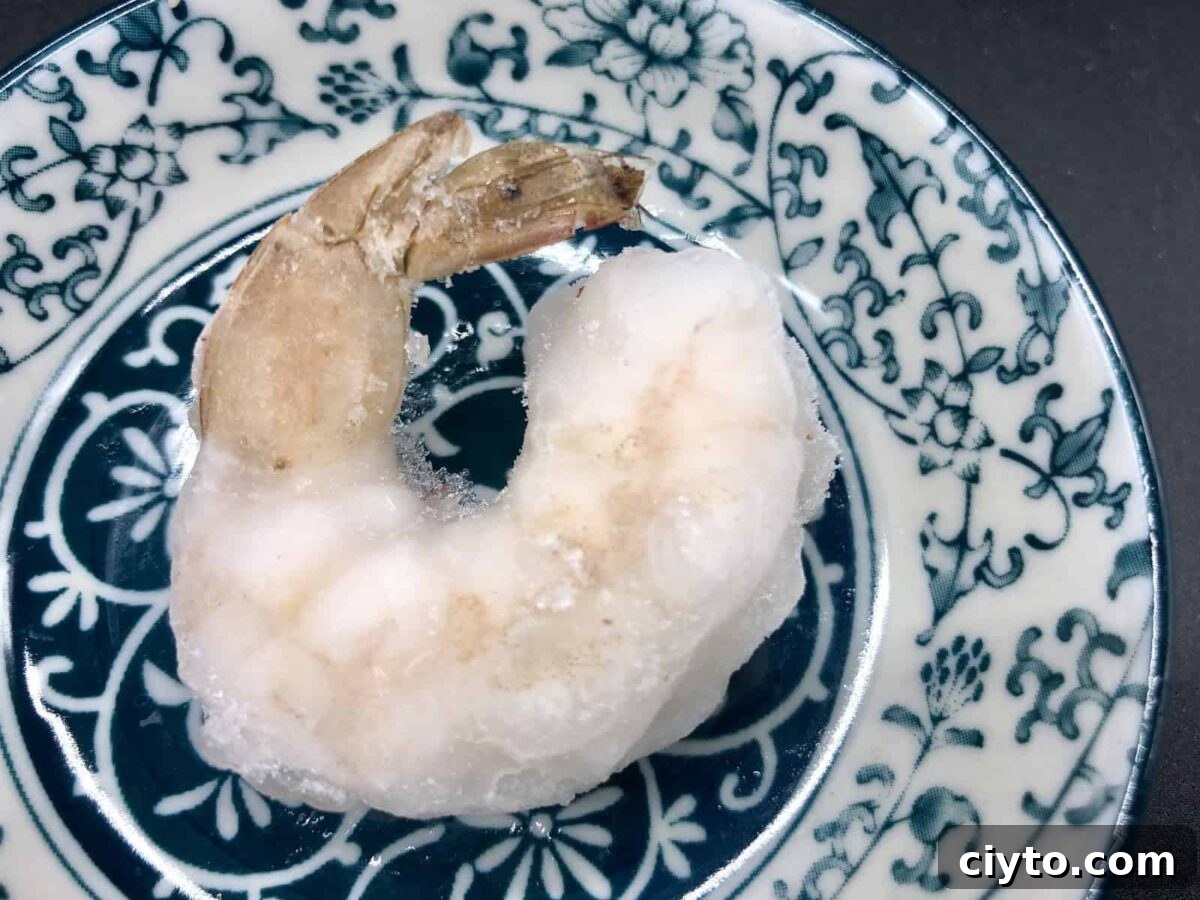
Frozen animal proteins are among the most useful pantry items because they extend your options and make weeknight meals effortless. One of my favorites to keep on hand is a bag of raw, peeled, deveined shrimp. Most “fresh” shrimp at a fish counter were previously frozen and should be used within two days, so a frozen bag gives you much more control. Properly stored, frozen shrimp will keep for months—many brands recommend up to ten months—so you can rely on them whenever you need a quick protein boost.
When using frozen shrimp, remove only the number you need, reseal the bag, and return the remainder to the freezer. To defrost quickly and safely, place the shrimp in a bowl and cover with cold water. Change the water after about 10 minutes; another 10 minutes and they’ll usually be ready to pat dry and cook. Look for “IQF” (individually quick frozen) on the package—IQF shrimp thaw more evenly and retain better texture than shrimp that were frozen in a block. Check the ingredient list too; it should list only shrimp without added salts or preservatives.
Chicken parts—especially thighs—are another freezer staple. They’re forgiving in many recipes and versatile across cuisines. Chicken requires careful handling: do not thaw on the counter and do not rinse under running water, since that can spread bacteria. Safe thawing options include the cold-water bag method, refrigerator thawing, microwave defrosting (followed by immediate cooking), or cooking from frozen with a longer cooking time.
- Cold-water thawing: keep chicken sealed in an airtight bag and submerge in cold water; change water every 30 minutes until thawed (thighs often take about an hour).
- Refrigerator thawing: move frozen parts to the fridge overnight to thaw slowly and safely.
- Microwave defrost: use the defrost setting and cook immediately after thawing.
- Cook from frozen: USDA guidance allows cooking without thawing if you extend cook time (generally increase by roughly 50%); follow recipe or package instructions.
If you prefer pork, beef, or other red meats, the same basic storage and thawing principles apply. Also keep a supply of fully cooked sausage in the freezer—Polish kielbasa, pre-cooked links, or smoked sausages are convenient to slice and toss into pastas, stir-fries, breakfasts, or soups.

🌽 Produce
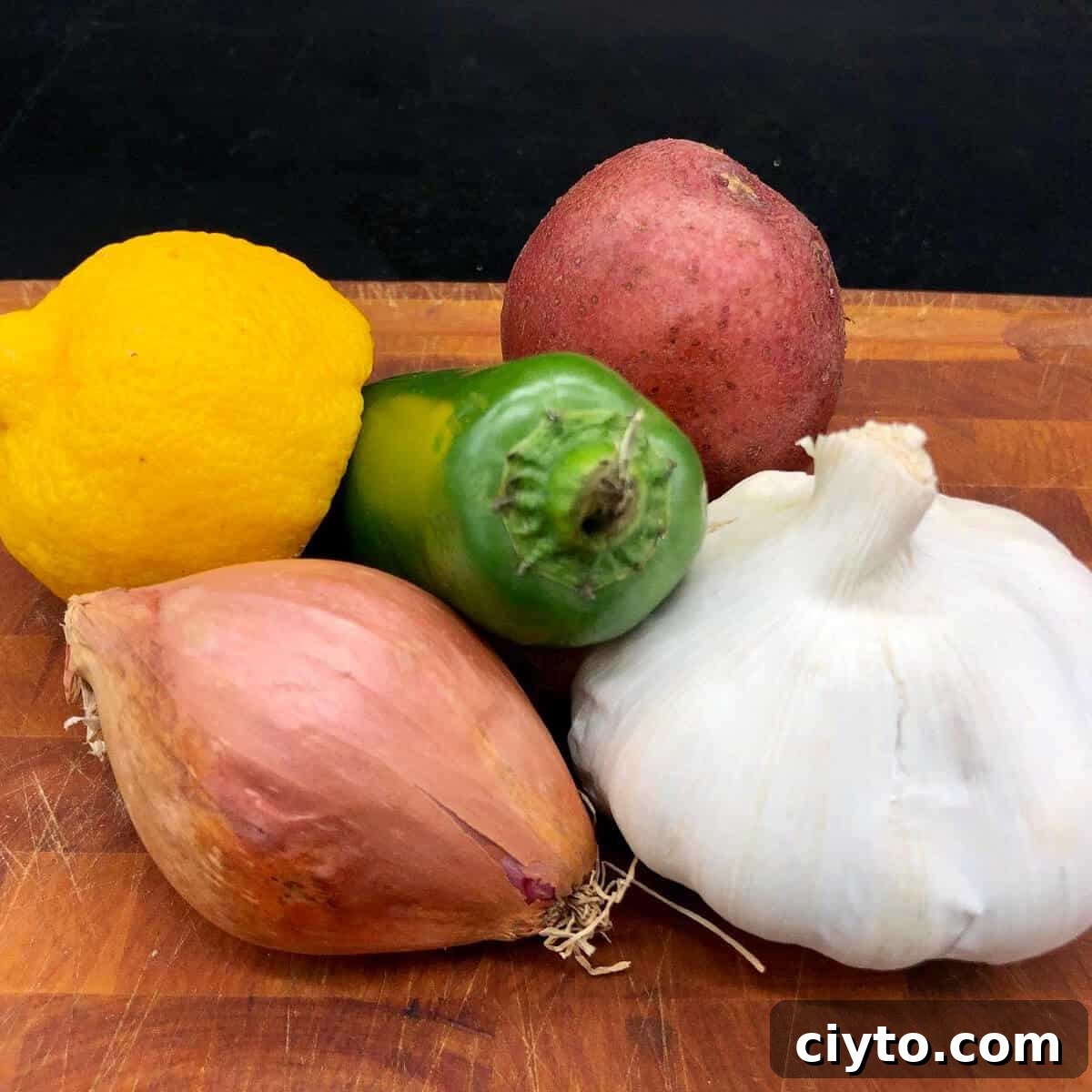
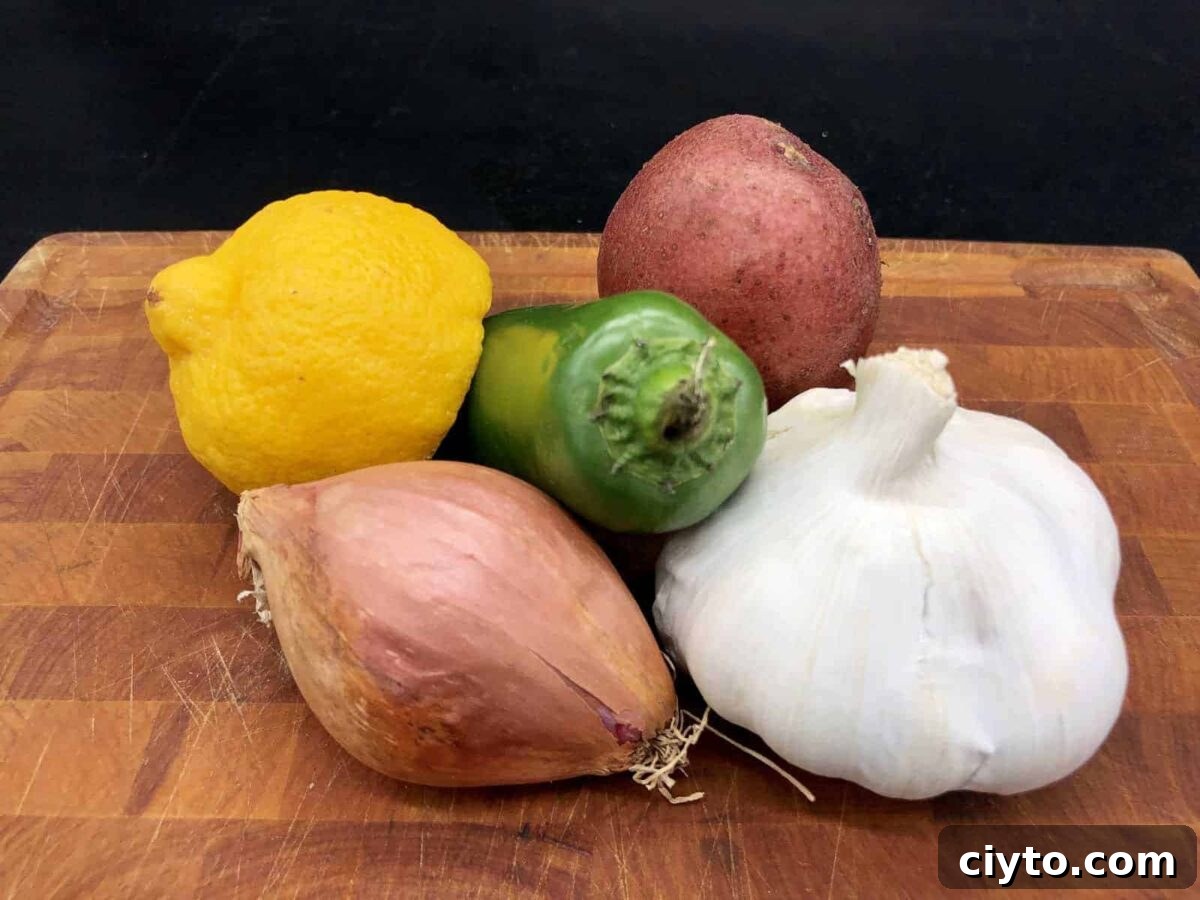
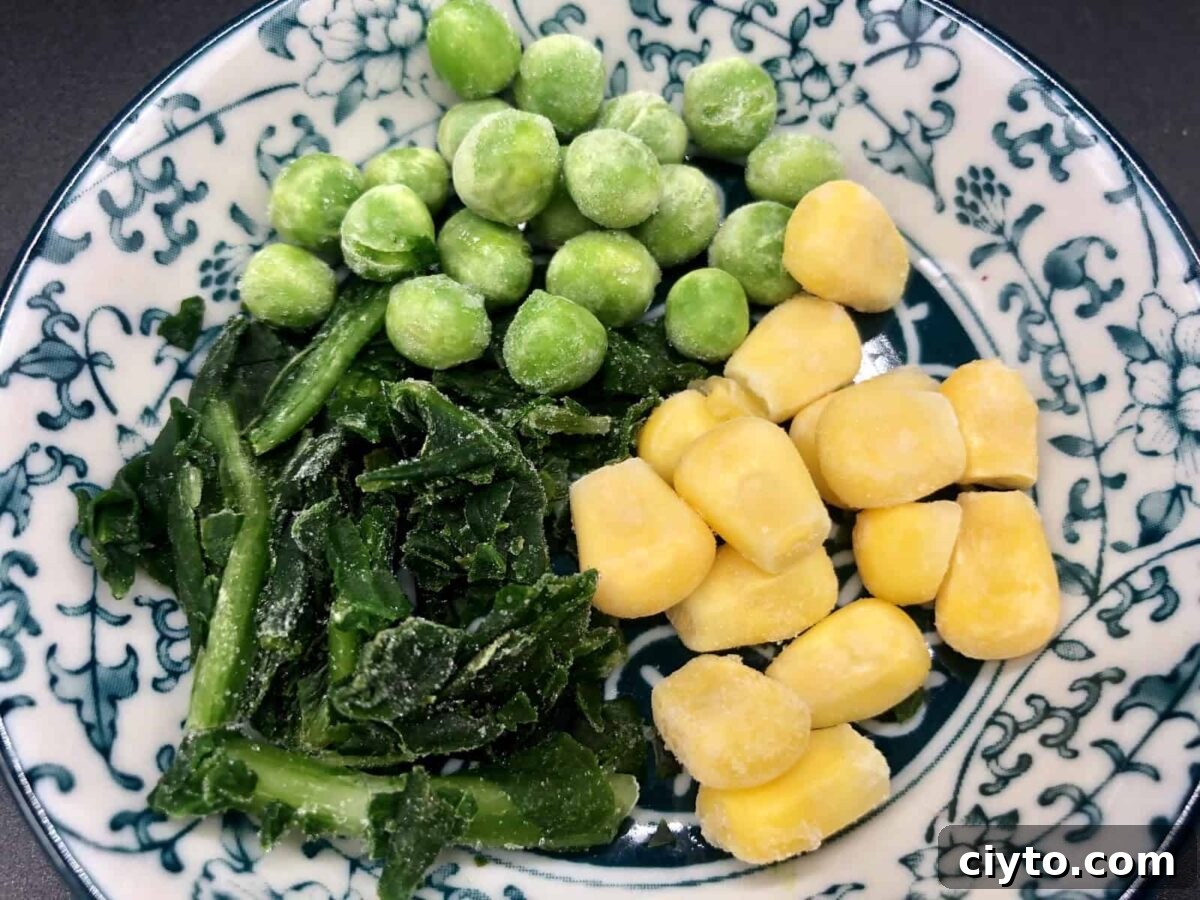
I keep a small rotation of produce that stores well and appears in a lot of quick meals: garlic, shallots, and a jalapeño on the counter; a lemon or lime in the fridge; and a bag of all-purpose potatoes in a cool, dark place. In the freezer I keep leafy spinach, corn, and peas for easy add-ins. These ingredients combine with pantry staples to make quick sautés, pastas, omelets, and simple soups.
Choose produce that matches how you cook. If you reach for Asian flavors often, keep green onions and ginger. If you like Mexican-inspired food, add limes and cilantro. Frozen vegetables are a great fallback when fresh produce isn’t available, and they reduce waste because you only use what you need.
Keep a simple system to rotate stock: label bags with dates, move older items forward, and use the “first in, first out” rule so nothing sits forgotten. Track pantry needs on your phone so you can buy staples when they’re on sale and avoid last-minute takeout.
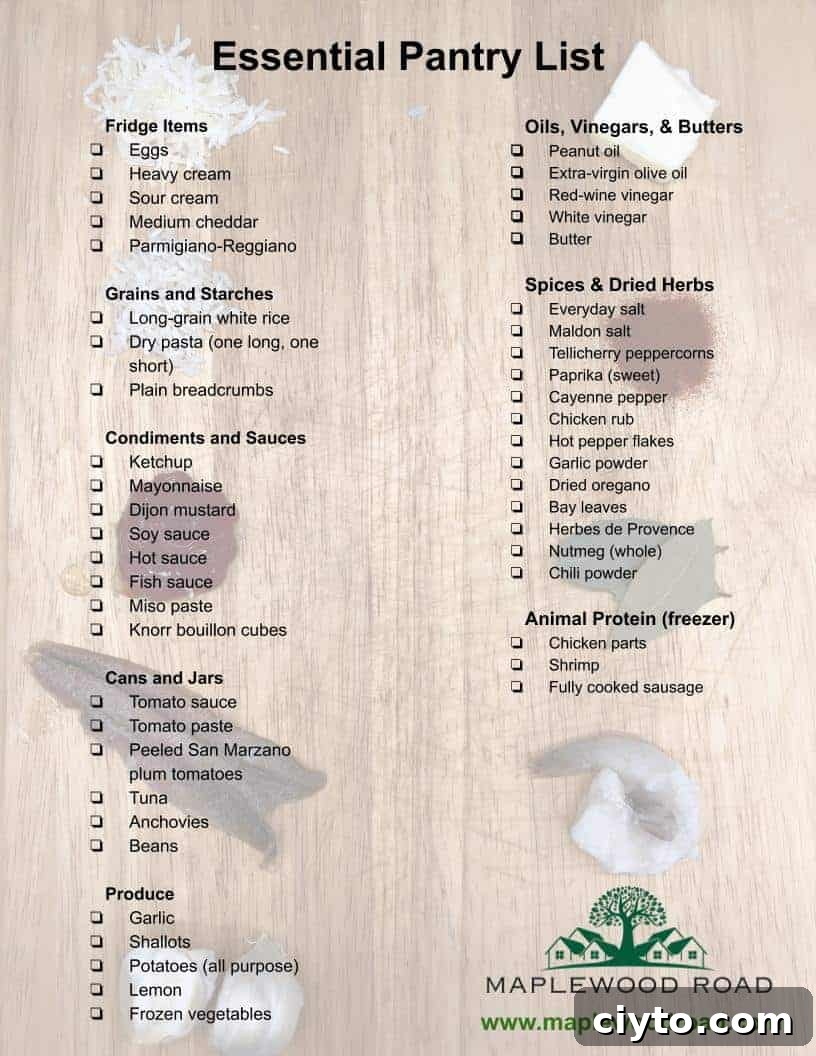
Animal Protein (Freezer)
- Chicken parts
- Shrimp
- Fully cooked sausage
Produce
- Garlic
- Shallots
- All-purpose potatoes
- Lemon or lime
- Frozen vegetables (spinach, corn, peas)
Print or save this essential pantry list and use it as a starting point to build your own. Stocking these items will let you improvise meals from what’s on hand, reduce waste, and make weekday cooking far less stressful.
Essential food pantry (printable PDF)
What else do you keep in your pantry? Share your favorites in the comments below—if you share a full list, I’ll try to suggest a simple recipe using only items from it. Consider it a pantry challenge!