 Spring is one of my favorite seasons, largely because it’s time to plant our patio garden. We’ve tended pots on our patio for over a decade, and watching tiny nursery seedlings grow into productive greens and fragrant herbs never gets old. There’s nothing like stepping outside to snip lettuce for a salad, grab Swiss chard for a quick quesadilla, or pick fresh herbs for a dressing or sauce. Growing your own food is incredibly rewarding, and the flavor is unmatched.
Over the years I’ve shared snapshots of our planting and harvest on social media, and many readers have asked for a practical, consolidated guide. Below I’m sharing what we’ve learned about starting and maintaining a patio garden—tips that apply to container gardening in small spaces as well as to anyone planning a larger setup.
 Background
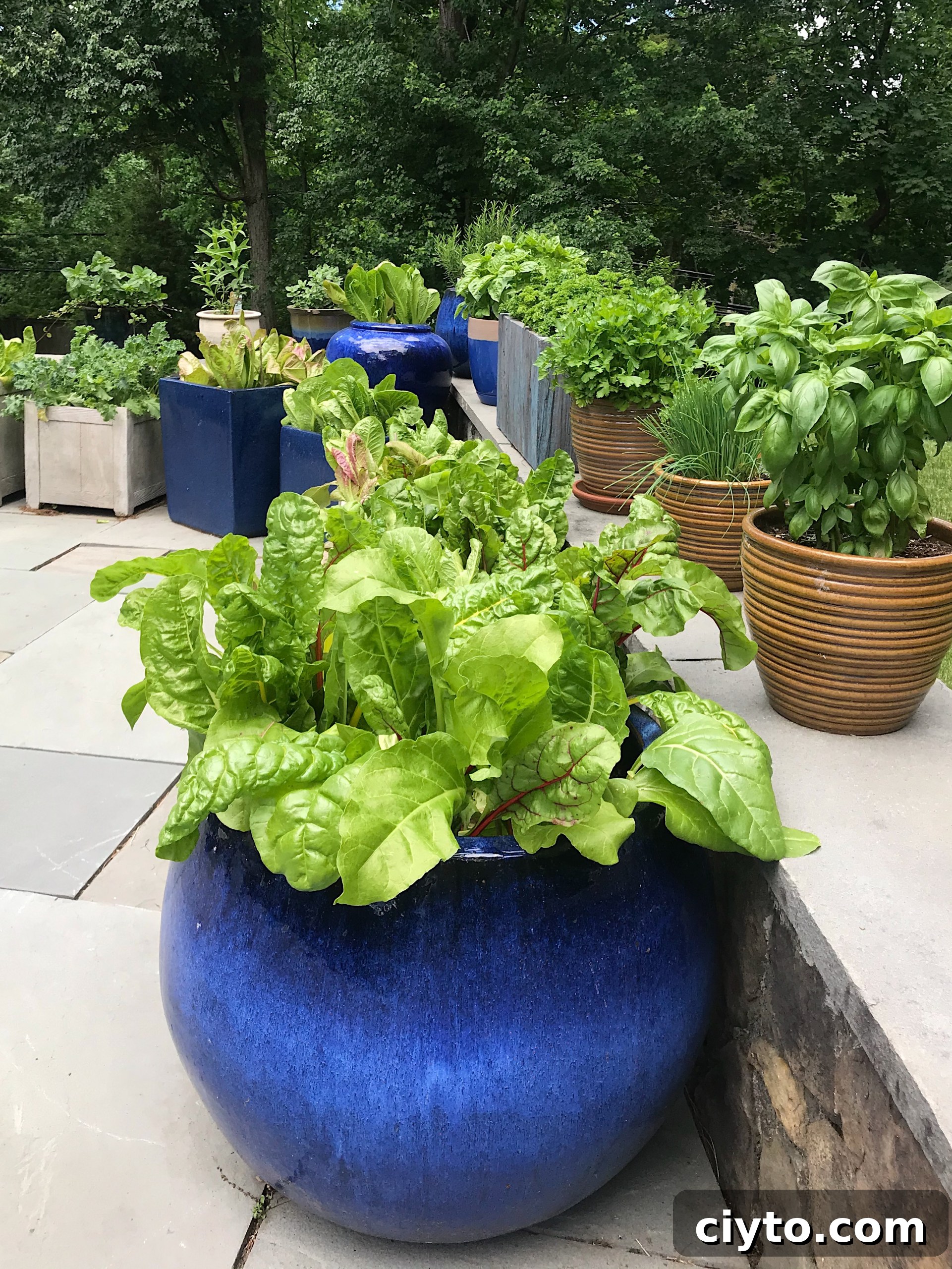
My husband and I have been growing vegetables and herbs in patio pots for more than ten years. It began with a few small containers on a patio ledge and grew as we experimented, learned what thrives in our yard, and discovered which crops we actually cook with most. Our families both had gardening roots—one with a greenhouse and another with long-standing backyard plots—so it felt natural to try container gardening when we moved to a suburban home without a ready in-ground bed.
We started with a handful of pots and expanded slowly. Over time we collected clay and plastic pots and have successfully grown lettuce, kale, Swiss chard, many herbs, and, when conditions allow, tomatoes, cucumbers, and eggplant. Below are practical tips based on that experience, focused on patio and container gardening in a temperate climate.
Caveats
- We garden in Connecticut, so timing and plant performance reflect Northeast conditions. Check your local hardiness zone and climate when planning.
- These tips are tailored for patio and container gardening. Many apply to in-ground or raised beds, but those systems have different watering and soil considerations.
Let’s make this an ongoing guide
This article is meant to be an evolving resource. I’ll add updates each season and respond to questions so this becomes a practical reference for planning, planting, and troubleshooting your own patio garden.
Tips for Growing a Patio Garden
1. Start small
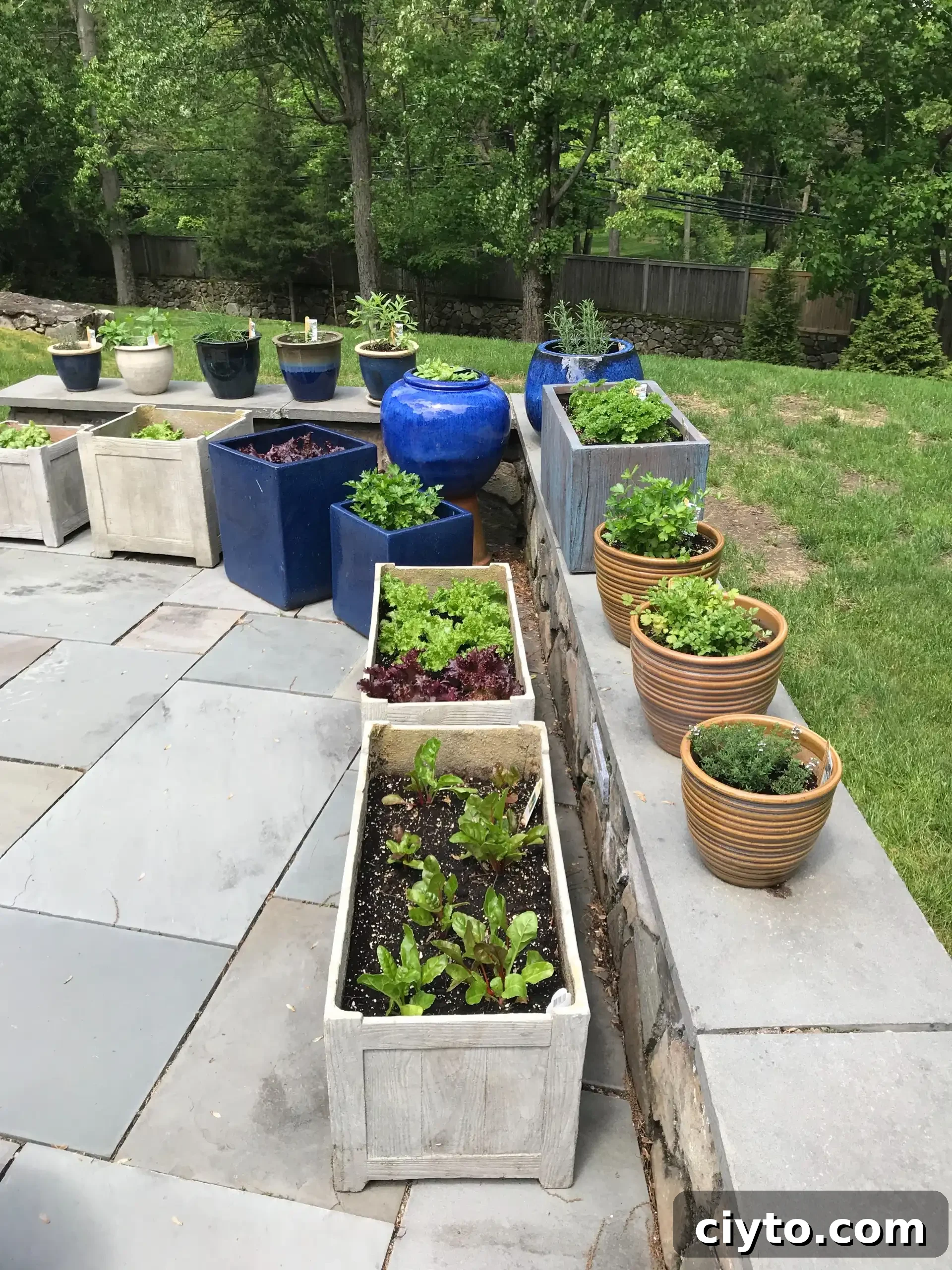
Begin with a few pots and a couple of easy crops. Our garden grew incrementally—herbs first, then larger pots for greens, and later, a few fruiting plants. Starting small helps you learn what grows well in your microclimate and what you actually enjoy harvesting and cooking. Choose one sunny spot and a handful of containers to get comfortable with watering and maintenance before expanding.
2. What grows best in containers
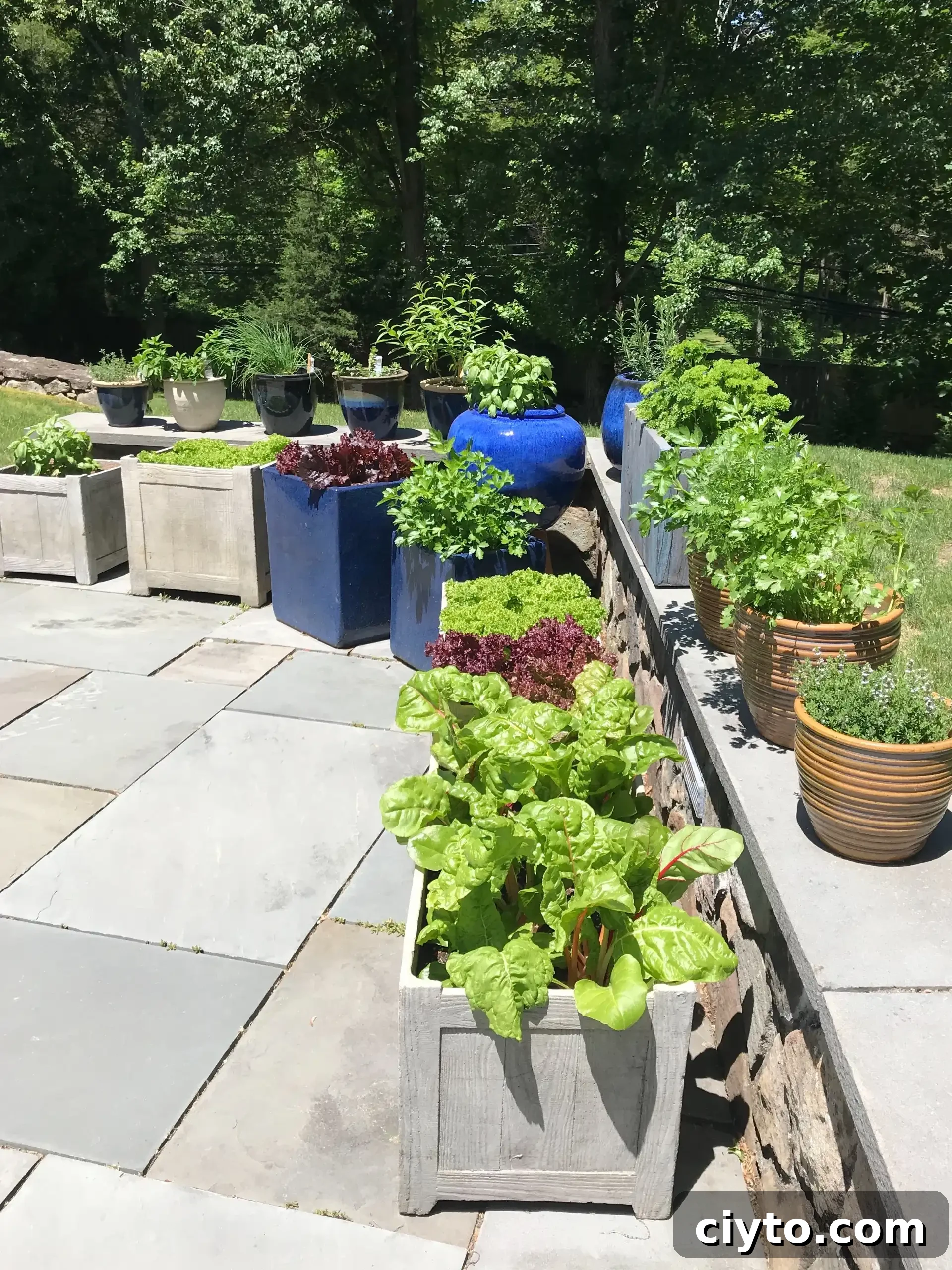
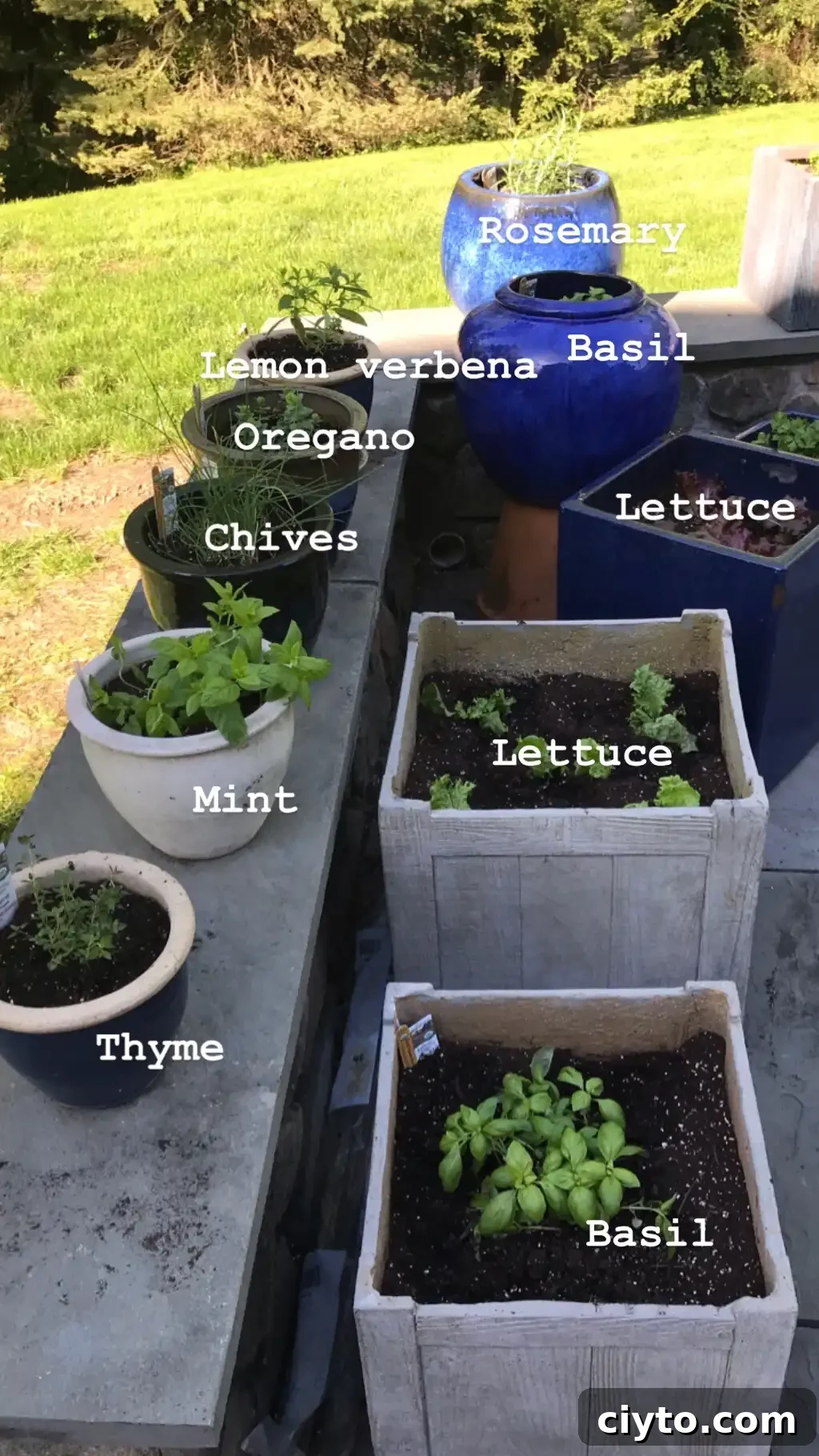
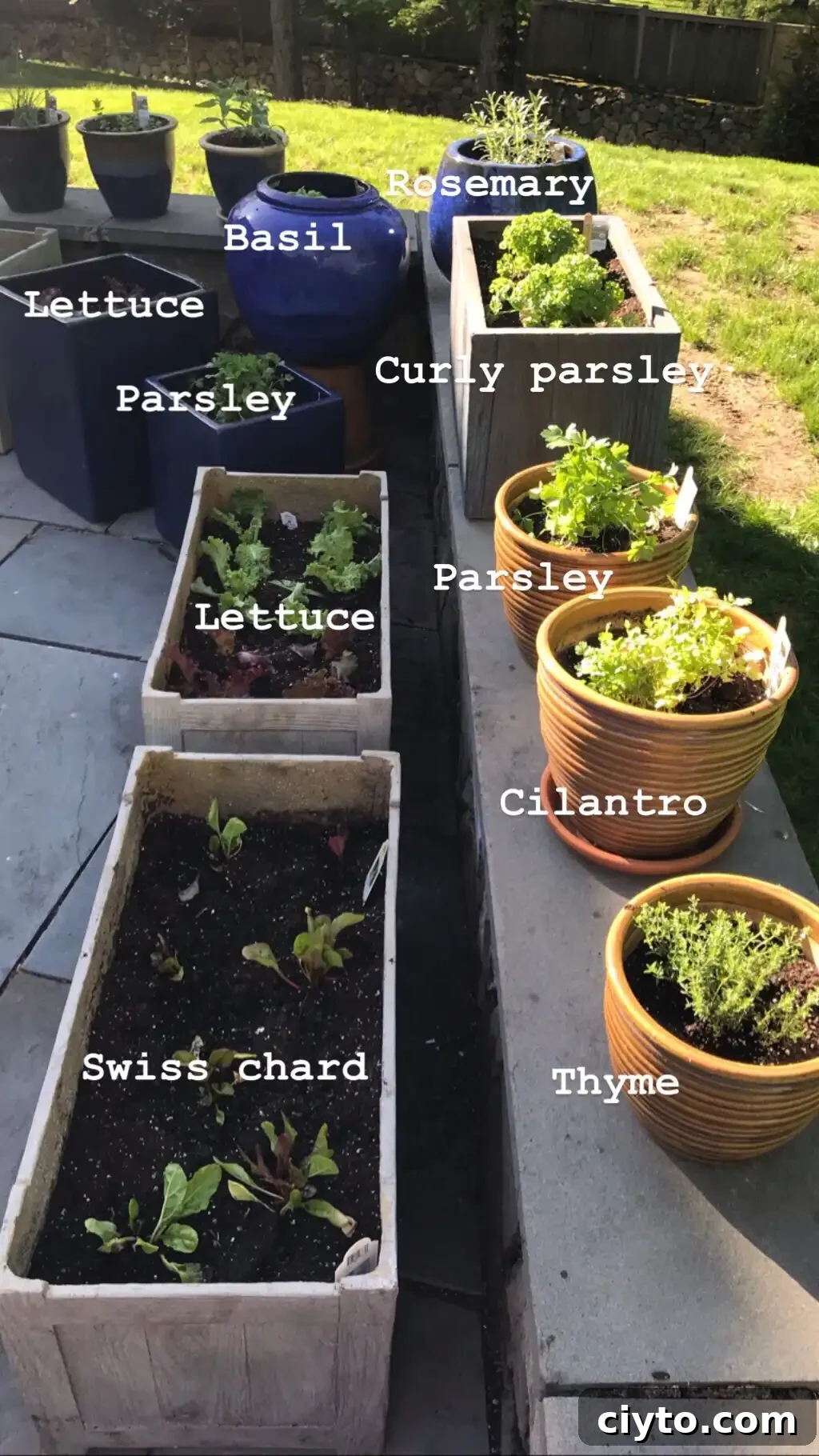
Greens and herbs are the easiest and most reliable container crops. Lettuce, kale, Swiss chard, basil, parsley, rosemary, thyme, and chives all perform well in pots. Fruiting crops like tomatoes, cucumbers, and eggplant can be grown successfully, but they’re more demanding: they need more water, consistent warmth, and larger containers. If you try fruiting varieties, pick compact types such as patio or cherry tomatoes, pickling cucumbers, or smaller eggplant cultivars.
3. Planting basics — timing and weather
As a general rule, cool-weather greens thrive in spring and early summer, herbs prefer moderate temperatures, and warm-weather crops (tomatoes, peppers, cucumbers, squash) should go out after the risk of frost has passed and nights are consistently warmer. In northern climates, that often means waiting until late May or around Memorial Day for tomatoes. Consult your local nursery or the USDA plant hardiness zone map to refine timing for your area.
4. Pot size matters
- Lettuce and other greens do better in wider, deeper pots that allow room for roots.
- Herbs can thrive in small pots, but larger containers are useful for frequently used herbs like basil and parsley.
- Fruiting crops need the largest containers you can accommodate to give roots space and help retain moisture.
5. Potting mix and fertilizer
Use a high-quality organic potting mix designed for container plants. Because pots don’t draw nutrients from surrounding soil, fresh potting mix at the start of the season boosts plant health. We typically replace potting mix each year—especially since we clean and store pots over winter—and recommend buying more than you think you’ll need. Fertilize at planting and then every 2–3 weeks during the growing season with a balanced organic fertilizer per the product instructions.
6. Keeping animals away
Pests can be an issue. On our patio, we rarely have major problems, but some years wildlife or hungry critters can nibble plants. A certified organic animal repellent from a local garden center or nursery applied every few weeks can help. Expect a strong smell with many repellents; apply according to label instructions and reapply after heavy rain.
7. Regular upkeep—watering, fertilizing, harvesting
Container gardens require routine attention. Watering is the most important task—pots dry out faster than ground soil, so plan to water daily in warm weather and possibly twice a day during heat spells. Fertilize every 2–3 weeks and harvest regularly. Frequent harvesting, especially of herbs and lettuces, encourages continued production.
8. Enjoy the process
Watching a patio garden go from seedlings to dinner plate is deeply satisfying. Take time to taste and use your harvest—the more you cook with what you grow, the more rewarding the garden becomes.
What to do now: planning and prepping
Planning and prepping
Late April through early May is a great time to plan. Decide what you want to grow based on what you’ll use and the light available on your patio. Choose containers, buy potting soil, and set pots where you plan to keep them so they’re ready when seedlings arrive.
- Make a short list of vegetables and herbs you actually eat.
- Place pots in the intended sunny or partly shaded location to confirm light conditions.
- Buy seedlings from a trusted local nursery—staff can recommend varieties suited to your area.
- Fill containers with potting mix in advance so you’re ready to plant when temperatures are right.
When the weather warms, select healthy seedlings—don’t overcrowd planters, as most plants will expand. Water newly planted seedlings with a diluted organic fertilizer solution to help them establish. Over the season, stay on top of watering, feeding, and harvesting, and enjoy the abundance a well-managed patio garden provides.
Are you planting a garden this year? Whether you’re a first-timer or a seasoned container gardener, what are you growing this season? Ask any questions below and I’ll add answers to this post as the season progresses.