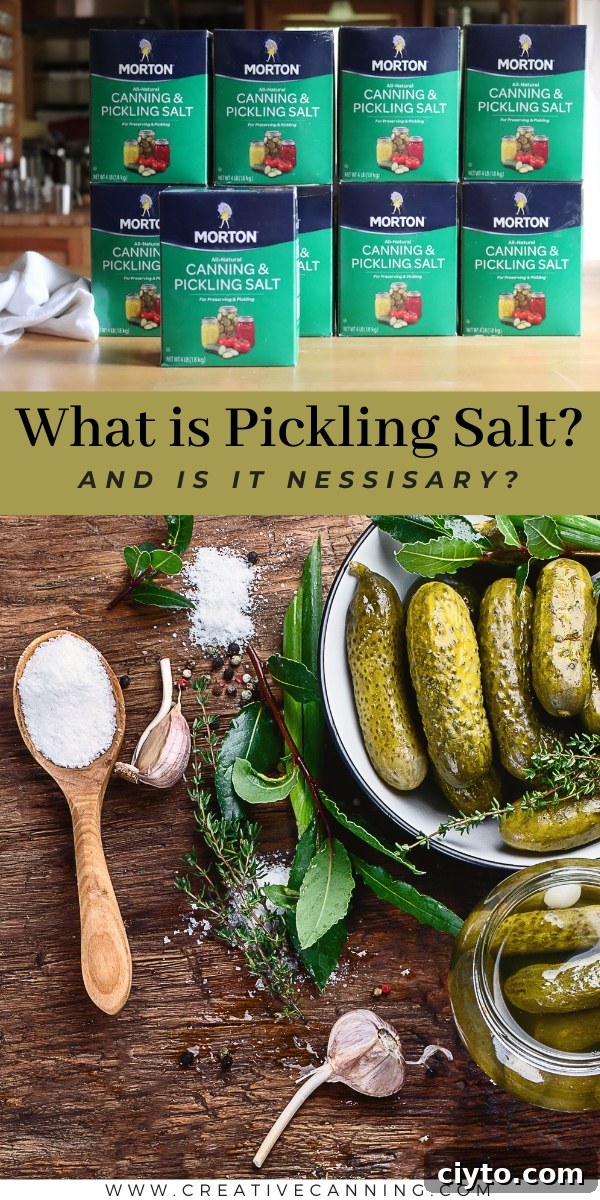
Canning salt—also called pickling salt or pickling and canning salt—appears in many canning and traditional preservation recipes. What exactly is it, and how does it differ from regular table salt?
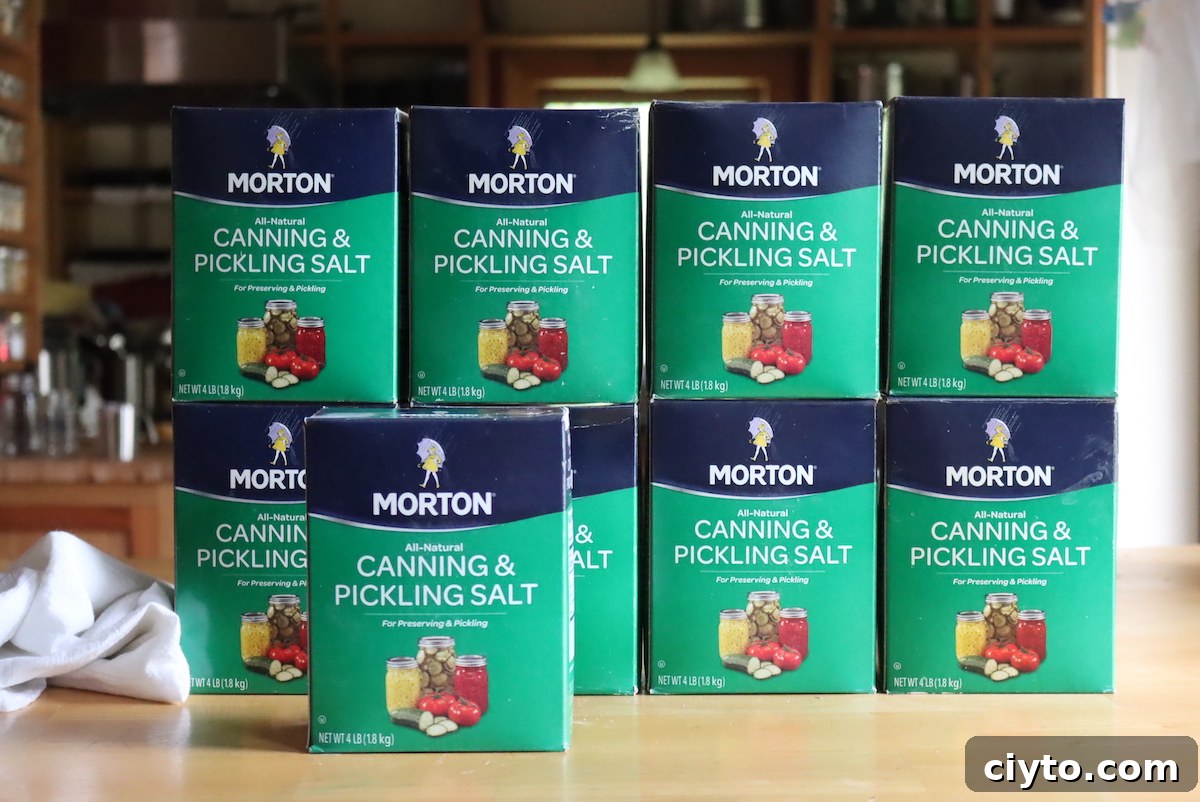
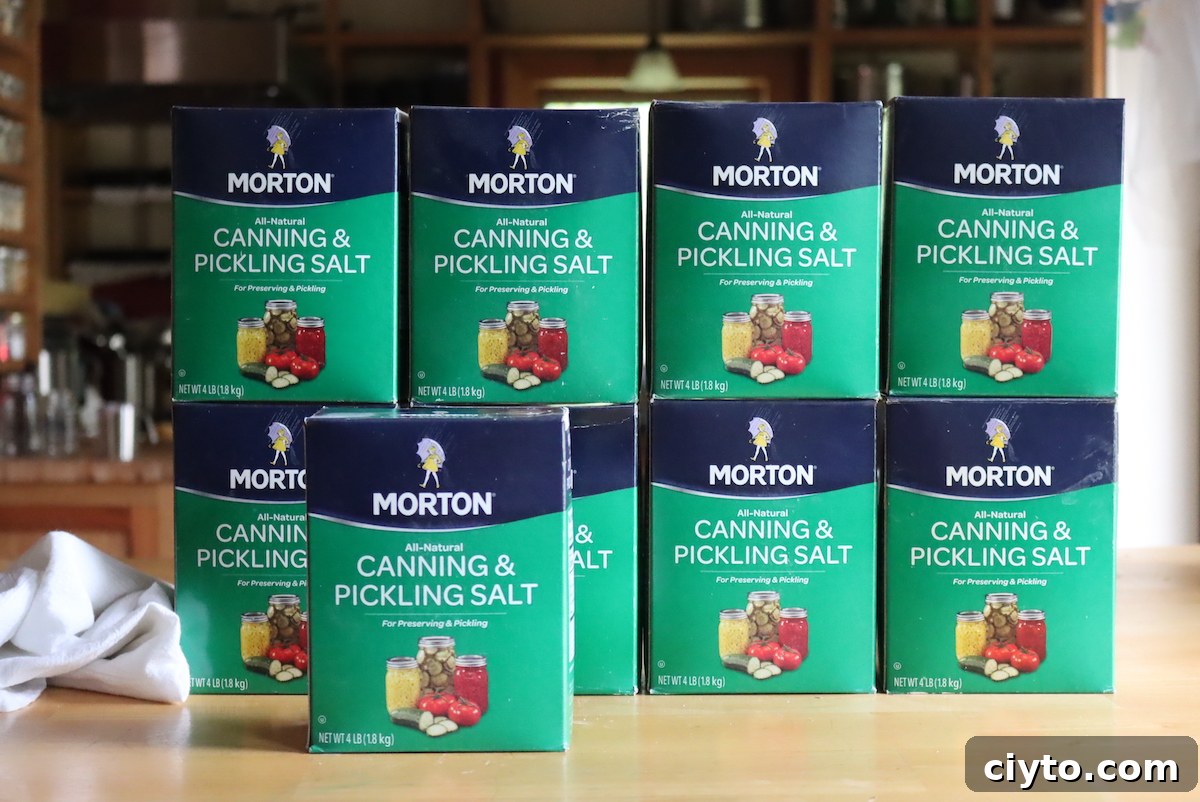
Most grocery stores stock pickling salt alongside table salt, kosher salt and sea salts, but the term can be confusing. Pickling salt is not a special chemical blend; it’s simply pure sodium chloride without additives. That purity is what makes it a preferred choice for preserving foods and for recipes that depend on predictable salt behavior.
What Is Pickling Salt (Canning Salt)?
Pickling salt is plain, refined salt with no additives. Unlike many table salts, which often include anti-caking agents, added iodine, or other ingredients to improve flow or shelf life, pickling salt lists only “salt” as its ingredient. Because it contains nothing else, it dissolves cleanly and won’t introduce off-flavors or unwanted particles into brines and preserves.
What Is Pickling Salt Used For?
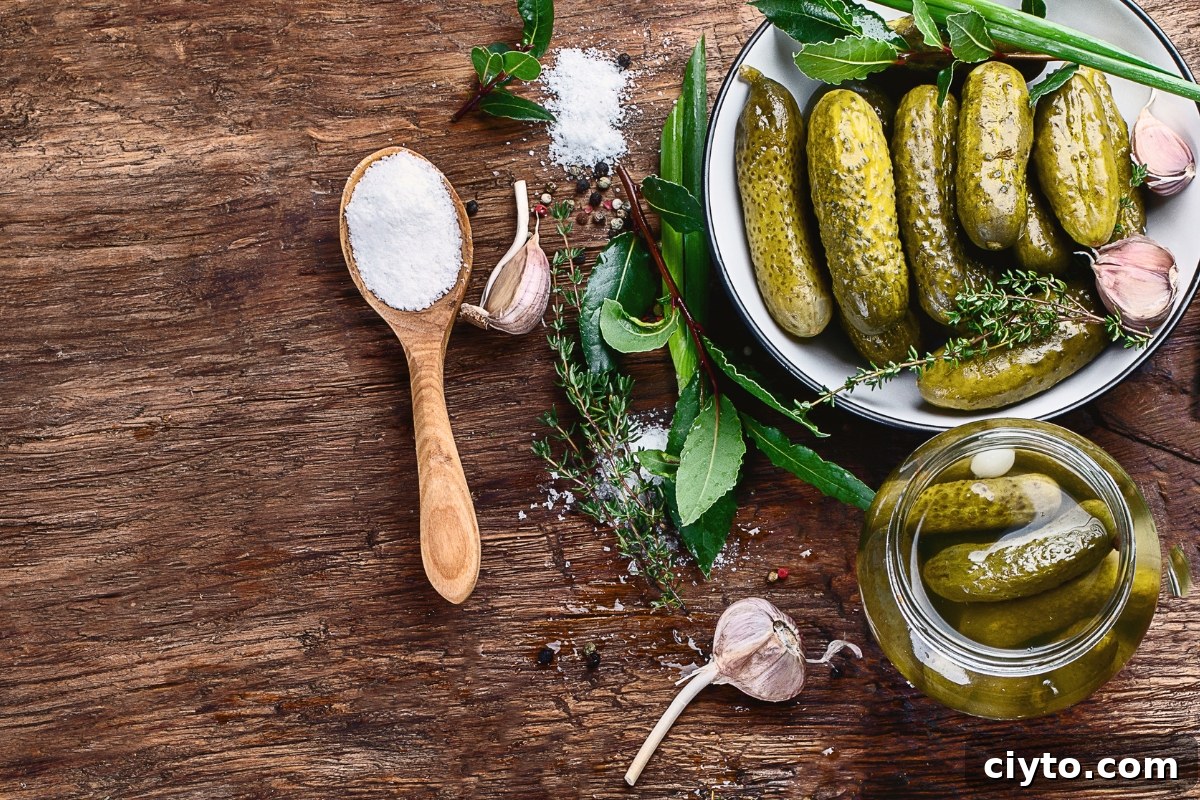
As the name implies, pickling salt is ideal for making pickles. It’s also commonly used in water bath and pressure canning recipes for fruits, vegetables and some meats. Its lack of additives prevents cloudiness in brines and jars, producing clearer, more visually appealing preserves.
Canning and pickling salt is also useful for certain charcuterie and curing recipes where precise salt measurements matter. When a recipe requires an exact amount of sodium chloride by weight, using a pure salt avoids the variability that additives or uneven grain sizes can introduce.
Substitutes for Pickling Salt
If you don’t have pickling salt, you can substitute other plain salts that contain no additives. Fine-grained sea salt, unprocessed rock salts such as Himalayan salt, and additive-free kosher salts are acceptable alternatives as long as the ingredient label lists only “salt.” Natural minerals in non-iodized sea salts won’t harm the preservation process and usually won’t affect safety.
Be mindful of crystal size and density when substituting: coarse kosher salt grains take up more volume than fine table salt, so use weight measurements when possible or adjust volume amounts accordingly. Also avoid salts that include anti-caking agents or flow enhancers, since those additives can cloud brines or subtly alter flavor.
Pickling Salt vs. Table Salt
Table salt frequently contains additional ingredients. Common additives include anti-caking agents, dextrose, or iodine compounds. These additions can affect the appearance and sometimes the taste of pickles and other preserved foods. Pickling salt contains only sodium chloride, so it does not contribute these effects.
For best results in canning, choose a salt that lists only “salt” on its label. If measuring by volume, remember that different salt types have different densities and grain sizes, so a teaspoon of one type may not equal a teaspoon of another in weight.
Pickling Salt vs. Kosher Salt
Many kosher salts are essentially additive-free and can substitute for pickling salt, but not all kosher salts are identical. Some brands add anti-caking agents, so always check the label. If the kosher salt lists only “salt” on the ingredient panel, it is generally safe to use for pickling and canning.
Using Salt Substitutes in Pickling
Salt plays two roles in traditional preserving: flavor and, in some methods, preservation. In many modern, tested water bath canning recipes, salt is included primarily for flavor rather than for safety. That means some recipes allow reducing or omitting salt, or using non-clouding salt substitutes suited to low-sodium diets. When considering substitutes, follow package directions closely because substitution ratios and flavor outcomes can vary.
Be cautious with salt substitutes if you are making salt-cured meats, lacto-fermented pickles, or refrigerator pickles that rely on real salt for preservation. Those methods typically require actual sodium chloride to produce the desired microbial environment and texture.
Practical Tips for Home Canners
- Read ingredient labels: choose salts listing only “salt” for pickling and canning.
- When swapping salt types, use weight measurements if possible to maintain recipe accuracy.
- Avoid salts with anti-caking agents to prevent cloudy brines and off-flavors.
- If trying low-sodium substitutes, test a small batch first to evaluate taste and texture.
For anyone interested in canning, understanding the role of salt—whether pickling salt, kosher salt or a substitute—helps produce better-flavored, more attractive preserves. Pure pickling salt remains a reliable, predictable choice for both beginners and experienced home canners.
Home Canning Guides
- What is Jam Sugar? (Coming Soon)
- Beginner’s Guide to Water Bath Canning
- Beginner’s Guide to Pressure Canning
- How to Make Jam