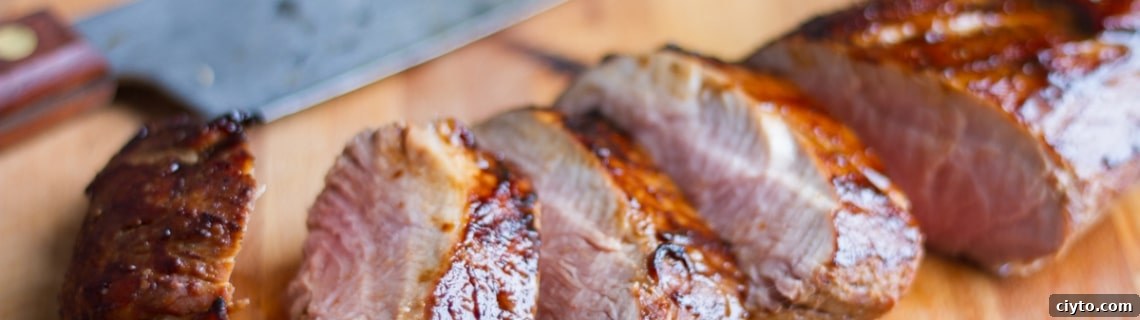
Your classic pork tenderloin gets a delightful Asian-inspired twist with a sweet and savory hoisin glaze. Sous vide cooking locks in moisture and tenderness while the hoisin brush and quick sear add caramelized flavor and an attractive finish. Serve thinly sliced over steamed rice, noodles, or in a ramen bowl for a satisfying weeknight meal or an elegant dinner party centerpiece.
Best Sous Vide Pork Tenderloin Recipe
Pork tenderloin is a lean, tender cut that benefits greatly from gentle, precise sous vide cooking. This method ensures an even, juicy interior without overcooking, and a short high-heat sear creates a flavorful crust. The hoisin glaze complements the pork with its balance of sweet, salty, and slightly tangy notes. The recipe below is simple, adaptable, and ideal for cooks who want reliable results with minimal fuss.
Equipment
- Sous vide immersion circulator (any reliable model that can maintain precise temperature).
- Water container or pot large enough to hold the sous vide bath and the sealed pork. A dedicated container is helpful for larger cuts, but an ordinary heavy pot works fine.
- Vacuum sealer and bags, or heavy-duty freezer-grade zipper bags for the water displacement method.
- Heat source for finishing: a hot grill, a cast-iron skillet, or a kitchen torch for quick caramelization.
Ingredients
- 1 pound pork tenderloin, trimmed
- 1 teaspoon kosher salt
- 1/2 teaspoon freshly ground black pepper
- 3 tablespoons hoisin sauce
Sous Vide Pork Tenderloin Cooking Times, Temperature, and Preparation
- Set your sous vide immersion circulator to 145ºF (62ºC). This temperature yields a tender but fully cooked pork texture. If you prefer slightly more or less doneness, adjust by a few degrees and consult your preferred doneness guide.
- Pat the pork tenderloin dry and season evenly with kosher salt and freshly ground black pepper. Place the seasoned tenderloin into a vacuum-seal bag or a heavy-duty zipper bag. If using a zipper bag, use the water displacement method: slowly lower the bag into the water bath, allowing water pressure to push air out before sealing the bag just above the waterline.
- Seal the bag with a vacuum sealer or ensure the zipper bag is tightly closed. Submerge the bag in the preheated water bath. Make sure the pork is fully underwater and that the bag is not touching the circulator.
- Cook for 3 hours. This extended time at a controlled temperature ensures a uniformly cooked, very tender result without risk of overcooking.
- When the time is up, remove the bag from the water bath and carefully take the pork out of the bag. Reserve any juices if you plan to make a sauce, but be aware that juices should be handled and reheated properly.
- Pat the tenderloin dry with paper towels. Drying the surface thoroughly helps the glaze adhere and promotes better browning during searing.
- Brush the entire tenderloin with hoisin sauce. You can use the full 3 tablespoons or adjust to taste. Optionally, reserve a tablespoon for serving or to finish the sliced meat.
- Preheat a grill to high heat, or heat a heavy skillet over very high heat. Alternatively, prepare a kitchen torch for a quick, even caramelization if you prefer a more controlled finish.
- Sear the hoisin-coated tenderloin until all sides are well caramelized and have attractive color. This step should be quick—about 1 to 2 minutes per side—since the meat is already fully cooked through sous vide.
- Transfer the seared tenderloin to a cutting board and let it rest for 3 to 5 minutes. Resting allows juices to redistribute for a juicier slice.
- Slice the tenderloin into medallions and serve immediately. Spoon any reserved hoisin or pan juices over the slices if desired.
Serving suggestions: Serve the hoisin-glazed tenderloin over steamed jasmine rice, stir-fried noodles, or in a bowl of ramen. Garnish with thinly sliced scallions, toasted sesame seeds, or a handful of fresh herbs like cilantro to brighten the flavors. Pickled vegetables or a crisp Asian slaw offer a refreshing contrast to the rich glaze.
Make-ahead and storage: You can sous vide the tenderloin in advance, chill it quickly in an ice bath, and refrigerate for up to 48 hours before reheating and finishing with the glaze and sear. Leftovers keep well for 3 to 4 days in an airtight container; reheat gently to preserve tenderness.
Variations: Try swapping the hoisin for a mix of soy sauce and honey, adding a splash of rice vinegar for acidity, or stirring in a little chili paste for heat. You can also rub the pork with five-spice or garlic powder before sealing for an extra layer of flavor.
Enjoy your hoisin-glazed sous vide pork tenderloin—tender, flavorful, and simple to prepare!