
Do you want to monetize your website with ads but aren’t sure which ad network pays best or is the easiest to work with? This Monumetric review shares my experience, results, and what to expect so you can decide if this ad network is right for your site.

For years I avoided ads because I liked a clean, distraction-free site and I didn’t want to compromise the reader experience. But with limited affiliate earnings and slow growth from digital products, I reached a point where I needed reliable income to invest back into the blog.
I finally decided to try Monumetric in late 2022 after asking experienced bloggers for recommendations. Many recommended Monumetric for sites under 50,000 page views per month, so I signed up with modest expectations and was pleasantly surprised.
How Much Can You Make with Monumetric vs Other Streams of Income?
Before Monumetric I was earning roughly $100 per month. That wasn’t enough to hire help, buy tools, or take courses I needed to grow. I needed revenue to invest in growth, and ads provided that capital quickly.
My first full month with Monumetric boosted my income dramatically. I saw more than a 500% increase in that first month, followed by continued growth in subsequent months. In my best month I experienced over a 700% rise in revenue compared to my pre-ad income.
Of course, ad revenue fluctuates. Seasonality and advertiser demand affect earnings, so results vary month to month. Even so, the extra income provided the momentum I needed to turn my blog from a hobby into a business.
Monumetric RPM (revenue per 1,000 impressions)
Exact earnings with Monumetric depend on niche, traffic volume, page views, and time of year, so I can’t promise a specific amount. Below I share my personal RPMs and earnings to give a realistic idea of what was possible for my site.
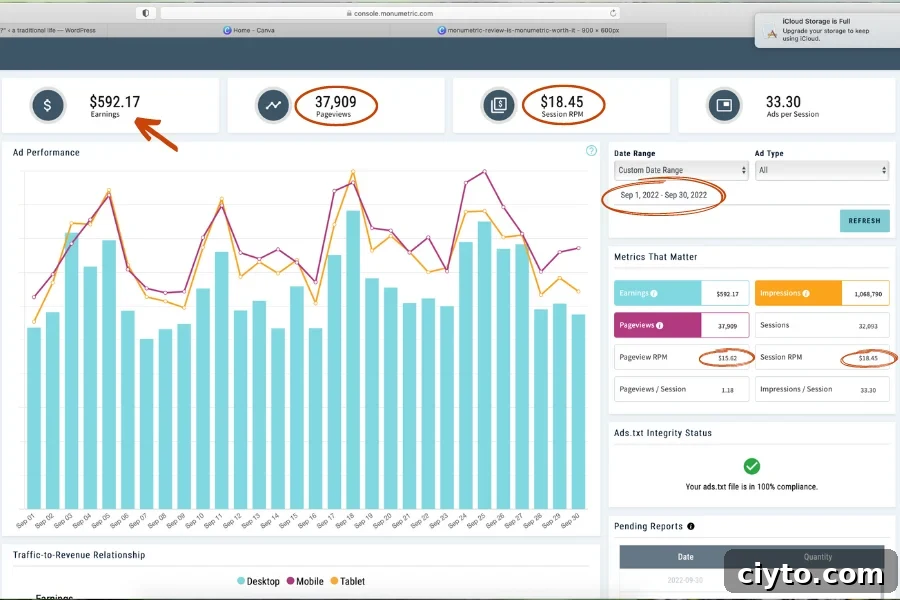
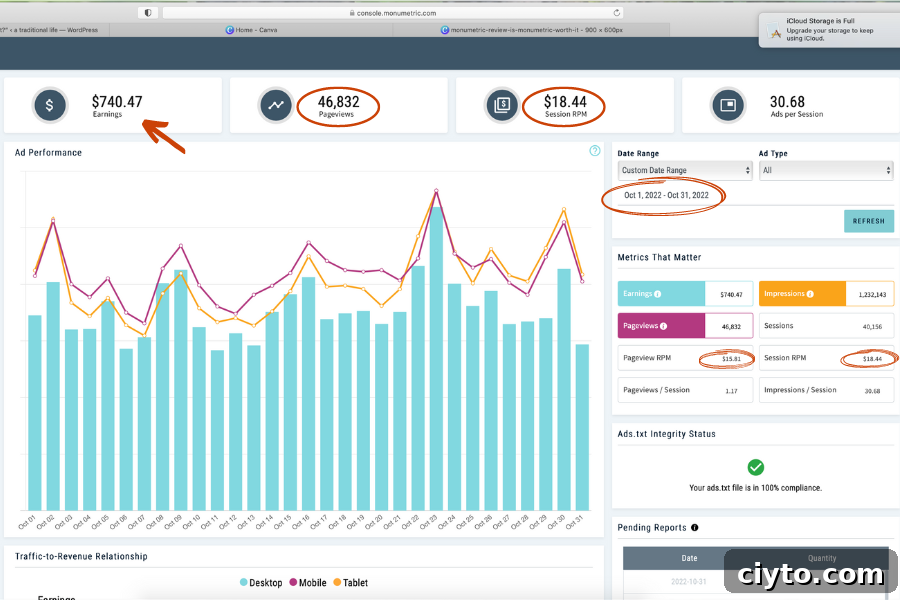
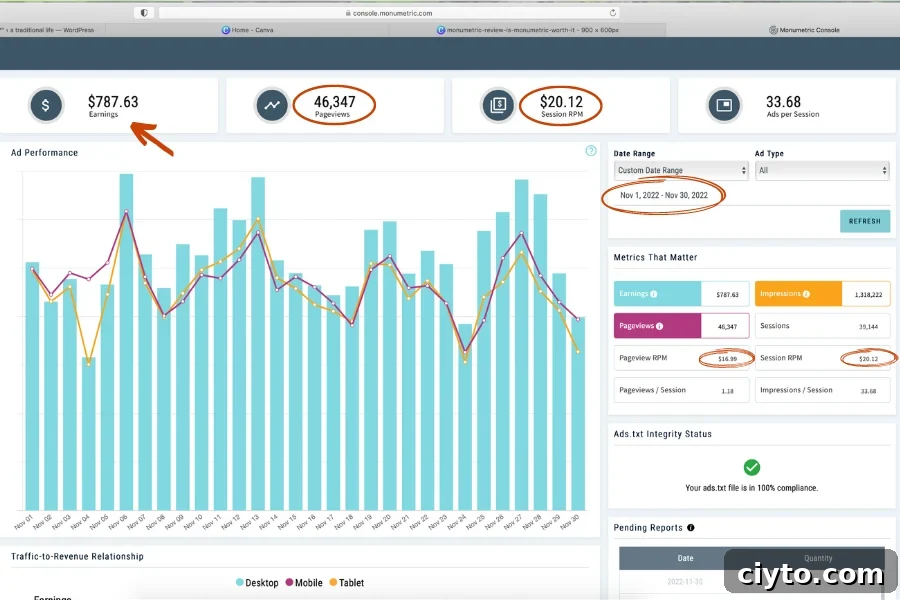
In my first full month, my RPM was around $18.45 per 1,000 sessions (about $15.62 per 1,000 page views), resulting in roughly $592.17. The following month—October—showed similar RPMs. In November, when advertiser spend is higher ahead of the holidays, my RPM climbed to about $20.12 per 1,000 sessions ($16.99 per 1,000 page views) and earnings reached $787.63.
Ad revenue tapered in the early months of the year, which is typical—the post-holiday quarter often pays less. My January RPM fell to $12.21 per 1,000 sessions (about $10.27 per 1,000 page views), and total earnings were around $332.03. Even this lower figure was still roughly three times my pre-Monumetric income.
Seasonality means you should plan for swings, but overall Monumetric delivered reliable, meaningful income that made a real difference for my blog growth and personal finances.
Watch my Monumetric Review
How Does Monumetric Pay Compared to Other Ad Networks?
From what I learned and from advice shared by other bloggers, Monumetric tends to offer the best payouts for sites in the 10K–50K page view range. Compared with networks that require much higher traffic, Monumetric is positioned to help smaller publishers monetize effectively.
Beyond earnings, my experience with the Monumetric team was largely positive—they were responsive to feedback and willing to adjust ad placements to protect the reader experience, which matters a lot if you care about your site’s design and usability.

Monumetric Requirements to Join
Monumetric requires a minimum of 10,000 page views per month to join. For sites with under 80,000 monthly page views, there is typically a one-time setup fee (the fee amount was $99 at the time I joined). In my case, that fee was recouped within days thanks to the increase in ad revenue.
Looking back, I wish I had started showing ads when my site first reached the threshold; I missed several years of potential ad income that could have accelerated growth and paid for tools and equipment sooner.
What is it Like to Work with Monumetric?
Overall my experience has been positive. Here are a few practical points from setup through ongoing management:
I had to wait 8+ weeks to have my application accepted
When I applied in the fall of 2022 it took more than eight weeks to be approved, likely due to high demand as other networks raised entry requirements. The wait was worth it, but expect some delay during busy periods.
Set up directions were only communicated through email
Monumetric communicates setup steps mainly by email rather than chat. That makes the process a bit slower, but email instructions are helpful to reference later.
They broke setup into clear steps when I needed help
If you’re not tech-savvy, Monumetric’s support team was patient and walked me through each step. They didn’t make me feel embarrassed for asking basic questions and they clarified where to find specific keys and settings.
They gave me freedom with ad placements
Monumetric’s Propel program requires a minimum number of ads per page for certain traffic tiers, but they allowed me input on placement and removed or adjusted ads that interfered with content. That flexibility kept the reader experience intact while improving revenue.
They asked for and acted on feedback
After setup, Monumetric requested feedback and the account manager responded personally, acknowledging suggestions to make setup clearer for less technical publishers. That responsiveness left a good impression.
How do I sign up for Monumetric?
If you’re ready to monetize your website and meet the traffic requirement, you can apply to Monumetric to get matched with an account manager who will guide you through setup via email. For many smaller bloggers, Monumetric has been a practical, profitable way to add steady ad income that supports growth investments like tools, courses, and equipment.
If you need extra funds to build your blog, pay down debt, or save for a goal, Monumetric proved to be a useful option for me—and it could be for you too. Good luck as you evaluate your ad network choices and work toward growing your site.